Wildlife cruise in world’s largest mangrove forest, the Sundarbans, both awes and stimulates awareness of the area’s fragility
- The vast Sundarbans mangrove forest that straddles southern Bangladesh and eastern India teems with wildlife, from Bengal tigers to crocodiles and dolphins
- Although four protected areas are Unesco World Heritage sites, rising sea levels are swallowing the forest and one feels it could all slip away at any minute

When it comes to Sundarbans, it is difficult not to speak in superlatives.
The world’s largest mangrove forest covers 10,000 square kilometres (3,860 square miles) of the world’s biggest delta, where the liquid juggernauts of the Ganges, Brahmaputra and Meghna rivers discharge into the Bay of Bengal.
Straddling southern Bangladesh and eastern India, the Sundarbans’ labyrinthine tidal waterways, mudflats and islands of silt are stalked by Bengal tigers; enormous estuarine crocodiles that patrol the opaque rivers; and ferociously clawed monitor lizards that drape themselves along tree branches, their tails dangling like a dinosaur’s might down to the water below.
A visit to this wild place, however, inspires not only awe at its primordial might, but also awareness of its fragility.
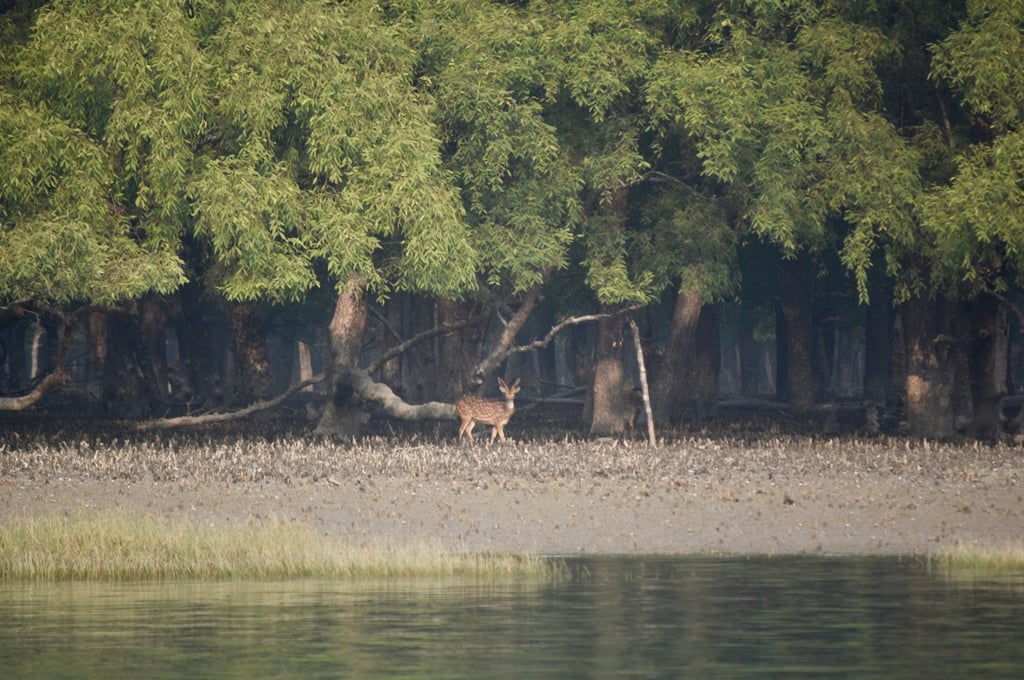
Like the tides that are so dramatic here that about a third of the land disappears and reappears every day, or the islands of silt that build up over months only to be washed away in a flood, the Sundarbans evokes the feeling that it could at any minute just slip away.
Nowhere is this impression of sliding between states as strong as at the very end of the delta, where the land gives way to the open sea.