One of Seoul’s last ‘moon villages’, why Haebangchon is worth a visit – its history, what to do, and where to eat and drink
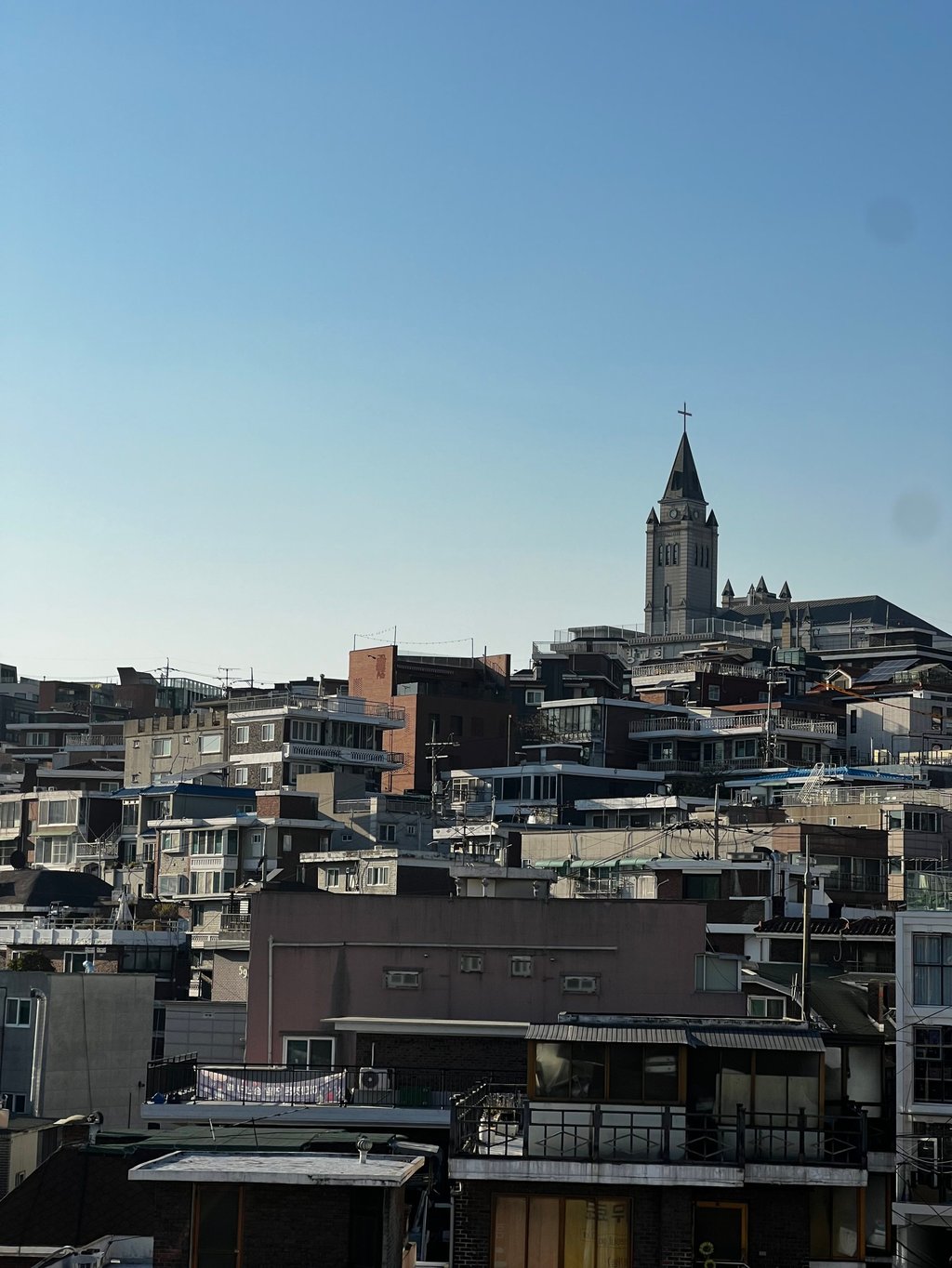
- Located on the steep slopes of Seoul’s Namsan mountain, Haebangchon has gone from migrant shanty town to thriving multicultural district
- Places to visit include the 108 Staircase, the towering Presbyterian Church, a hectic five-way intersection, and the now-trendy Shinheung Market

In the 1961 Korean cinema classic Aimless Bullet, director Yu Hyun-mok not only offers a realistic portrayal of how the poor lived in post-war Korea but also of the squatter area where the story is set: Haebangchon.
Located at the foot of Namsan, a mountain that stands in the heart of the capital, Seoul, the neighbourhood was once a makeshift home for migrants, mostly from the North, displaced both after the Japanese colonisation (1910-1945) and after the Korean war (1950-1953).
Today, densely populated Haebangchon is a multicultural residential – and increasingly commercial – district, but strolling through its steep, narrow streets you can still spot traces of its past.
History
The district’s name describes what it once was: Haebang means “liberation” in Korean and chon means “village”. When Japanese rule ended, displaced Koreans who sought to settle in Seoul formed a shanty town here.
Another wave of displaced migrants moved into Haebangchon after the devastating civil war. They were joined by Christians from North Korea who had fled from the communist regime’s religious persecution.
Koreans from abroad, the North and other parts of the South built mud huts and shanty homes wherever they could find empty plots, according to the Korea National Housing Corporation.
South Korea’s economy gradually picked up after the war, as did the lives of those living in Haebangchon. In the 1960s, many residents earned a living by knitting sweaters and selling them at the nearby Namdaemun market.