How forgotten Japan is revealed amid Fukushima’s olde worlde charm
- Ouchi Juku, in Fukushima prefecture, has been restored to look the way it did during the Edo era, with thatched roofs and no visible power or telephone lines
- Near to the picture-postcard village, with its minshuku inns and a quirky soba noodle restaurant, is the region’s oldest whisky distillery

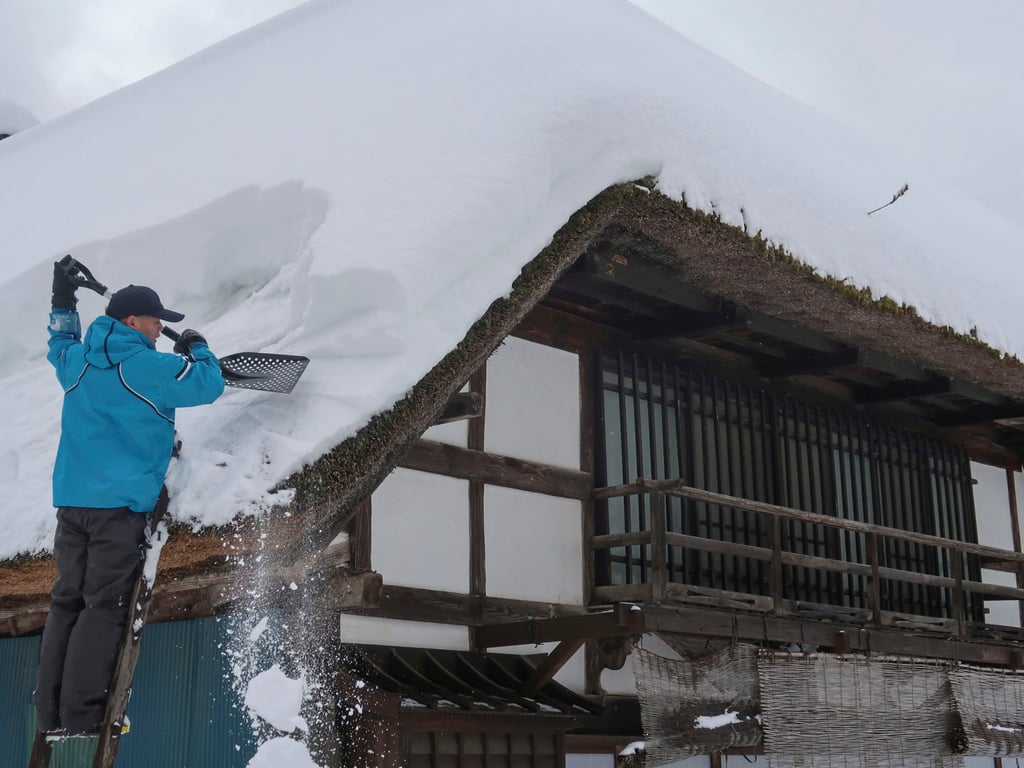
A muffled thud turns visitors’ heads but residents ignore it. The owner of one of the old-fashioned thatched homes that line the main street of Ouchi Juku is up a ladder and using a shovel to pry snow off his roof, leaving it in mounds thigh-deep beneath the eaves.
Deep in the mountains of western Fukushima prefecture, Ouchi Juku is around 20km (12.4 miles) south of the historic town of Aizu-Wakamatsu and was an important staging post on the trade route that linked Aizu with Nikko during the Edo Period (1603-1867).
Today, the village has been restored to look just as it did during Edo, with telephone and electricity cables buried and not a satellite dish or vending machine in sight. The main street is flanked by streams, with the thatched properties set back and today serving as restaurants, minshuku inns and shops selling handicrafts.
The largest historical building is the Honjin, a wooden inn that was set aside for high-ranking government officials and which is now a museum. A small temple partway up the hill at the northern edge of the village offers a spectacular view over the settlement, while a Shinto shrine is set back from the main street amid cedar trees.
In the summer months, the crops in the surrounding paddy fields are bright green and insects hum on the breeze; in the depths of winter, all is coated with a thick mantle of snow, the black pine trees on surrounding hills making the view appear monochrome.