How a drowned village in India reappears each summer, to be flooded by visitors and litter. A new tour could change that
- Inhabitants of Kurdi in Goa, India, were relocated and their village inundated when the Salaulim Dam was built in 1986 to provide water for island residents
- Villagers celebrate Kurdi’s reappearance each during the dry season. Now it draws outsiders who leave litter and damage buildings in their quest for selfies

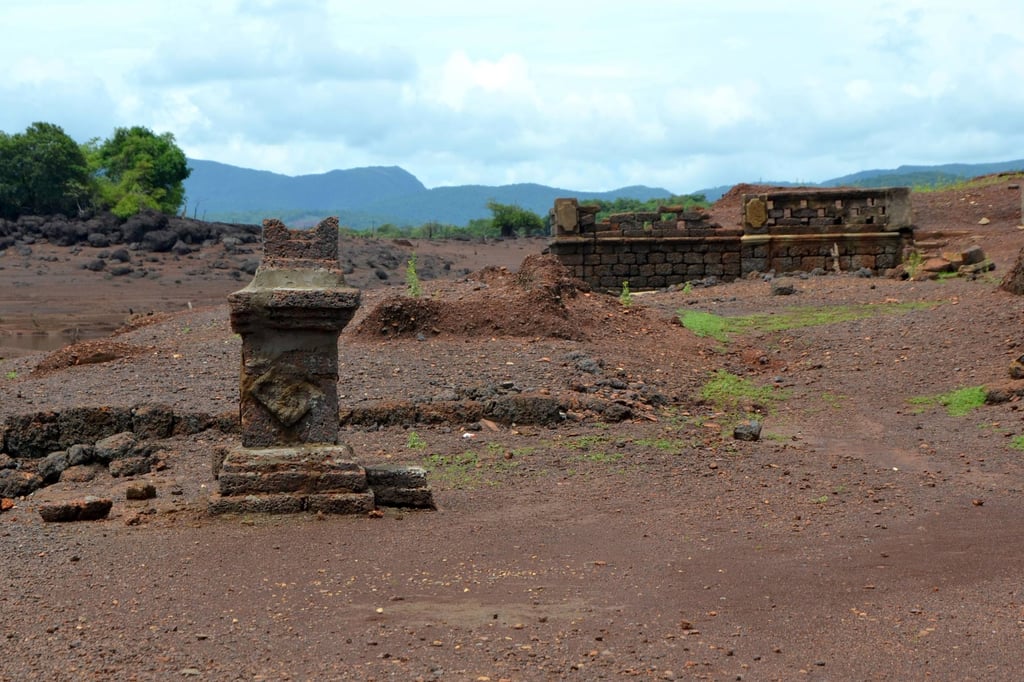
Houses in ruins, a washed-out temple, cracked earth surrounding puddles of water and a deafening silence welcome summer visitors to Kurdi in Goa, western India.
Submerged for most of the year, the remnants of the once thriving village, also known as Curdi, re-emerge from receding reservoir waters during the hot summer months to remind visitors of a bygone era.
In 1986, Kurdi was flooded by the reservoir of the then newly built Salaulim Dam. It had been a village of paddy fields, and plantations of coconut, jackfruit and mango trees, which flourished on the banks of a canal.
It had a school and a chapel, as well as the ancestral home of classical vocalist Mogubai Kurdikar (1904-2001). Kurdi also had a 10th century Mahadev temple, which was dismantled by the Archaeological Survey of India and rebuilt in Shelpem, about 15km (9 miles) away.
Around 600 families – 3,000 villagers in total – were displaced to make way for the dam and reservoir, which provides water to the South Goa district.