Swiss watchmakers try out 3D printing that could cut costs, and allow making of bespoke watches
Watchmakers have so far used 3D printing only to prototype parts, and their customers may baulk at loss of handmade tradition. Swiss chocolatiers look like beating them to market with a 3D product - instant chocolates

When the spindle broke off his wife’s sewing machine, Michael Sorkin refused to replace the device. Instead, he bought a 3D printer and built the part himself. Four years later, he’s using the technology to change how to make the Swiss watch you might get next Christmas.
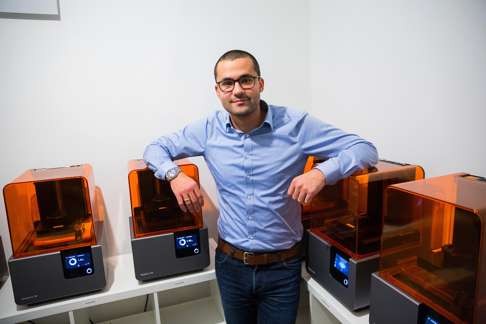
On a recent afternoon in his company’s dimly lit office in central Berlin, an employee in a white lab coat checks on the progress of six cubes tinted in see-through orange. A laser silently slices resin, layer by layer. Formlabs’ product: 3D printers. Interested customers include Swiss watchmakers and jewellers, which are quietly testing the process’ potential.
“If you don’t concern yourself with new technology, you’ll lose out,” says Sorkin, Formlabs Europe’s managing director, as he points to printed models of figurines used in movies and rings used by jewellers spread out on a table in a conference room. “We are disrupting an industry that hasn’t changed in centuries, and bringing fresh wind into it.”
The technology is also starting to be deployed in the Swiss chocolate industry, though it’s less far along. Nestle, the world’s biggest food company, uses 3D printing in research into prototypes for chocolate confectionery and says it’s interested in going further. Zurich-based Barry Callebaut, which makes almost a quarter of the world’s chocolate, is testing new ways of decorating and forming chocolate in its gourmet business.
For the makers of Swiss watches, embroiled in the most challenging times since the introduction of battery-powered timepieces in the 1970s, new technologies could help speed up manufacturing while containing costs. Declining demand in Asia spread to Europe and the US last year, leading companies including Richemont to cut jobs, buy back unsold inventory from retailers and refocus on more affordable pieces.