Director Kenneth Branagh says Disney's Cinderella is about a loss of innocence
British director Kenneth Branagh's Cinderella updates the fairy tale for a modern audience

The smartest thingthat the folks at Walt Disney Pictures did when staging its new live-action movie of Cinderella was to hire Kenneth Branagh. When it comes to his stints behind the camera, notably his adaptations of Shakespeare's Henry V and Hamlet, the British actor-director has shown no fear when it comes to touching the untouchable. "I do genuinely choose to be inspired by things that have been done well in the past," he says. "Coming from the theatre, I feel that when something's a classic, it invites rediscovery, and re-examination."
Hollywood being what it is, nothing is ever sacred - not even the timeless animated Cinderella made by Walt Disney in 1950. But unlike last year's live-action Maleficent, which put a new spin on the Sleeping Beauty story through the eyes of the titular antagonist, Branagh's film is more straightforward, or "very classical", as leading lady Lily James puts it. It doffs its cap to both the Disney cartoon and Charles Perrault's equally evergreen fairy tale Cendrillon that served as inspiration for the Cinderella story.
The film presses all the right buttons. The young Ella sees her widower father (Ben Chaplin) remarry the haughty Lady Tremaine (Cate Blanchett), who arrives with her two daughters (Holliday Grainger, Sophie McShera).
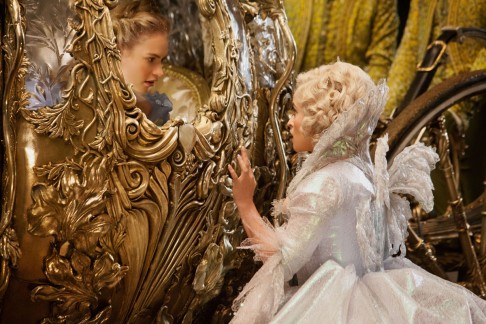
When he unexpectedly dies, Ella becomes little more than a scullery maid, treated with cruel disdain by her new relatives, who nickname her 'Cinderella' after her sooty appearance. You probably know the rest: our heroine meets her fairy godmother (Helena Bonham Carter), who spirits her in disguise to the royal ball where she enchants the kingdom's handsome Prince Charming (Richard Madden).
Yet as Branagh notes, that "happy ever after" ending has to be earned. "The story is about the loss of innocence, and whether that has to be replaced by a toughness that stops you being open to generosity and kindness. In Cinderella's case, loss occurs, and then cruelty occurs, and then ignorance occurs and then deprivation occurs. How does she manage that? The way to negotiate it was to make sure the innocence and the sincerity is not translated as naiveté and stupidity."