Oysters for Dummies
Pearls of wisdom from shellfish specialists.
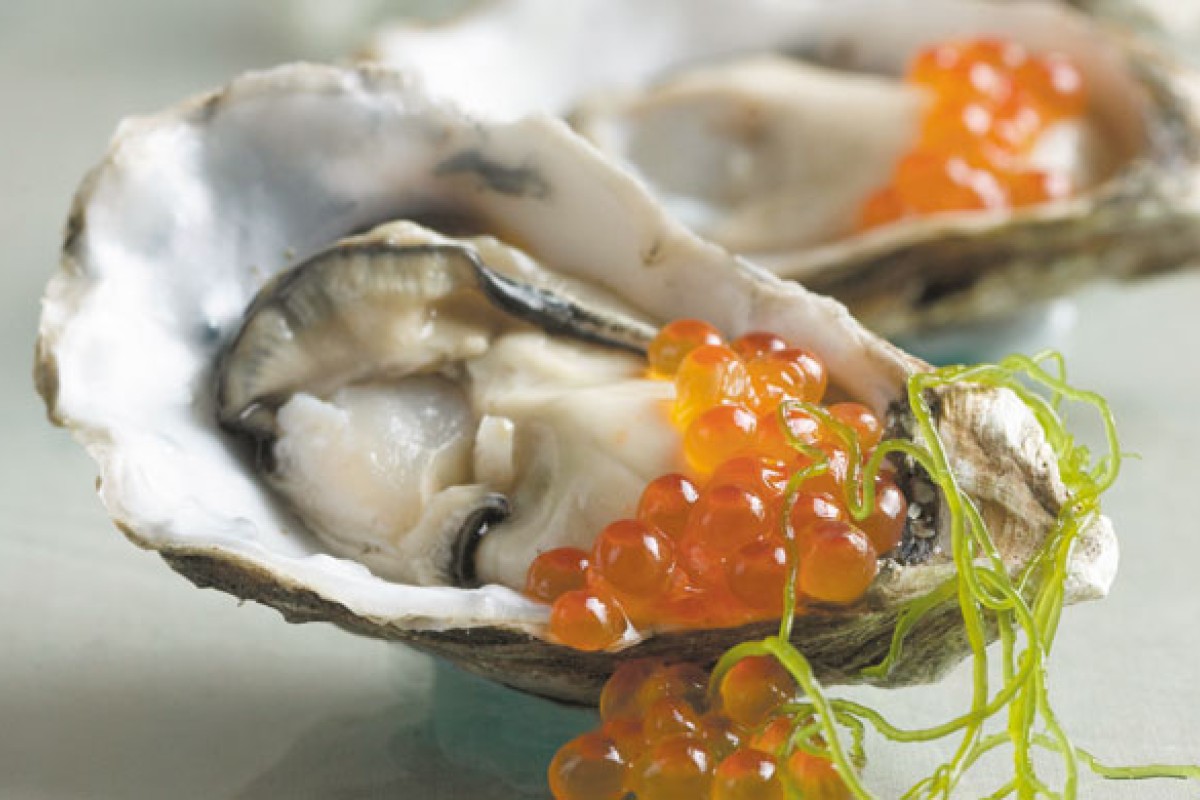
Sharpen your shucking skills, people: South Australian oyster season is here. Hong Kong imports 67 percent of all Australia’s seafood, so you'll be spoiled for choice across the city. So what makes a great oyster? We asked a panel of experts for the low-down on the perfect specimen.
Are all oysters made equal?
There are three broad classifications: Pacific, Olympia and Atlantic. Each grouping is then further broken down by the shore from which the oysters are harvested, and graded by age and size. Yearlings are the youngest at a year old and the smallest at four-six centimeters long. Bistro oysters are three years old and 5cm-7cm. Plate oysters are also three years old, but larger at 6cm-9cm. And the king daddy of oysters are the "standard" grade: four years old and 9cm-11cm. But bigger doesn't always mean saltier (brinier) because a small oyster can pack a punch.
What are the qualities of an excellent oyster?
Connoisseurs describe oysters by their texture, degree of sweetness/salinity and mineral and marine plant flavors. Everyone agrees they must be fresh, and that a fishy smell is not good. Oyster importer Kathy Kingston says a moist, sweet-smelling shellfish is a must. And chef Dieter Lengauer recommends diners "smell each and every one." Our experts agree that the liquor (seawater inside the oyster) should be intact when served so the oysters are "swimming" in it. Conrad hotel assistant manager Giovanni Viterale says the shells should be kept closed until exposed to direct hear or the shucker's knife. For hotel food and beverage manager Jens Corder, the best oysters are high in mineral flavors.
Do oysters go in and out of season or are they mostly farmed these days?
Most oysters are farmed and all oysters are edible all of the time, but they still go in and out of season because they taste better in certain conditions. "Oysters are seasonal in that they breed in summer and during this time their meat is mushy in texture and warmer waters are higher in bacteria. Therefore people tend to eat oysters cultivated in winter months only," Corder explains. The general rule is that they are best when the outside temperature is below 20 degrees Celsius, and the most favorable conditions are 1-5 degrees C. Australian oysters are in season March to September, and French oysters from September to March.