Howard McCrary
You wouldn’t say that Howard McCrary’s musical career begin humbly. After initially touring with the Jackson 5 as a part of The McCrarys—his family’s gospel band—he moved on to a Grammy-nominated career in both gospel and secular music, working with big names like Quincy Jones, Chaka Khan, and yes—MJ himself. Lisa Huang sat down with McCrary before his concert in July to discuss his musical evolution, his spirituality, and why he loves Hong Kong.
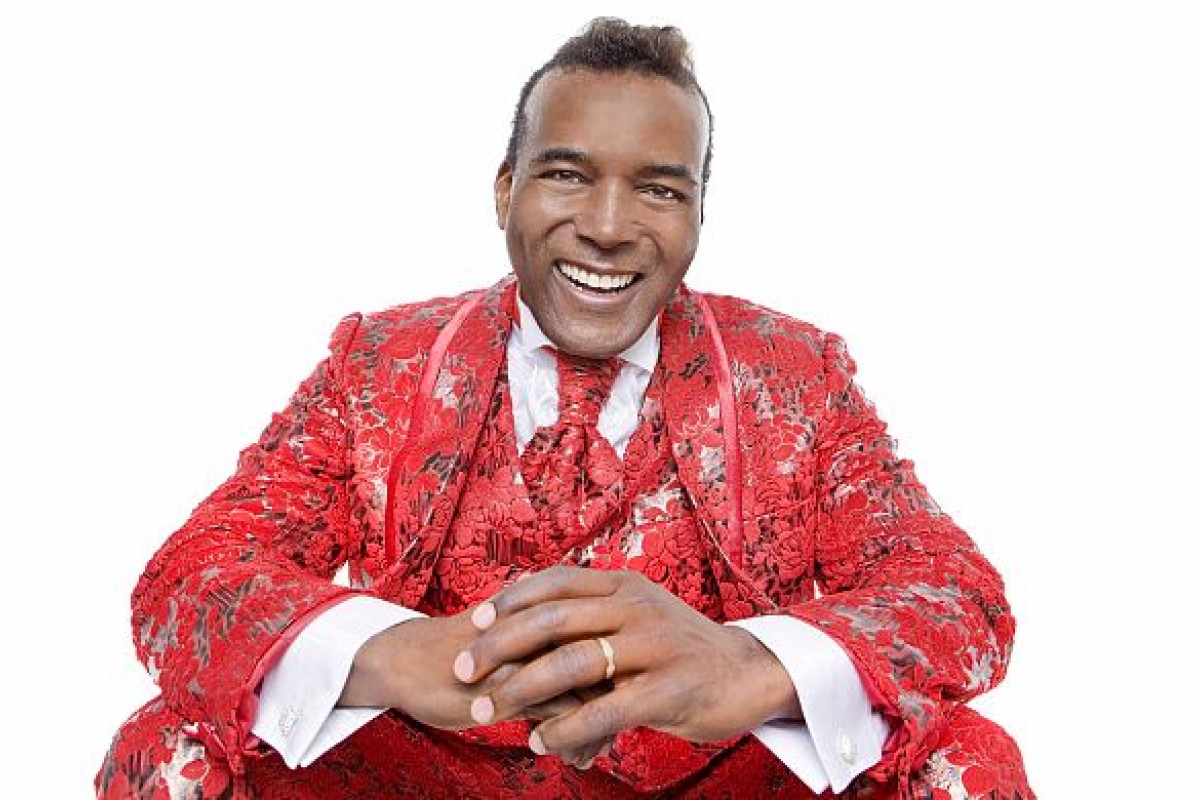
HK Magazine: Your musical career started when you were very young, performing with your family. Can you talk a little bit about The McCrarys?
Howard McCrary: Imagine four kids washing dishes and harmonizing together after dinner, and sounding so good that our father walks in and decides to teach us some songs. When my brother Sam joined in, we had a soprano, a baritone, an alto, a bass, and a piano player all in the same family. We started off in gospel music and eventually moved to play secular music after we were signed by Capitol Records. I left the group because I wanted to stay in gospel, but I did rejoin them in time for the Jackson tour. That’s when I met Michael.
HK: You must have some interesting stories to share about working with Michael Jackson.
HM: Yes, both in studio and out. We were recording this song once called “Keep the Faith” and came to an impasse for 20 minutes. Michael said, “the song cannot be finished—we must think of something!” So my friend Andraé Crouch looked at me and said, “Howard, go to the piano and give us the pass that we need. Do something.” I went to the piano and came up with a three part harmony on the spot. Michael jumped three feet in the air and said, “I love it, I love it, I love it!” As always, he went around and hugged everyone to show them his love, and danced around the studio because we got the part.
HK: Does that sort of thing happen often when recording?
HM: My friend Andraé says, “Every song that has ever been written, has already been written. We just receive it.” So it was one of those magical moments in the studio. It’s not planned. Michael once said to me, “Whenever I dance on stage, I never count. I just dance. It just happens.” Can you imagine that? With the way that he moonwalks and everything, he never counts. He does it spontaneously, because if you can create in the moment, then you are a true artist. That’s why people love Michael Jackson—because he was so spontaneous. You will see this kind of spontaneity at my concert, I promise it!
HK: You’ve worked in genres as diverse as pop, gospel and R&B, but now you’re a jazz musician. When did you first develop a love of jazz?
HM: You know, jazz is a timeless genre. It’s such a free expression—like an approximation of a feeling. I heard artists like Miles Davis, Quincy Jones, Bill Evans; they were a really big influence on me when I was 12 years old. And then there were singers like Ella Fitzgerald, Billie Holiday, and Sarah Vaughan, and when I heard these voices, their freedom of expression was just so colorful that it drew me in. I used to practice when I was 13 years old for eight hours a day. I love music that much. I just walk in the chords, get lost in the progressions, lost in the feelings. When you change genres, the writing process doesn’t change. Some songs take ten minutes to write, some come to me in dreams, and some just come out of the inspiration of meeting someone. It can start with lyrics, melody, chord progression—sometimes all together.
HK: Peace and love are major themes in your music. Why are they so important to you?
HM: In our world today, you can turn on the six o’clock news and by the time you’re finished watching it, you don’t feel any better. In fact, you’re filled with apathy because you wish you could stop the bombings, the shootings, the rages and the rampages and the atrocities that go on in the world. As long as people look outside themselves for peace they will never find it, because real peace is found within. In my music, I share the message that if you can find peace within yourself, you can find peace in the world.
HK: You are a Christian who also embraces Buddhist philosophy. How did you discover Buddhism in the first place?
HM: It’s not so much about religion, it’s about spirituality—who are we as spiritual beings. I met a teacher in Thailand whose name is Luang Phaw Dhammajayo: the abbot of the largest Buddhist temple in the world. He embraced me as his Christian son, and I embraced him as my Buddhist father. You’ll find that all the teachings of Christ correspond with all the teachings of Buddha. When you get to a certain altitude and spirituality you don’t see all the differences—you see more synergies. It’s more about what you have in common.