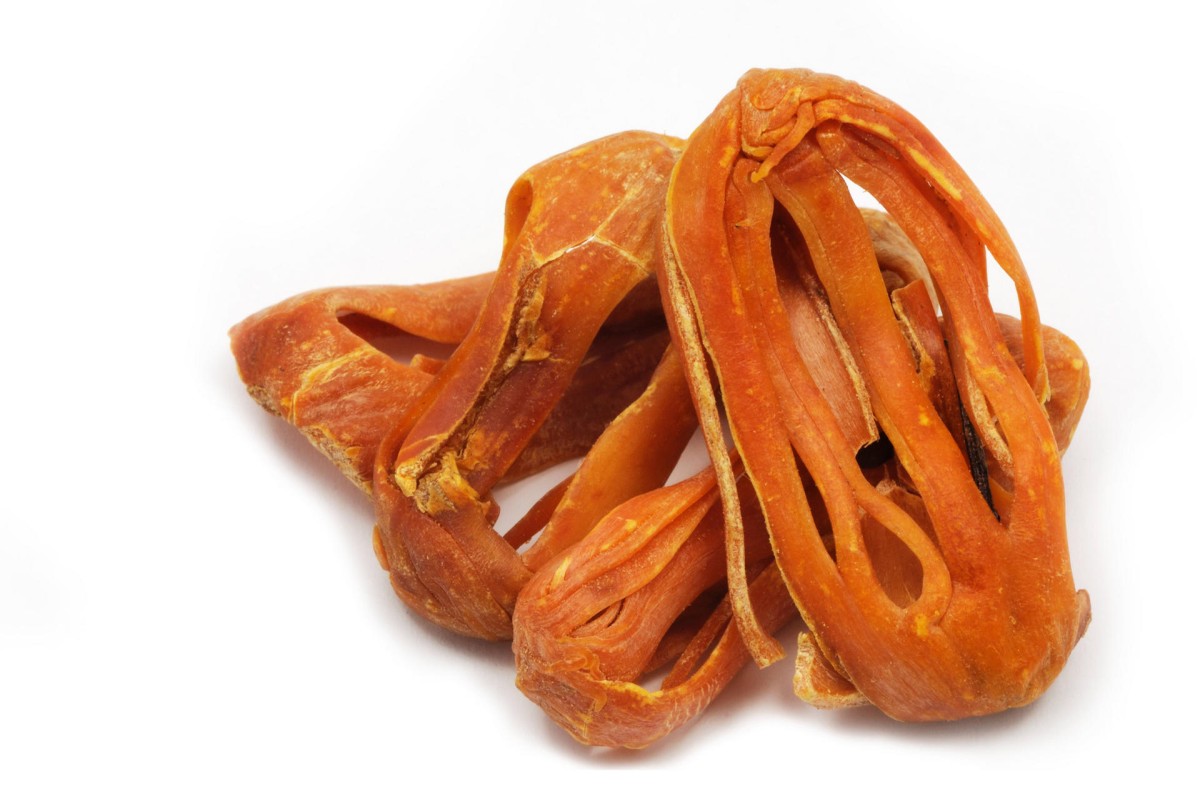
I'm not sure why mace is not as well known as its twin, nutmeg. The two spices come from the fruit of the Myristica fragrans tree - mace is the seed coating and nutmeg the seed. But while nutmeg is quite common - what cook, after all, doesn't have a nutmeg in the spice cupboard for grating onto eggnog or adding to a béchamel? - mace isn't.
The two spices are prised together out of the fruit, and the mace, which tightly surrounds the nutmeg, is removed. When processed, nutmeg is a hard kernel that's easy to grate. The thin, delicate piece of mace remains flexible and leathery, which makes it hard to grate - I've tried without success to use a rasp grater, a hand-cranked spice grinder and an electric grinder. If you're not using the mace whole, in stews or braised dishes, it's better to buy ground mace and store it in an airtight jar in the freezer. As with all pre-ground spices, the flavour and fragrance will fade over time.
Mace is used in alternative medicine, to treat digestive disorders, insomnia and anxiety. Like nutmeg, mace goes well in milk-based dishes. For a sleep-inducing pre-bedtime drink, heat some milk in a saucepan (or in the microwave) and sweeten it with a little honey. Add some grated mace, then drink it hot. Ground mace is delicious in spice cakes, where it's often combined with ground cinnamon, ginger and cloves.
Whole pieces of mace can be mixed with cinnamon stick, cardamom, cloves, peppercorns, cumin and coconut milk, then used to braise mutton or goat.