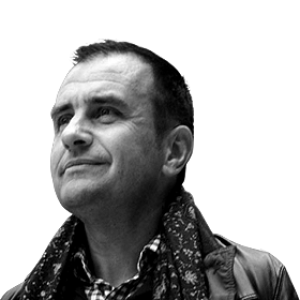
Then & NowLate China scholar Pierre Ryckmans didn’t believe in bending the truth
The late China scholar Pierre Ryckmans was that rarest of writers, one who was not afraid to tell the truth, writes Jason Wordie.

“Did he really need to say all that?” “What possible benefit could writing something like that bring him?” Anyone who pens confrontational newspaper articles eventually evokes these reactions among random illwishers, the general public and sometimes even friends.
Polemic urges aside, authors write controversial articles because the truth that materialises before them is so compelling that it must be documented, regardless of personal consequences. Cecil Day-Lewis’ moving Spanish civil war-era poem The Volunteer – An Ode to the International Brigade sums up the compulsion towards unpalatable truth telling – “… because our open eyes could see no other way”. Blunt facts – however incendiary – are ultimately not the fault of the person relating them.
One China specialist who fearlessly – and, at times, recklessly – documented brutally inconvenient political realities was the late Belgian-Australian scholar Pierre Ryckmans. Writing under the pseudonym Simon Leys, Ryckmans – almost alone among contemporary Western sinologists – exposed the unvarnished truth about China’s Cultural Revolution-era horrors long before the Western intellectual world finally acknowledged what had been happening.
Ryckmans’ first visit to China, on a Belgian student exchange in 1955, forged a powerful conviction, which remained until the end of his life, that it was impossible to live fully in the modern world without some detailed knowledge of China. After graduation, he pursued post-graduate Chinese studies in Taiwan, and then lived in Singapore, Taiwan and Hong Kong, where he taught at Chinese University’s New Asia College in the late 1960s.
A searing experience during Hong Kong’s 1967 riots, when someone injured by leftist thugs died on the doorstep of the Kowloon squatter hut in which he lived, profoundly influenced his views about communism’s essentially foul nature. Ryckmans’ contempt for intellectual fellow travellers, who accepted comfortable junkets to China and privileged access to political leaders in return for penning fantastic distortions of objective reality, was unbounded. In a typically acerbic essay, he described novelist Han Suyin, a leading Maoist apologist, as someone who “seldom lets her intelligence, experience and information interfere with her writing”.
Ryckmans moved to Australia in 1970, where he taught Chinese language, history and culture at the Australian National University, in Canberra; one of his students, Kevin Rudd, later became the prime minister of Australia.