Then & NowWhere does Hong Kong’s army of street sweepers come from?
The city’s legions of toilet attendants and other ‘low-status’ occupations are the direct result a lack of compulsory education before 1971

Have you ever wondered, when going into one of Hong Kong’s many well-maintained public lavatories, why at least one permanent attendant can be found in almost every facility? Even in high-traffic areas during peak periods – parts of Central on weekdays, or Stanley Market on a weekend – a visit from the cleaners every couple of hours should suffice to keep the conveniences sanitary.
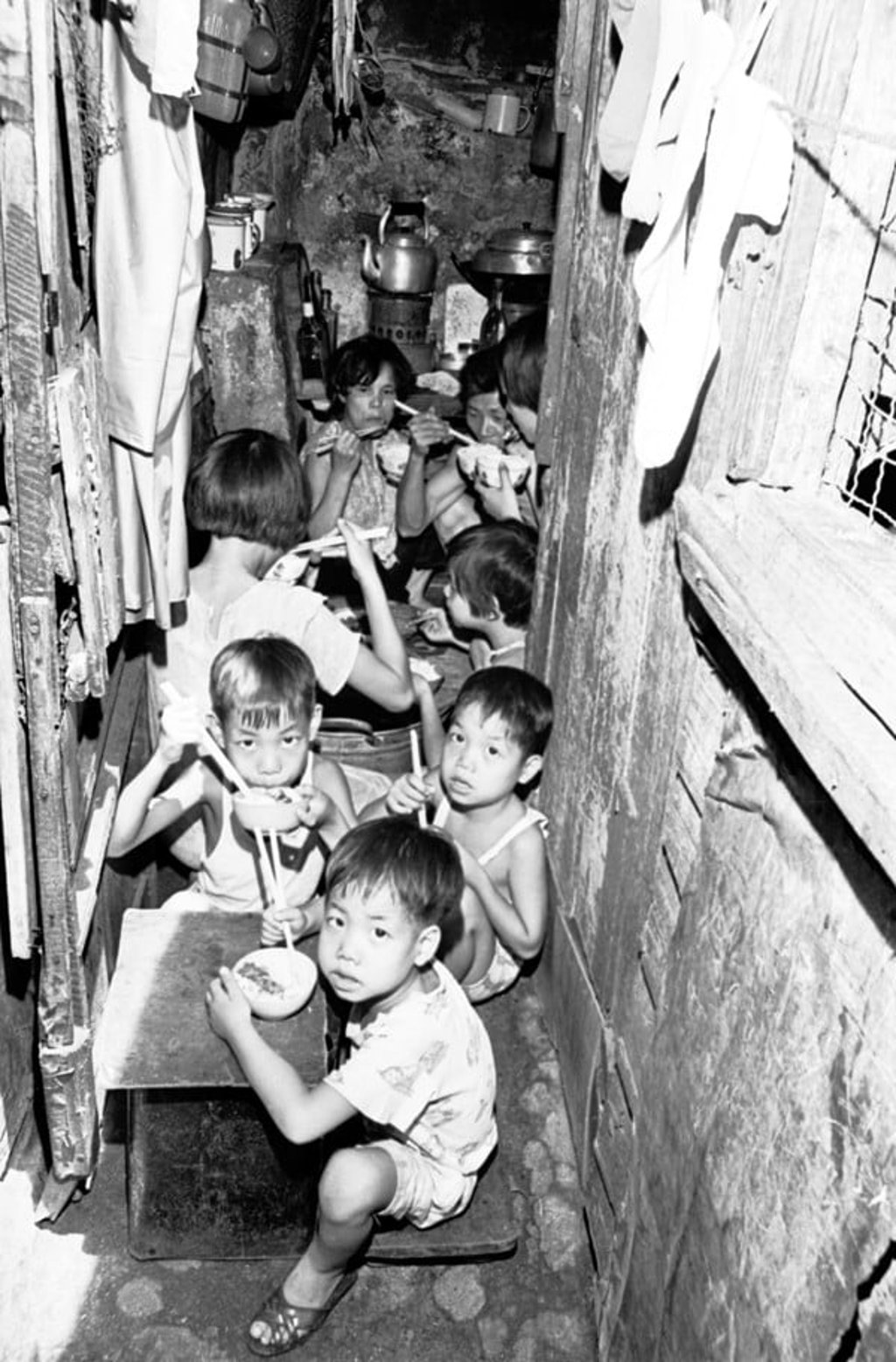
Fast forward some decades and many of those children are still of working age; two more decades will pass before they are all too old to work. Meanwhile, jobs have to be found, and it is now far more expensive for the government to subsidise their employment than it would have been to provide better educational opportunities in the first place. Groups of late-middle-aged people clustered together brushing up and bagging leaves in a park, or sweeping roadside gutters, or hosing out public lavatories, graphically illustrate this fact.
Unsurprisingly, one of the most common threats made to schoolchildren is that if they don’t study hard and pass their exams, all they will be fit to do in life is sweep the streets.
In spite of the fact that well-swept streets are a basic necessity of civilised life, being a street sweeper remains a low-status occupation in Chinese society and so, in times of political upheaval, sending formerly higher-status individuals out to sweep the roads was one of the most humiliating punishments available. The Chinese Communist Party adopted such an approach after its assumption of power, in 1949, and authenticated accounts of those who couldn’t tolerate the shame of being sent out onto the roads with a broom, and committed suicide soon afterwards, are commonplace.