Then & NowMenswear in Hong Kong: from monkey jackets to safari suits, how fashion adapted to climate
Summer attire for the gentleman about town has undergone several transformations over the decades to adapt to hot, humid Hong Kong

Dressing for the Hong Kong summer was a challenge before widespread air conditioning. Across Asia, from the earliest days of European settlement, home attire for Europeans was whatever was most comfortable in a particular climate. In Southeast Asia, baggy batik-patterned pyjama trousers were teamed with a loose-fitting Indian-style shirt made from the lightest cottons, with a sarong or lungi worn as a cool sleeping garment that could be drawn up around the body in the early hours of the morning, when temperatures dropped a few degrees.
From the early 20th century, traditional evening dress was adapted for tropical conditions. Dinner jackets evolved into what was popularly known as “Red Sea rig”; sea passengers on the journey from Britain changed from black into white dinner jackets, often shortened to form “monkey jackets” or “bum-freezers”, after passing through the Suez Canal. These jackets came down only as far as the lower back, a few inches below the cummerbund, and usually tapered to a waistcoat-like point at the front. “Red Sea rig” is seldom worn today, except as a consciously recherché sartorial statement, or to fancy-dress parties.
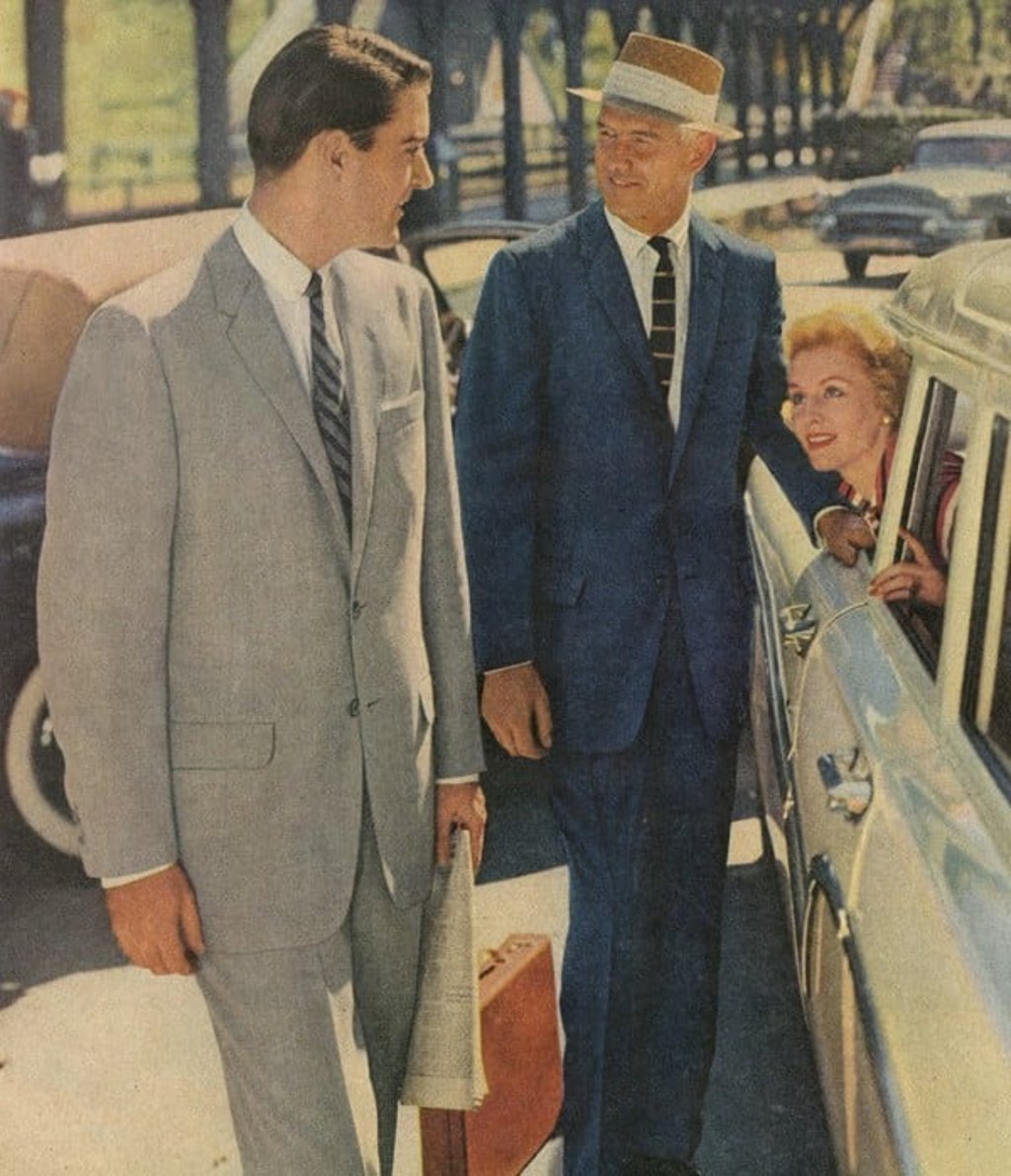
By the 1950s, Palm Beach suits were regarded as archaic and were occasionally ridiculed in period memoirs as “ice-cream suits”. They were obsolete by the ’60s.
Safari suits were introduced in Hong Kong in the ’50s and became commonplace over the following two decades. These were designed as a practical response to Hong Kong’s summer climate, as heavier-weight woollen cloth was simply too uncomfortable.