Then & NowMandarin’s Hong Kong house shows Sino-European cultural exchange was a two-way street
Decades before Britain leased the New Territories from China, a house built for a retiring civil servant featured fanlights borrowed from European architecture – evidence of longstanding Western influence over the Pearl River Delta

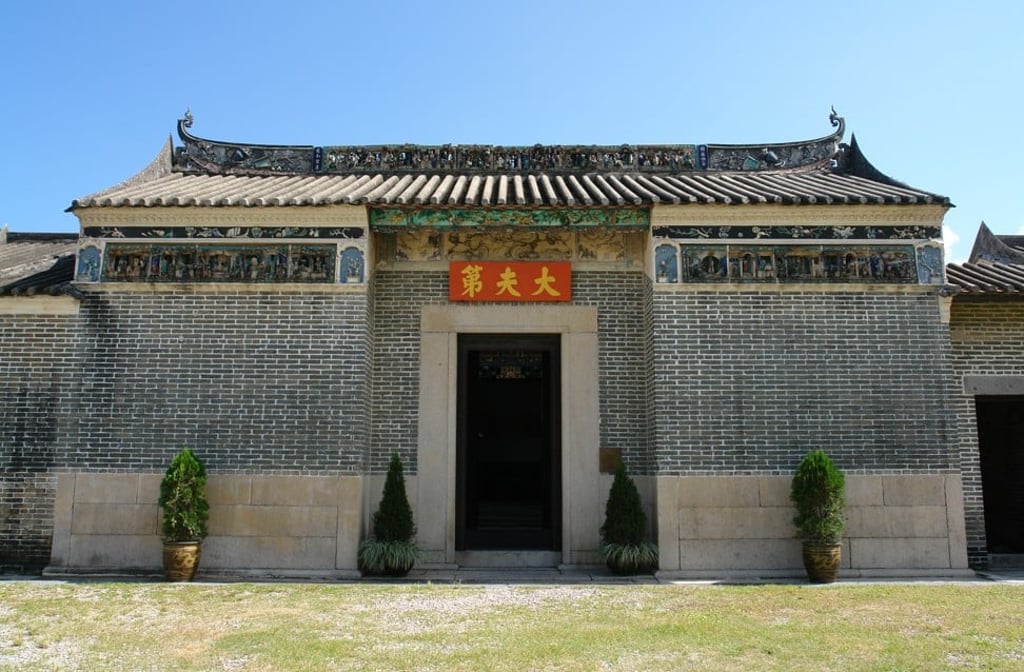
At San Tin, in the northern New Territories, so close to Shenzhen that the neighbouring city’s tower block windows are clearly visible, is one of Hong Kong’s more unusual architectural anomalies. Tai Fu Tai – referred to in tourist literature as “the Mandarin’s House” – contains a curiosity with a broader cross-cultural significance than the building itself would otherwise imply.
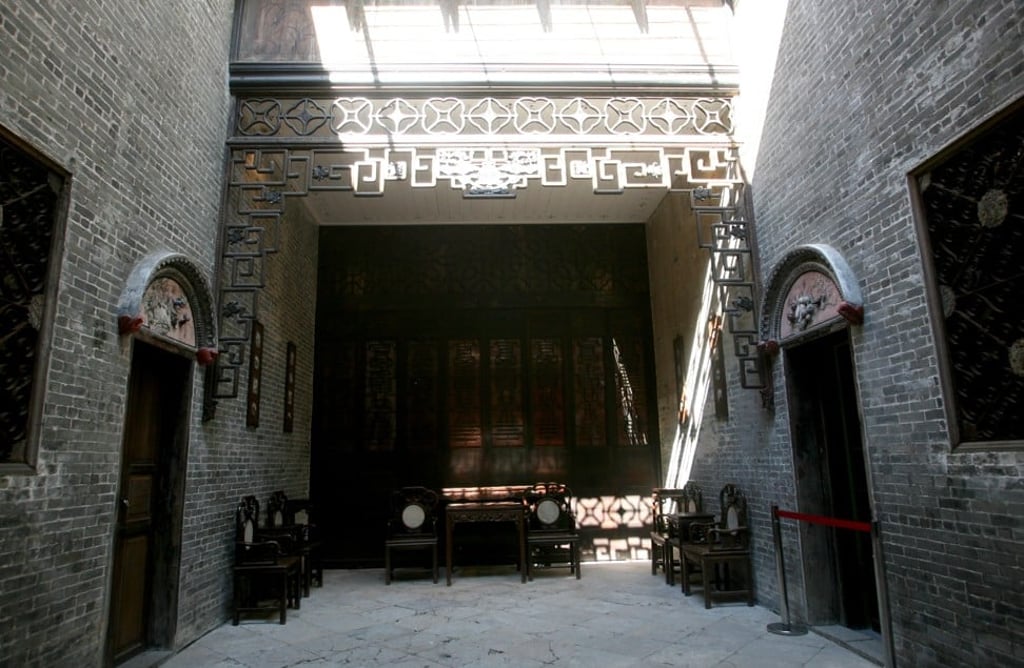
Just inside the interior courtyard, set into the walls, is a pair of unmistakably European fanlights, surrounded by ornately carved lime-plaster mouldings, also Western in design provenance. Their individual panes are hand-painted with pastel-coloured designs, popular when the house was built. Such decorative features were commonplace in Hong Kong, Macau and the China coast’s emerging foreign cities, such as Shanghai, in the mid-19th century. So why should these be special?
Kaiping watchtowers a curious legacy of overseas Chinese wealth
Hong Kong Island – a British colony for less than 30 years when Tai Fu Tai was built – was remote from San Tin when Man Chuen-lung built it as his ancestral village retirement home, after a lifetime spent in civil-service posts elsewhere in China.
So where did the idea for these fanlights originate, and what does this artefact tell us about cross-cultural influences at the time?
Coin stash that puts new spin on China’s 100 years of humiliation
While most Chinese remained uninfluenced by what they experienced through casual contact with foreigners, some aspects – especially elements of the decorative arts – did rub off. And so it was at Tai Fu Tai.