Then & NowWhy traditional Chinese baby slings are back in fashion in Hong Kong
The colourful Chinese-style baby carrier is all the rage again as a new generation embraces its practicality and ease of use compared with bulky strollers and shows new interest in their Chinese heritage

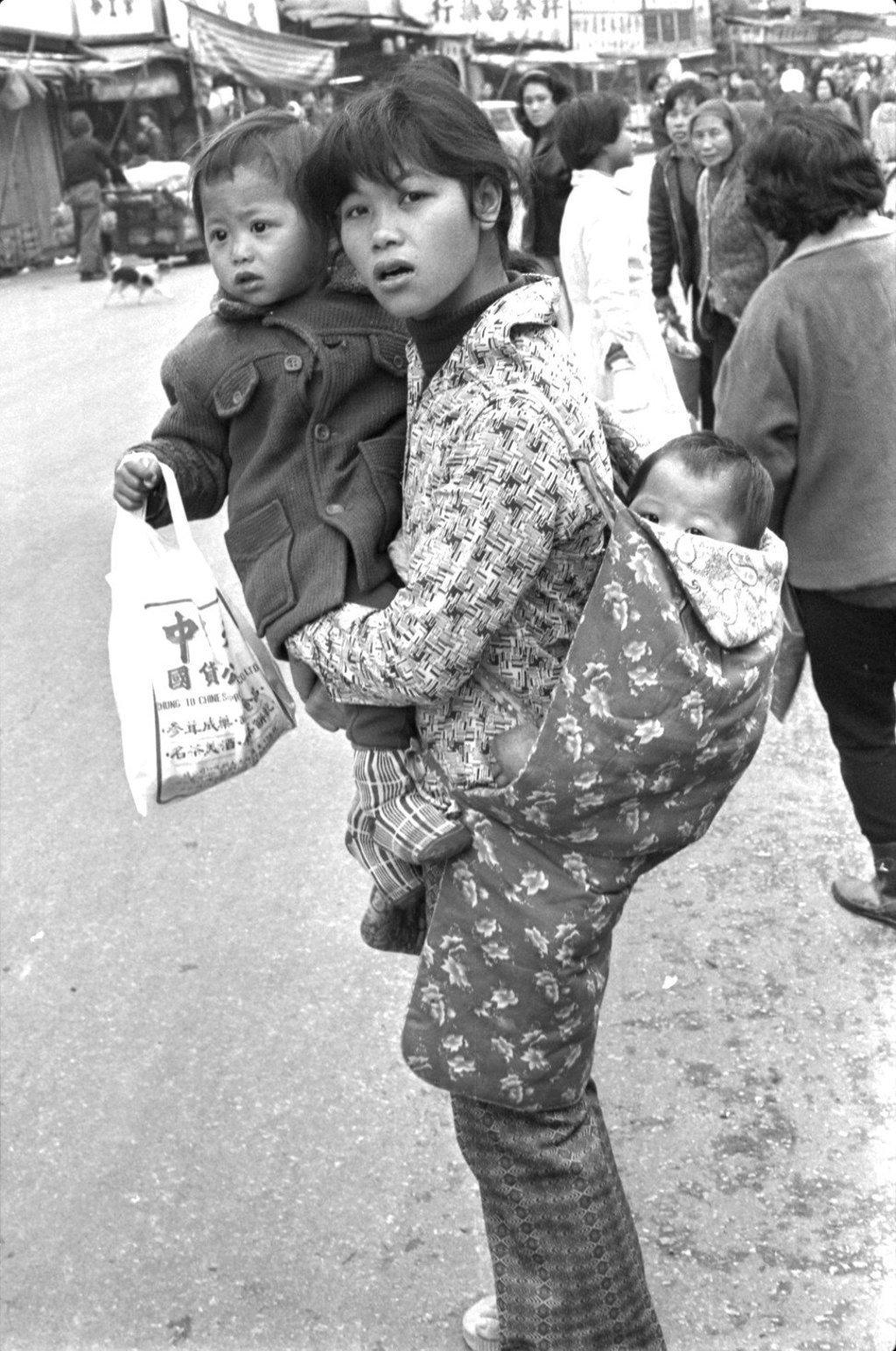
Brightly coloured cloth baby carriers slung on the backs of Chinese women were once a common sight in Hong Kong, and have recently made a comeback. Part of the reason is their lightweight practicality: unlike the modern stroller or other bulky types of contemporary infant transporter, traditional cloth carriers can be folded up and easily stored away.
Wearing the garment was (and still is) easy; the child was placed against the woman’s back, with its legs straddling her waist. Upper straps were tied around and over her shoulders, and the lower pair under the woman’s arms and child’s legs, to form a sling. Most women were involved in manual work – perhaps on fishing boats, tending fields or looking after animals – and could manage with an infant strapped to their back. As new babies were born, older sisters carried infant siblings.
In earlier times, traditional Chinese male wedding garments included a strip of red cloth draped across one shoulder and tied on the opposite hip, as an auspicious wish for children. This fabric was kept aside for later use as a baby carrier. Adult men seldom (but by no means never) carried young babies using such an arrangement themselves.
Sturdy, bright red cotton was the most commonly used material (it was also easily washable – important for those with young infants not yet toilet trained). Auspicious decorative symbols included Mandarin ducks, lotus flowers and pomegranates, as well as the characters for things such as luck, fortune and virtue. Special-occasion carriers, for use during Lunar New Year and other festivals, might be made from embroidered satin on a brocade background.