Then & Now | Latter-day Leninists bent on rewriting Hong Kong history - at least we can speak out against them ... for now
- Hongkongers once led protests against revisionist Japanese history books, yet today the man in charge of city’s schools says China never lost sovereignty over Hong Kong
- English essayist George Orwell wrote of sinking ‘to a depth at which restatement of the obvious is the first duty of intelligent men’. Hong Kong has reached that point

In the 1980s and 90s, the politically motivated revision of Japanese school history textbooks caused a furious uproar among teachers, academics and public intellectuals across East Asia. These new versions of the recent past deliberately downplayed – and in some instances flatly denied – the incontrovertible evidence of Japanese militarism in the 30s and 40s, first in China and then in Southeast Asia and the Western Pacific.
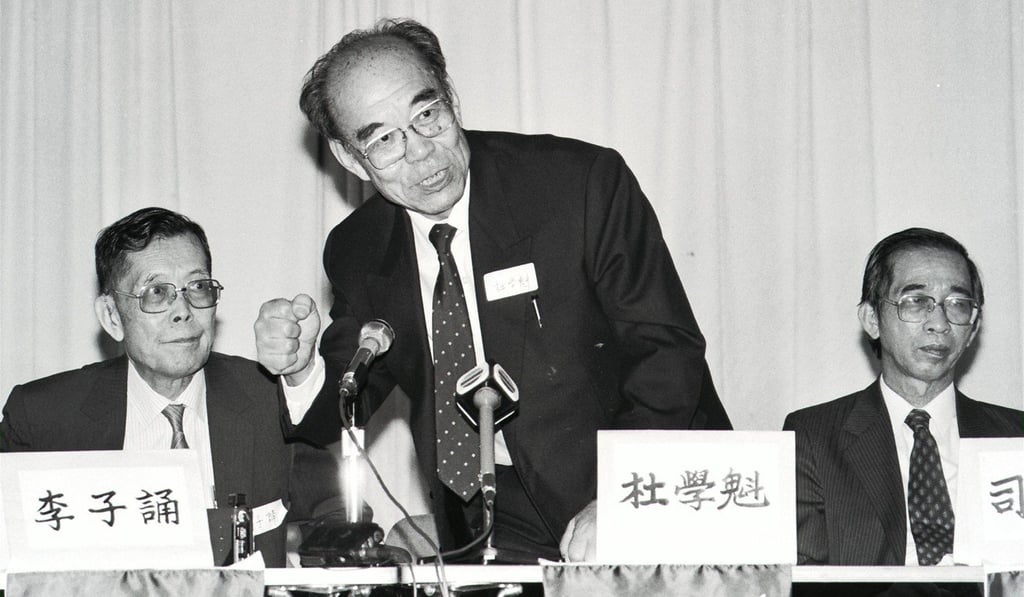
In Hong Kong, well-articulated, fact-based public rebuttals were swiftly orchestrated by respected teachers with undisputed Chinese patriotic credentials. Leading the charge were Andrew Tu Hsueh-kwei (husband of redoubtable social activist Elsie Tu) and school principal-turned-legislator Szeto Wah – both of whom were old enough to remember the Pacific war years as adults. Angry protests also occurred in places such as Korea, which had direct experience of Japanese colonialism.
While the Japanese textbook revision controversy continues to reverberate, some Hong Kong “educators” clearly learned nothing from the episode. Hong Kong Secretary for Education Kevin Yeung Yun-hung recently parroted an extraordinary alternative history: China never lost sovereignty over Hong Kong in the first place. By extension, references to the 1997 “return” or “handover” of sovereignty from Britain to China are redundant.
Neatly ignored by these comments was the basic fact that three international treaties – the Treaty of Nanking in 1842 (which ceded Hong Kong Island to Britain “in perpetuity”), the Treaty of Tientsin in 1858 (which ceded the Kowloon peninsula and Stonecutters Island under similar conditions), and the Convention of Peking in 1898 (which leased what became the New Territories for 99 years) – were signed by representatives of Britain and China.