Destinations knownHow Japanese airlines became the new front line for the great mask debate
- At least two Japanese flights have been delayed or diverted because passengers refused to wear face masks
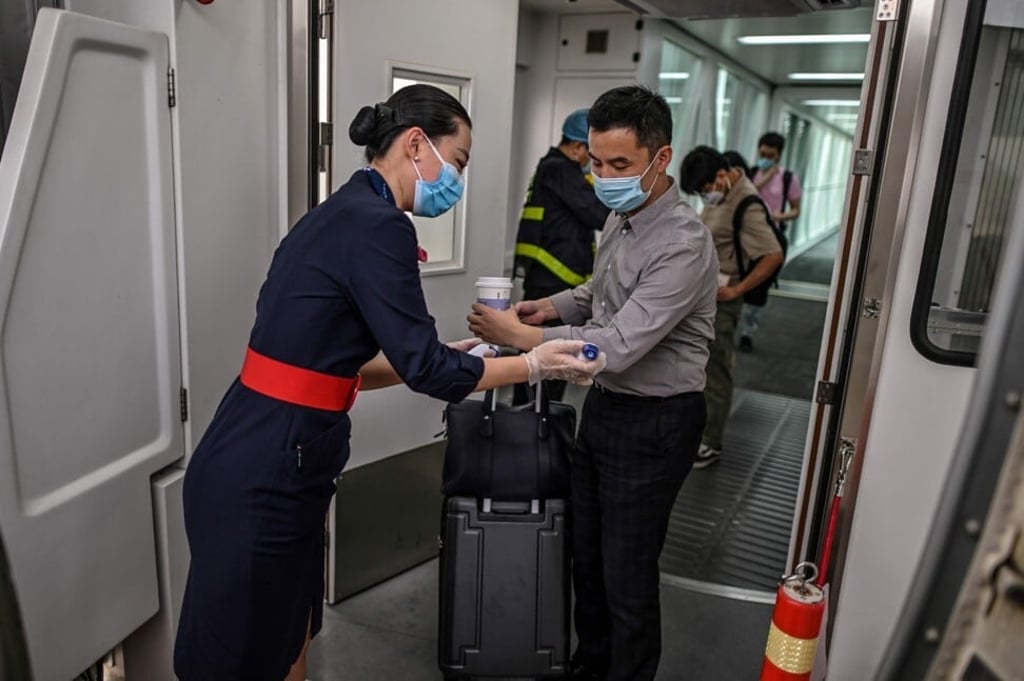
- Most airlines in Japan and beyond ask that passengers cover their faces at airports and while in the air

The great mask debate has not quite reached the final frontier, but it has entered a new one – Japanese airspace. On September 7, a Peach Aviation flight from the northern island of Hokkaido to Kansai International Airport, near Osaka, was forced to make an unplanned stop at Niigata Airport, in central Japan, because a passenger refused to wear a face mask. He had to be ejected, ultimately causing a delay of two hours and 15 minutes, according to The Japan Times.
Less than a week later, The Mainichi newspaper reported, “A man was ejected from a flight ahead of take-off in Japan’s northernmost prefecture of Hokkaido on September 12 after he failed to provide a reason as to why he refused to wear a mask.” The Hakodate-bound Hokkaido Air System plane was grounded for about 30 minutes after the man declined to don a mask.
In a statement to The Mainichi, Hokkaido Air System said: “If there is a reason for not wearing a mask, then we can make considerations such as spacing out passengers’ seating. We’d like people to consult with us.”
Most Japanese airlines – like their international counterparts – ask that passengers wear face coverings at the airport and while on board. Skymark Airlines, the self-proclaimed “most comfortable and most affordable” of the country’s carriers, has taken a different approach, scattering available seating rather than demanding masks be worn, according to Time Out Tokyo. (Destinations Known couldn’t find any mention of masks on Skymark’s website but there was a notice about a “new non-smoking policy” that stipulates “smoking and the use of all smoking devices is prohibited anywhere on board”, which is good to know.)
Frankly, it was only a matter of time before the anti-maskers took it mile high. After all, they have a supporter with stratospheric reach in United States President Donald Trump, who didn’t wear a face mask in public until July, several months into the pandemic. What is most surprising is the country in which these anti-mask ejections occurred – we’re much more accustomed to reading about the “weaponisation” of face masks in the West.