Flashback: Celine and Julie Go Boating (1974) – Jacques Rivette experiments with cinema’s boundless narrative potential
Rivette, a leading figure of the New Wave, spends more than three hours exploring his ideas about the ways we watch the movies, but the experience is a delight

Jacques Rivette’s Celine and Julie Go Boating (1974) manages to be playful and insouciant as well as experimental – an unlikely combination, which makes for intriguing viewing. The film’s underlying purpose is to analyse the way we watch and respond to cinema, and to suggest ways it can be used to tell stories. But the idea is voiced in such a cheeky manner that the experience is a delight rather than a chore.
Rivette was a former film critic who became a leading light of the French New Wave. A mix of magic, mystery, murder and fantasy, Celine and Julie became his biggest box-office success when it was released in France, although its 192-minute length, and unusual structure, mean that it has often been difficult to see it elsewhere.
Rivette was a highly literate director, and Celine and Julie draws on two stories by Henry James, as well as Lewis Carroll’s Alice’s Adventures in Wonderland. The film contains a story within a story – a kind of alternate reality that the two female protagonists at first observe and then enter and manipulate – as well as cinematic tricks that allow the two to effectively swap roles whenever they fancy.
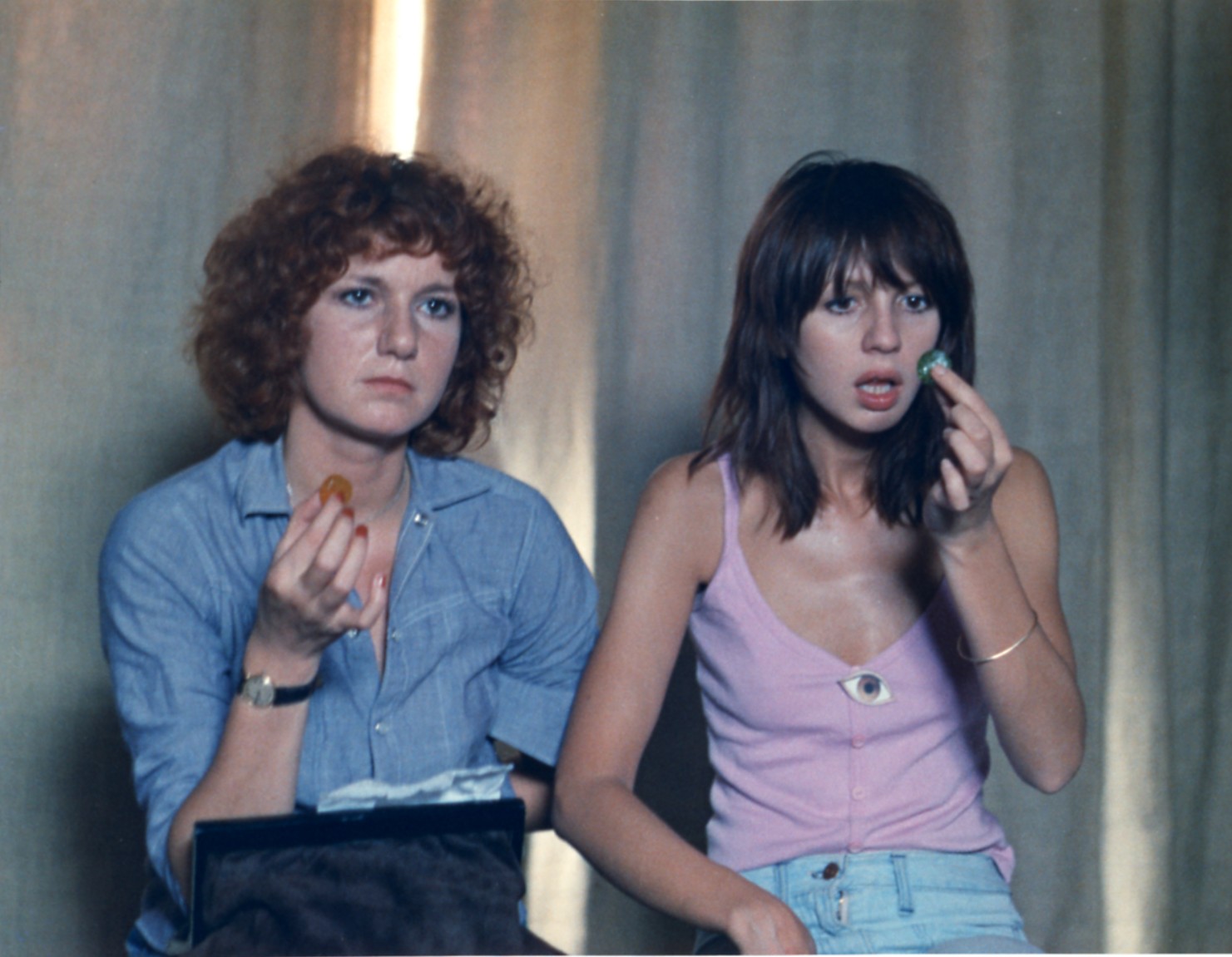
Celine (Juliet Berto) and Julie (Dominique Labourier) meet in a park in a scene that references the White Rabbit in Alice, and move into an apartment together. One day, Celine finds herself inside an old house, in which two women are competing to marry a widower who has vowed never to remarry while his young daughter lives. Celine and Julie realise they can enter the house at will by eating a special sweet.