Art house: A Ghost Story – Casey Affleck, Rooney Mara in reflective, metaphysical drama about time’s passing
Director David Lowery dispenses with dialogue in a thought-provoking, if a little muddled, reflection on life

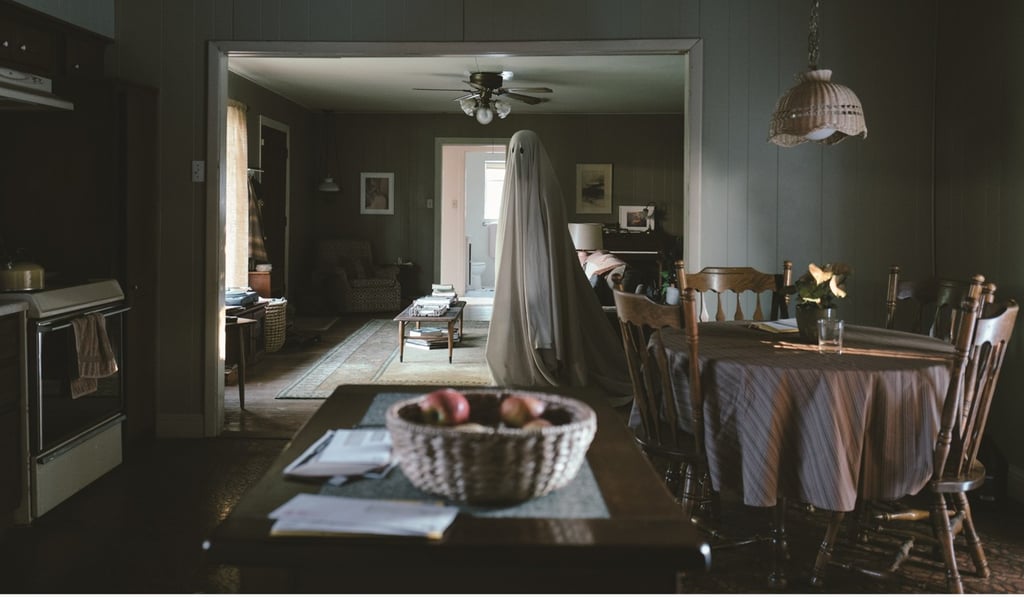
Most contemporary films about the supernatural fail because they aren’t scary enough. The delightful thing about David Lowery’s A Ghost Story (2017) is that it isn’t intended to be frightening. Instead, the director uses the genre to deliver a reflective, metaphysical drama about the passing of time; his film manages to be engaging even though the ghostly character, played by Casey Affleck, spends nearly all of it covered by a sheet with cut-out eye holes.
One of the encouraging aspects of A Ghost Story is that it’s the opposite of formulaic. Just when you think it’s going to be a low-key take on Ghost (1990) or Truly, Madly, Deeply (1990), it skedaddles in a different direction. The unconventional elements include the flowing sheet that the ghost wears, which was difficult to construct, and consisted of several layers of petticoats and a helmet under the sheeting.
The story starts conventionally, with musician “C” (played by Affleck) moving into a quiet house with his girlfriend “M” (Rooney Mara). He likes the silence, she wants to leave. Then, offscreen, he’s killed in a car crash. After “M” has left the hospital, “C” rises from his deathbed, concealed by his sheet, and returns to the house with her. Time passes, things change.