Why Bille August’s China-set war film is a Chinese box office flop: a far-fetched story, mismatched stars and a mishmash of ideas
The Chinese Widow looked to have it all: a world-class international crew and A-list stars, but its Danish director hasn’t worked in China before – and it shows – and the film presents an unbelievable vision of wartime China

With its patriotic peasants, self-sacrificing communist partisans, inept Kuomintang soldiers and lecherous Japanese villains, The Chinese Widow is politically correct to a tee, and ends with an English voice-over describing its titular protagonist as “a hero of the Chinese people”. It’s no surprise that the Shanghai International Film Festival picked this second world war drama over Ann Hui On-wah’s similarly themed Our Time Will Come as its opening movie in June.
It was equally unsurprising to see The Chinese Widow released domestically on November 10, just as Donald Trump finished his three-day visit to China. Parallels can be found in the film’s story, about a grounded American pilot receiving a lifeline from new-found Chinese friends, and the way that the beleaguered United States president left China with what he described as “incredible job-producing” agreements worth US$253 billion.
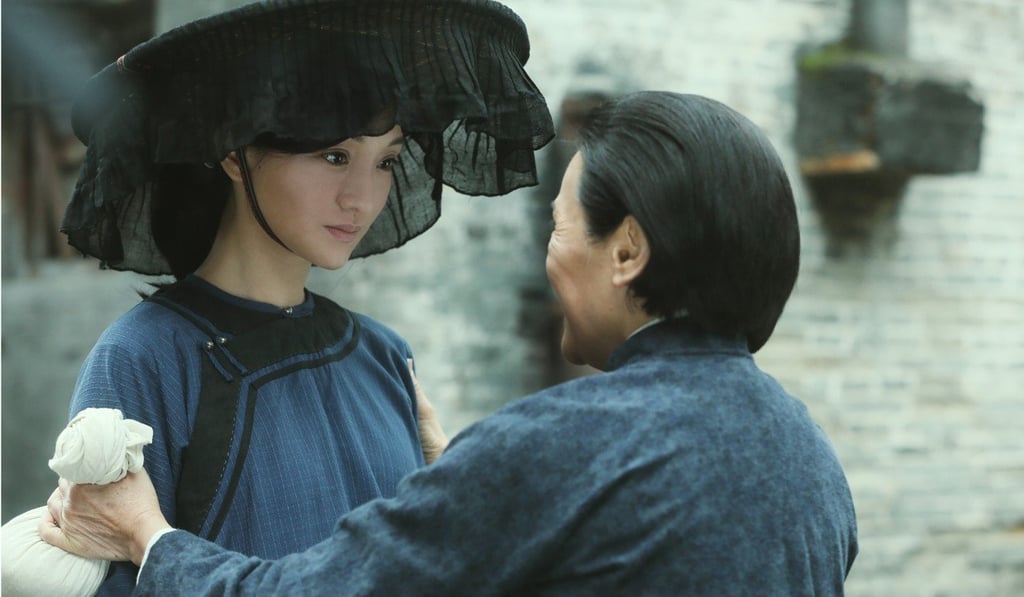
The Chinese Widow tanked, however, taking just 12.8 million yuan (HK$15 million) on its opening weekend – yet another stark reminder of the perils of foreign co-productions.
The Chinese Widow has international pedigree aplenty, with Hollywood name Emile Hirsch (Into the Wild [2007]; The Autopsy of Jane Doe [2016]) and Chinese A-lister Crystal Liu Yifei (The Four [2012]; Never Gone [2016]) in the starring roles, and two-time Palme d’Or winner Bille August (Pelle the Conqueror [1987]; The Best Intentions [1991]) from Denmark as director. That’s not to mention South African screenwriter Greg Latter, German composer Annette Focks, Swiss cinematographer Filip Zumbrunn – all regular collaborators with August, most recently on Night Train to Lisbon (2013).
That team, however, had never before worked on a film about China, and it shows: August’s depiction of wartime life is far from convincing.