New Oscars rule to give Asian documentary filmmakers much-needed boost
Hong Kong filmmaker Ruby Yang applauds the new regulations announced by the Academy and talks about her efforts to interest more Hongkongers in the genre, which is on the rise thanks to platforms like Netflix and HBO

While platforms such as Netflix and HBO – both of which have an impressive library of documentaries – are likely to be the main beneficiaries of the change, Asian filmmakers will benefit, too, as the list of competitive festivals will include competitions in the region.
“Up to now, documentary short films that have won top awards at competitive film festivals listed by the Academy have been eligible for Academy Awards consideration,” says Ruby Yang, the Hong Kong-born, US-educated filmmaker who won an Oscar in 2007 for The Blood of Yingzhou District, a short documentary about Aids-afflicted orphans in a Chinese town. “If this eligibility requirement is expanded to the documentary feature category and includes film festivals in Asia, it will give more opportunities for Asian documentary films to be eligible for the Oscar race.”
In 2015, Yang helped establish the Hong Kong Documentary Initiative at the University of Hong Kong (HKU), where she oversees the provision of seed grants to young directors in the shape of technical and financial support (of up to HK$150,000).
Yang says she has received 118 applications since the initiative started. Funding was approved for 13 of these projects, and two have since been completed. Co-directed by Han Meng and Vincent Du, China’s Forgotten Daughters, which premiered at the Los Angeles Asian Pacific Film Festival in May, probes the repercussions of China’s one-child policy; and Lorraine Ma Siu-yun’s Gateless (2018) looks at the abuse of children at a monastery in Cambodia.
The Documentary Initiative holds regular master classes and seminars by international auteurs. In February, it organised workshops led by American cinematographer Kirsten Johnson (Citizenfour [2014]) and Canadian-Chinese film editor Mary Stephen. The following month Yang presided over talks by Taiwan’s Yang Li-chou, Japan’s Kazuo Hara and Germany’s Werner Herzog.
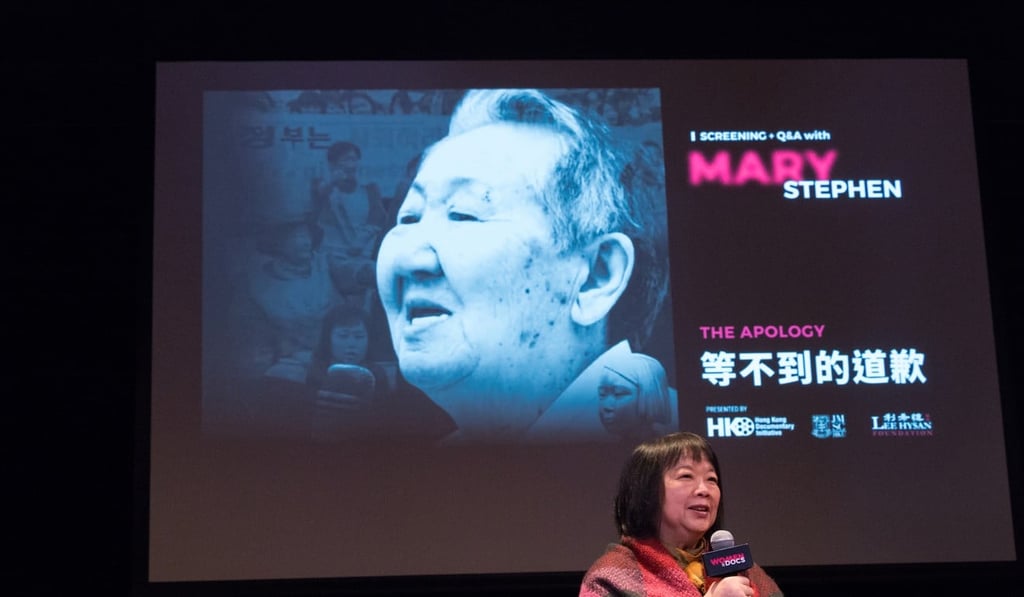
“These sessions could really ignite the young audience’s interest in documentaries – something that has grown a lot in recent years,” Yang says. Getting movie-goers interested in documentaries, she says, is just as important as nurturing young filmmakers.