The CollectorA new chapter for independent Hong Kong art bookstore Tai Yip, as long-time patron takes over
Over dim sum and tea, owner of shop dedicated to traditional Chinese art finds a saviour in journalist Tinny Cheng

Working as an independent bookseller and publisher in Hong Kong can be a dangerous business.
Nevertheless, independent bookstores seem to be thriving in Hong Kong. For instance, Stand News, an independent media company, operates more than 70 stores in Hong Kong and Macau.
Independent bookstores stock mainly Chinese-language books but some, such as Hong Kong Reader, Bleak House Books and Art and Culture Outreach, have a good selection of English titles, too. Each shop has a specific focus. Hong Kong Reader, for example, is where you’d go for academic titles in the humanities and social sciences. However, few are as specialised as Tai Yip.
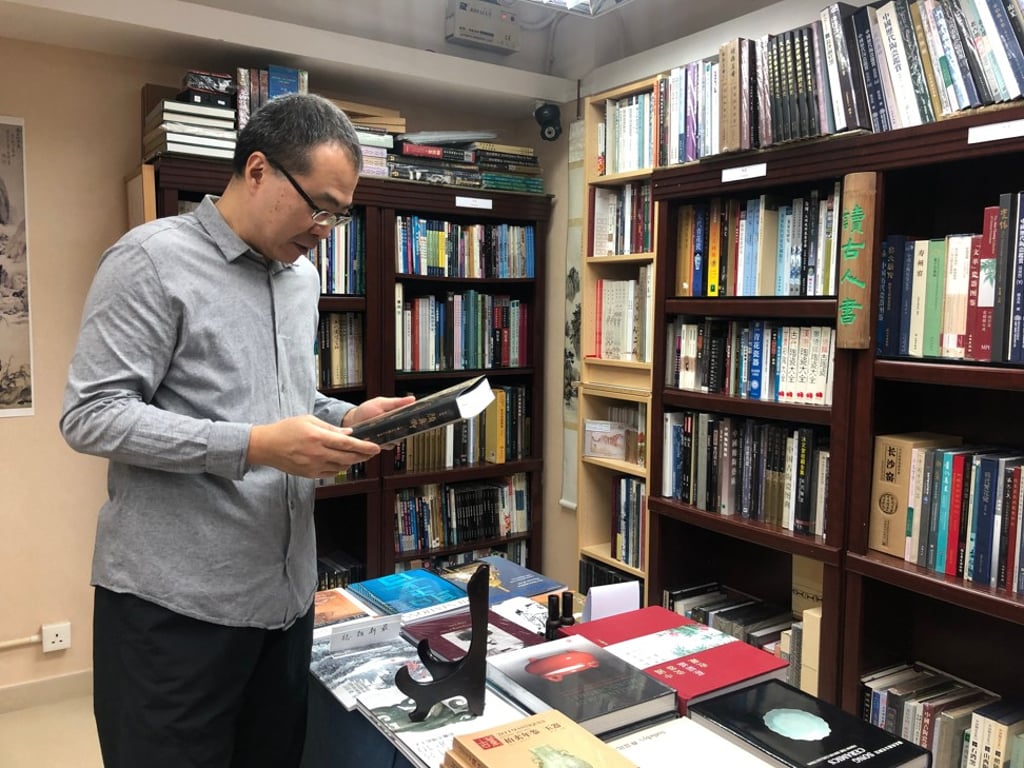
The bookstore was opened in 1975 by Cheung Ying-lau, a Baptist University Chinese department graduate, who, having been unable to find books on traditional Chinese art, decided to open a store dedicated to them. During its heyday, in the 1980s and 90s, it also published titles on how to authenticate Chinese antiques, such as a now much-sought-after series on Ming and Qing dynasty ceramics, and had four branches, including a 3,000 sq ft emporium inside the Hong Kong Museum of Art, in Tsim Sha Tsui.
When the museum announced it was closing for renovation, Cheung, who is in his 70s, began to think of retiring. He shuttered his flagship store in 2013. He had no successor in mind and believed there was no future for his business in a society that was becoming ever less cultured.