The Collector‘Interspecies erotica’ and exotic animals illustrate Japan’s history of cultural exchange at Washington gallery
- The Life of Animals in Japanese Art at the National Gallery of Art takes a thematic approach to explore the breadth of Japanese creation
- Rich and intellectually rewarding, the show features textiles, ceramics, armour, weapons, masks, figurines and dishware
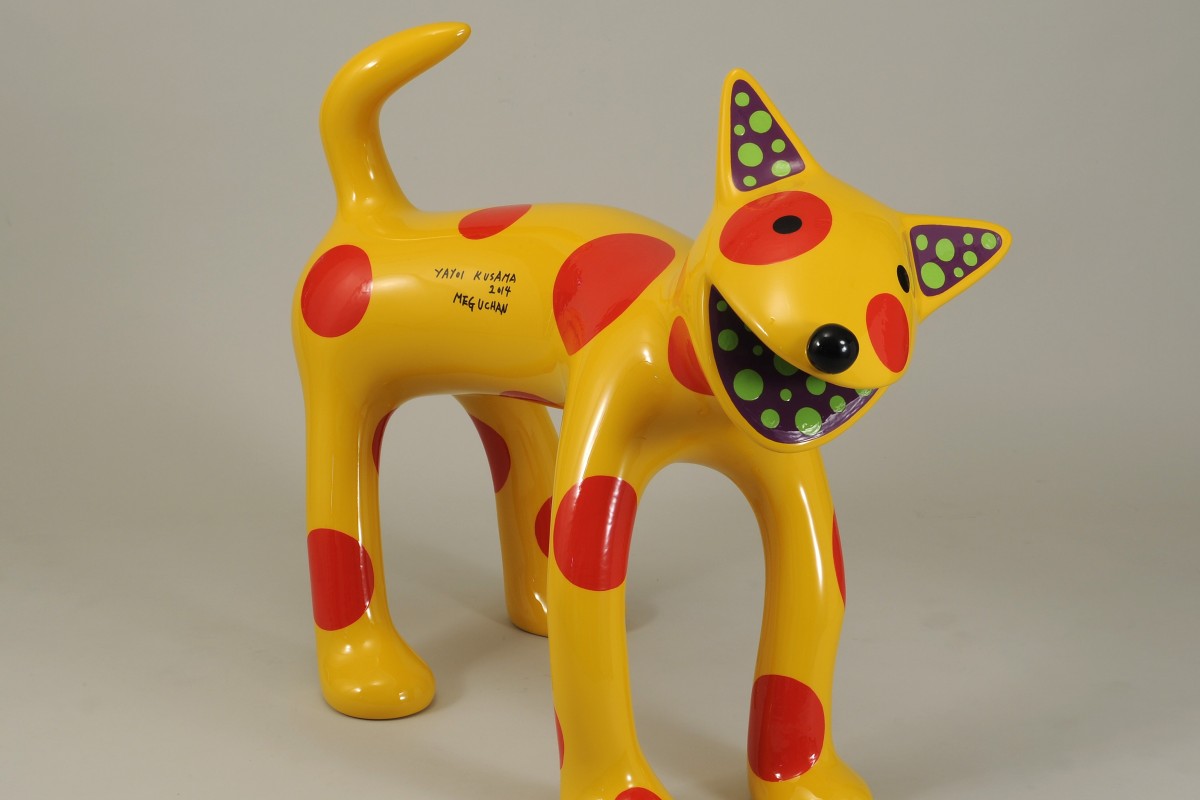
Some of the oldest and newest objects in “The Life of Animals in Japanese Art” face off in the space just outside the exhibition entrance, at the National Gallery of Art, in Washington.
Yapping silently at visitors are three of Yayoi Kusama’s brightly painted, polka-dot-festooned dogs, while nearby stands a stolid earthenware sculpture of a bridled horse with saddle, made for a burial mound in the sixth century.
The dissonance between new and old, plastic and clay, pop icon and historic artefact resolves itself nicely in this exhibition, full of rare and ancient objects as well as contemporary photography, painting and video.
The show was co-organised by the Japan Foundation and includes works from the Tokyo National Museum that rarely travel. And it uses a thematic approach to give a substantial overview of the history and breadth of Japanese artistic creation.
The old and new animals in the atrium space outside the East Building special exhibition galleries also bookend the historical range of this show – from just before the arrival of Buddhism in Japan, in the sixth century, to the present moment, in which animals remain essential to art, entertainment and the pervasive production of adorable kitsch that strikes visitors to the country as a strange and surreal cultural tic.
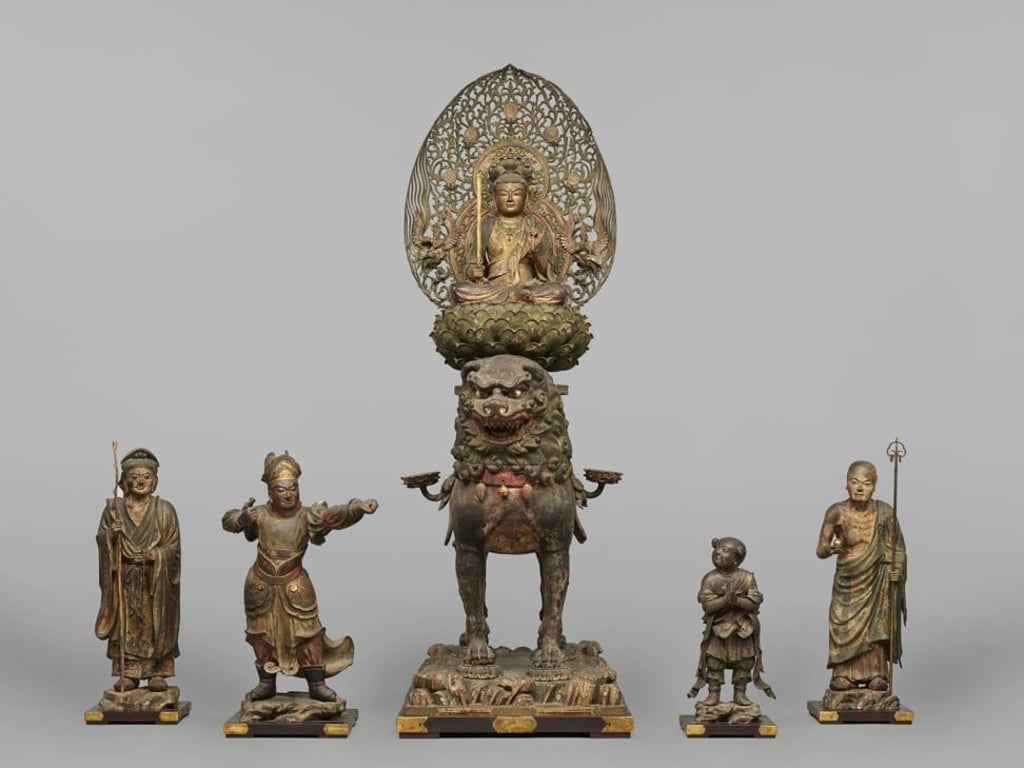
With Buddhism, imported from China (where it had arrived from India about 500 years earlier), came new animals, including those not native to Japan. Among the more intriguing sculptures is a ferocious-looking elephant with six tusks and legs that bend backward (like those of a horse).