
The CollectorWhy Irene Chou’s art was not dominated by her troubled marriage
- Her filmmaker husband’s alleged infidelities did not reflect in the works of the Shanghai-born artist
- Now an untitled work may shed light on why one of the city’s greatest artists didn’t get the credit she deserved

“Provenance, provenance, provenance”. That’s the advice auction houses have for buyers. Go for something with a proven history of transactions and ownership and you are more likely to buy an authentic work of art that has long-term value. (The small print of any auction house’s warranty shows how hard it is to get reimbursed if a painting turns out to be a fake.) Value is also increased by public stamps of approval, such as a spell in the collection of a connoisseur, or having been included in exhibitions curated by authoritative voices.
Does that mean collectors should always play it safe? No, says Catherine Maudsley, an art historian who has lived in Hong Kong since the 1980s and who advises private collectors on what to buy – and what to avoid.
We are standing in front of a 4.5-metre-wide artwork by the late Irene Chou (1924-2011) that Maudsley encouraged local businessman Victor Lo Chung-wing to buy for his MK Lau Collection of Chinese ink paintings. The work is part of the ongoing “Irene Chou Rediscovered: Paintings from the MK Lau Collection” exhibition at Duddell’s, in Central. In 2015, Lo – the chief executive of battery maker Gold Peak Industries – paid HK$375,000 for the painting at a Christie’s Hong Kong sale, a significant premium over the estimate, even though its provenance was unknown.
The authorship was never in doubt – the style and motifs are immediately recognisable and Chou’s signature and seal chop are clearly seen – but what was not known was what the untitled artwork was trying to convey and when it was painted.
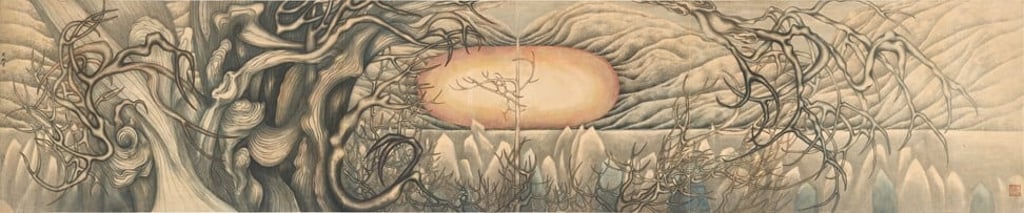
The foreground is a surreal, gloomy landscape full of menace, with the promise of shelter and warmth in the distance. The writhing tree trunks are reminiscent of Chou’s 1970s painting Tree VII, which is currently on show at the Asia Society Hong Kong’s retrospective of the artist.