How Oscar-winning Korean actress Youn Yuh-jung had to start from scratch in the US shooting Minari
- At the age of 73, best supporting actress Oscar winner Youn Yuh-jung is a legend in her native South Korea. But working on acclaimed American film Minari meant starting over

This would not have happened in Korea, she thought. For one, she wouldn’t have been scheduled at 10am on the first day of a movie shoot only to be kept waiting. Imagine keeping Meryl Streep baking in the Oklahoma heat for four to five hours in the middle of July. But the force field of celebrity was gone. Here in the Ozarks, she was not Youn Yuh-jung, the 73-year-old actress with a career spanning more than half a century. On the set of Minari, she was an old Korean lady. “A Far East nobody,” she tells me, taking a long drag from a slim white e-cigarette. As in a classic American tale, she would have to start from scratch.
“I kept thinking about her as my grandma who has come to America to take care of me,” says Lee Isaac Chung, the writer and director, who drew from his childhood memories for the film. “She [left] a good life in Korea. It felt like it was happening all over again.”
In Minari, the four-member Yi family – father Jacob (Steven Yeun), mother Monica (Han Ye-ri), and their children, David (Alan Kim) and Anne (Noel Kate Cho) – leave California for the hill country of Arkansas in pursuit of Jacob’s dream of building his own farm. It is all exposition until the arrival of Monica’s mother, Soonja, played by Youn, who comes bearing gifts from home: gochugaru, hwatu cards, an envelope of cash.
During that first week on set, Youn observed independent American filmmaking at work. Minari was made on a scrappy US$2 million budget. The actors worked on a lower pay scale and an ever-evolving ad hoc script (Chung wrote it in English and then had it translated into Korean). They had little time for pre-production, which meant everything had to happen yesterday.
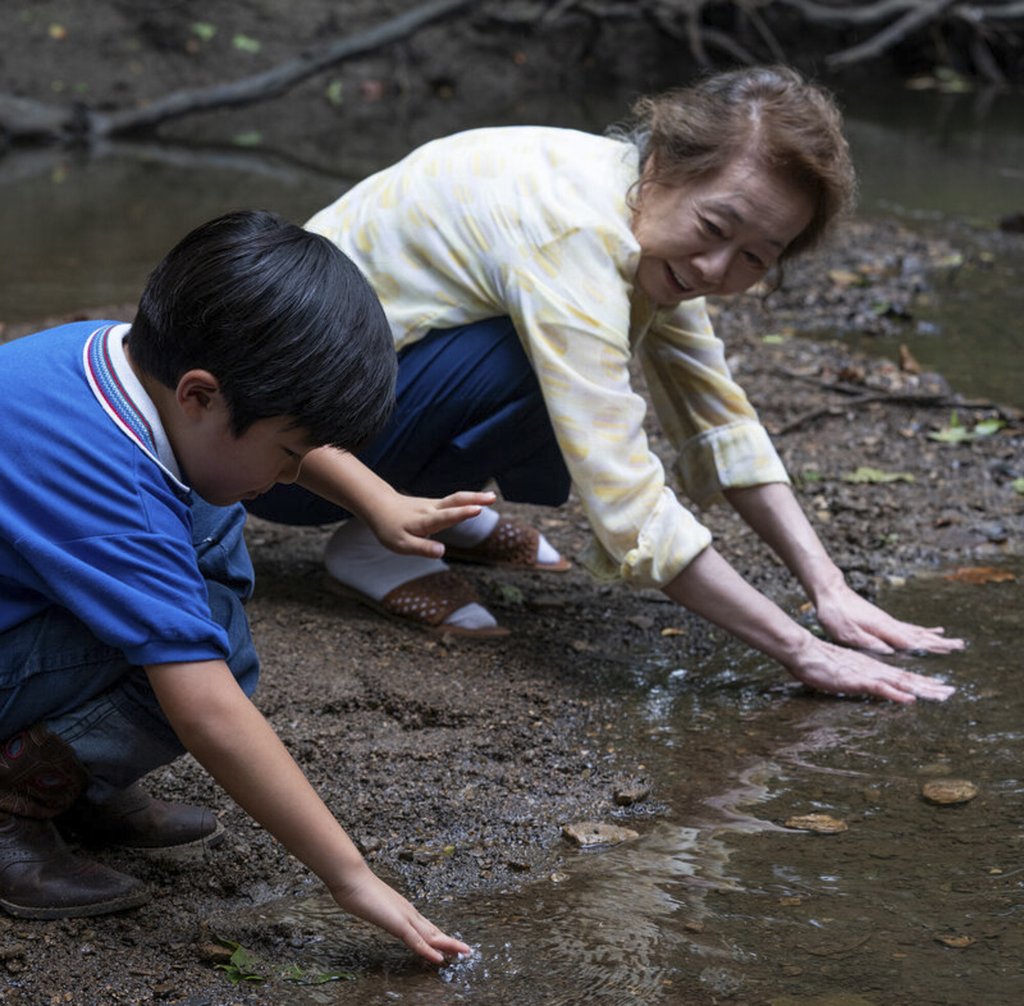
On the first day, they had nine scenes to shoot when the air-conditioning unit proved useless in the trailer home where the domestic drama unfolds. The heat was unforgiving, the pace unrelenting. They worried about Youn’s health. Chung felt the pangs of filial guilt and went to her trailer and apologised. “My first mistake in this whole situation is that I met you,” she told him. “My second mistake is that I liked you.” Later, as a joke (mostly), he knelt on the ground the way little David does in the film when he is being punished. “She’s on her e-cig and just starts laughing,” he remembers.
The thing about reverence is it makes you soft. In Korea, everyone calls Youn seonsaengnim, which translates to “teacher” or “master”. “In Korea, nobody will correct me. If I want to settle and do the same thing over and over, I’ll become a monster,” she says. Minari provided the tonic of unfamiliarity. “In Tulsa, I’m nobody to them. A newcomer. I need to prove myself with my acting.”