How an ‘ugly’ sculpture by Eva Hesse changed art student Leelee Chan’s journey from painter to contemporary sculptor
- When Leelee Chan first saw Hesse’s artwork Hang Up, as an art student, she found it ugly and disturbing
- When Chan was studying sculpture, she was reminded of Hesse’s work and it inspired her and gave her the courage to experiment

During her short career, German-American artist Eva Hesse became known for a body of work that challenged the conventions of sculpture, experimenting with unconventional materials and constantly questioning the nature of art and artistic production.
Hang Up (1966), one of her best-known works, consisting of a wooden frame wrapped in a bedsheet with a loop of metal tube protruding from it, marked her transition from painting to sculpture. Hong Kong contemporary sculptor Leelee Chan tells Richard Lord how it changed her life.
Like Eva Hesse, I started off as a painter: we’re really similar. This was the first Eva Hesse piece I encountered, when I was an undergraduate student in the painting department of the Art Institute of Chicago, in 2004.
I always walked through the museum to get to my classes. There was a small section of contemporary art, and I remember seeing her work for the first time; I had seen her name in an art history book before, but nothing else. At that time I only knew people like Van Gogh and Dali – I didn’t even known Jackson Pollock – so my understanding of the work was minimal.
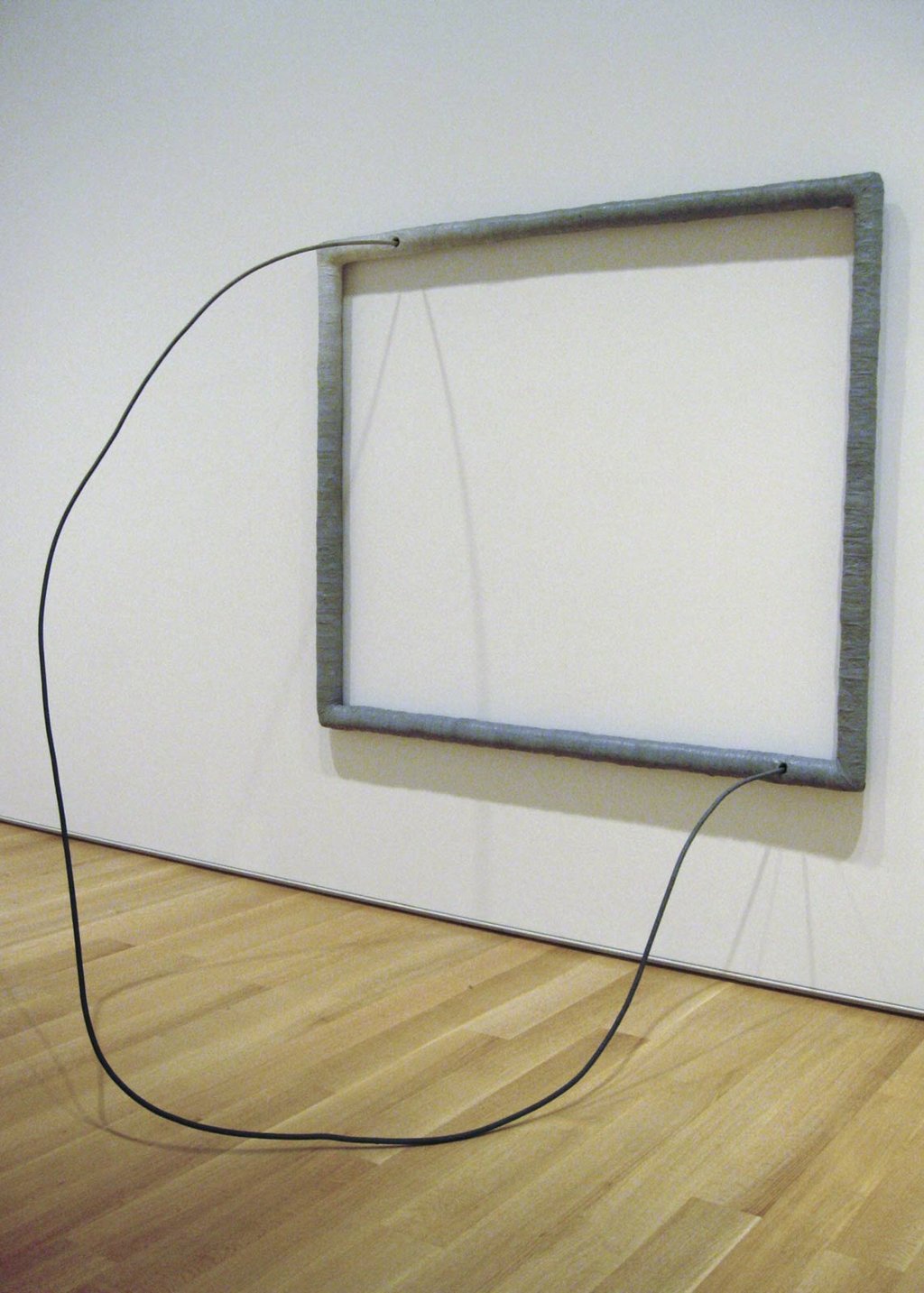
It’s made from a bedsheet, with a steel tube extending from it; the steel is industrial, but with a bedsheet, which is personal. The frame we use to stretch canvases is used as a hanging device. It’s like a painting but it’s not a painting. It asks: what is a sculpture and what is a painting?
For me, seeing this work in a museum was shocking. I didn’t like it, I didn’t understand it and I didn’t know how to look at it. I wondered why they would have something so ugly in a museum. But it also made me want to find out more. I realised that art can be subversive – it was a quality I had never been exposed to.