How seeing 12 exquisite Qing dynasty porcelain dishes on a UK museum visit changed the life of a maths student
- Gigi Yu was studying in London when she first saw the porcelain collection, made during the Qing dynasty’s Yongzheng era
- This got her interested in Chinese art history, and led to her current job as head of Chinese ceramics and works of art at Bonhams auction house

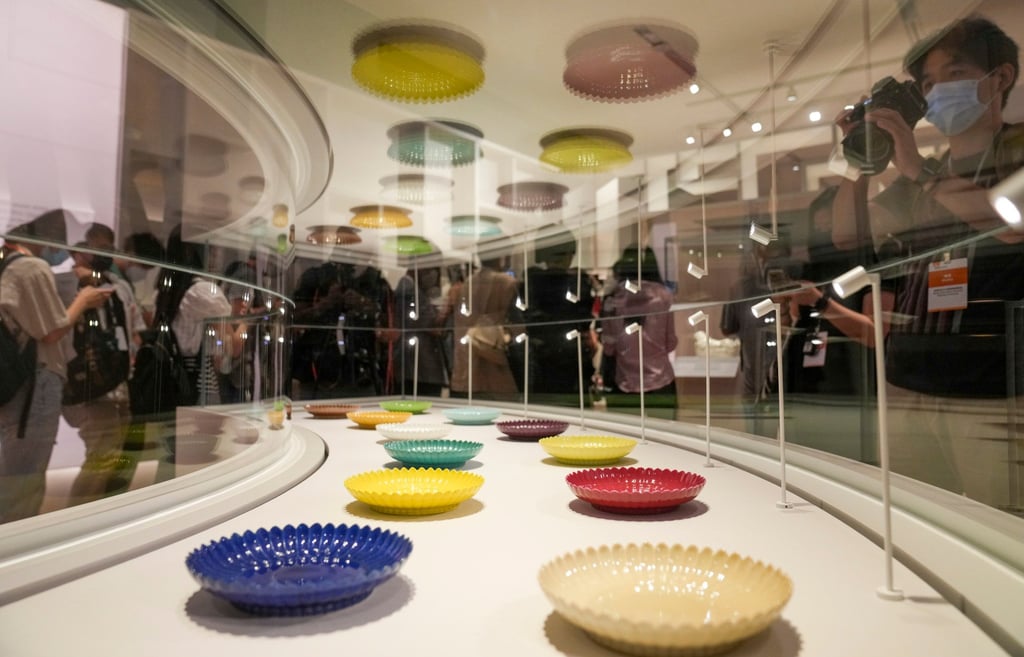
A set of 12 chrysanthemum porcelain dishes from the Qing dynasty’s Yongzheng era (1722 to 1735), part of the collection of the Palace Museum in Beijing, combines faultless craftsmanship with the exquisite aesthetics of the reign. Gigi Yu, head of Chinese ceramics and works of art in Hong Kong for auction house Bonhams, tells Richard Lord how they changed her life.
The dishes are on display at the Palace Museum in Beijing, but by coincidence they’ve recently been on display at the Palace Museum in Hong Kong. When I first saw them, though, it wasn’t in the Palace Museum. It was at the Royal Academy of Arts in London.
There was an exhibition called “China: The Three Emperors” in 2005 and 2006. I was a student then, at University College London. I grew up in Hong Kong and went to the UK for further education in 2005. I studied maths and statistical science, not because I loved it; it was whatever would get me to graduation.
I first encountered Chinese art history in the UK. It was a bit ironic. In Hong Kong, there are not as many resources; there are not many collections you can look at.
In London, there’s not just the British Museum, with the amazing and comprehensive Percival David Foundation of Chinese Art, a collection of Chinese ceramics from the Song dynasty to the Qing dynasty (AD960 to 1912), which is well known around the world, but also the V&A, which has a very good collection of Chinese art.
That’s how I started to absorb Chinese art history.