How Oscar-winning documentary The Cove made one Hong Kong marine biologist ‘switch 180 degrees’ to fight against dolphin captivity
- The Cove shocked the world in 2009 by documenting Japan’s brutal dolphin drive hunting, and it affected Taison Chang, who then worked at Hong Kong’s Ocean Park
- He quit his job with captive animals and began fighting against the industry. Chang says it’s important to educate the public that dolphin hunting is wrong

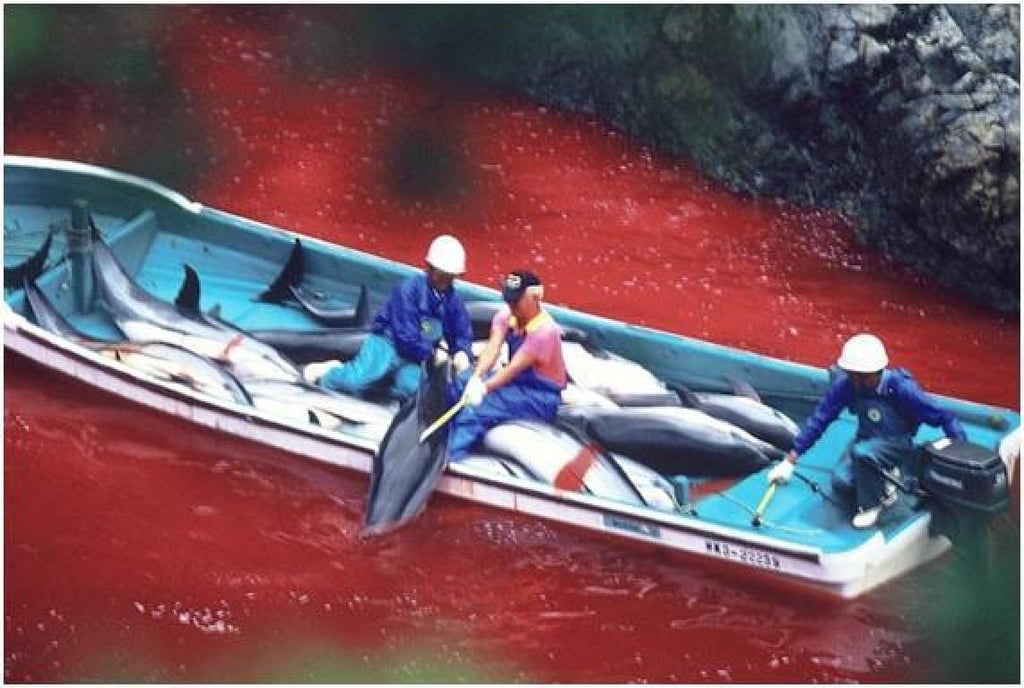
For Oscar-winning documentary The Cove (2009), filmmaker Louie Psihoyos accompanies conservationist Ric O’Barry as he attempts, in the face of stiff resistance from local fishermen and officials, to document dolphin hunting in Taiji, Japan, from which some animals are sold to the global marine park trade and others are slaughtered for meat.
Taison Chang Kai-tai, marine biologist and chair of the Hong Kong Dolphin Conservation Society, tells Richard Lord how it changed his life.
I saw it around 2010, when it was aired in Hong Kong, at one of the cinemas. It redefined the concept of the relationship between humans and nature for me.
For my undergraduate degree, I studied general biology: cell, marine, plant. Marine biology at that time was not really what I wanted to go into, but during my studies at HKUST (Hong Kong University of Science and Technology), I decided I would go into working with animals.
In Hong Kong, there are really not many options. Ocean Park – an aquatic life-focused theme park, in the city’s Southern district – is an organisation a lot of students doing biology think about; I went there to get experience and ended up getting a job.