How a famous ink rubbing of Chinese calligraphy by Cai Yong changed a museum research fellow’s life
- An ink rubbing of the ‘Stele for Xia Cheng’, attributed to calligrapher Cai Yong, can be found in the collection of Chinese University of Hong Kong’s Art Museum
- Peggy Ho, research fellow at the museum, originally saw only the superficial beauty of the calligraphy, but now better understands its deeper meanings

Xia Cheng Bei, or the “Stele for Xia Cheng” (circa AD170), attributed to renowned calligrapher Cai Yong, is an Eastern Han dynasty stele, a form of ancient monument, describing the family history and life of Xia Cheng, which embodies Confucian ideas of moral rectitude and edification.
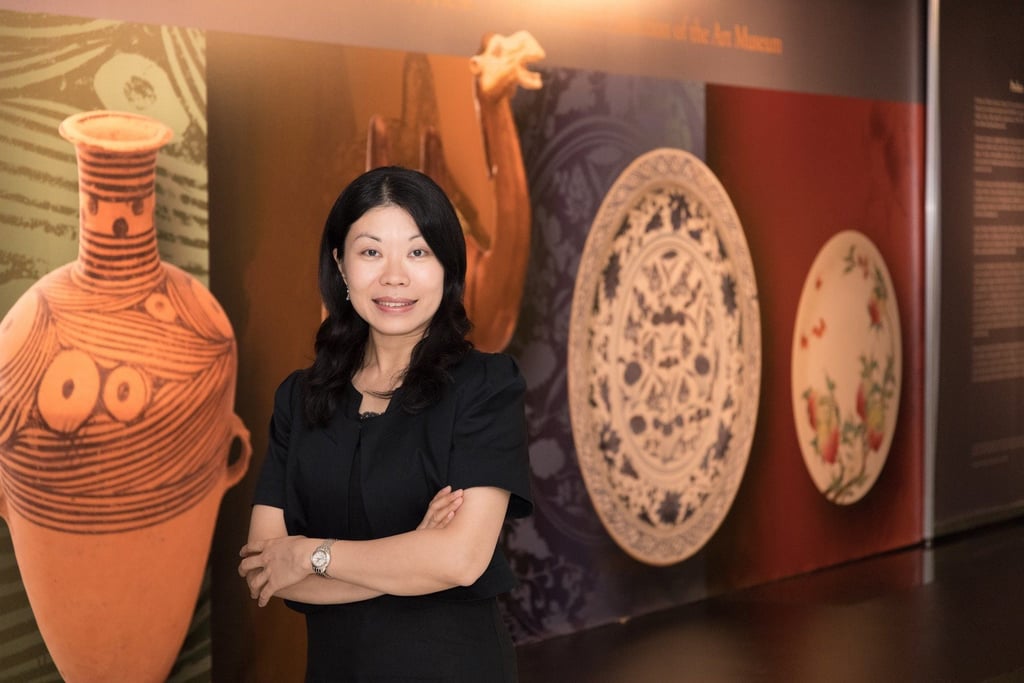
A Song dynasty ink rubbing of it can be found in the collection of Chinese University of Hong Kong’s Art Museum. Peggy Ho Pik-ki, research fellow at the museum, tells Richard Lord how it changed her life.
After I completed my undergraduate studies in geography at Chinese University, I learned about the Stele for Xia Cheng when I was preparing for the entrance examination for the master of philosophy in Chinese art history.
The original stele had been lost for a long time, and I saw the rubbing in a catalogue.
I saw it in a 2001 exhibition of the university’s Art Museum. The rubbing is very famous, and I was surprised to learn that it was in a collection at my university.