ReviewMichael Palin retraces final journey of ill-fated HMS Erebus in new book, tries to piece together ship’s tragic end
The beloved broadcaster and actor brings the 19th-century Royal Navy ship and its crew to life as he relives the perilous expeditions it undertook, even if routine naval life did not always prove exciting

Erebus: The Story of a Ship
By Michael Palin
Hutchinson
Broadcaster and actor Michael Palin’s televisual adventures have taken him around the world, from pole to pole, through Brazil and “new Europe”, across the Sahara and Himalayas, and along the great railway lines of Britain. He was once president of the Royal Geographical Society and, a member of surreal comedy group Monty Python, Palin has always injected his accounts with gentle irony and wit.
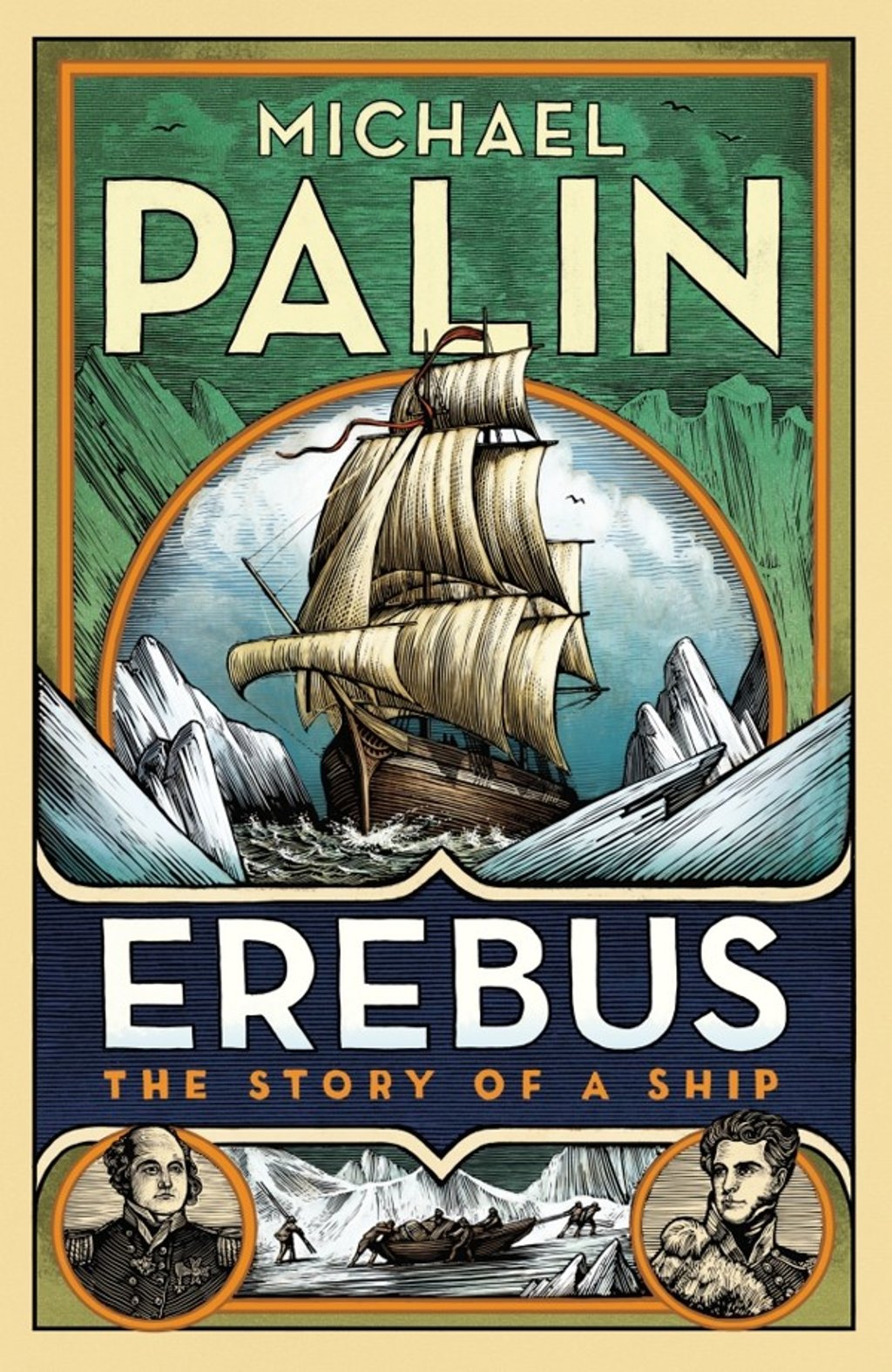
Sailing in the first half of the 19th century, during the reign of Queen Victoria and when British hegemony was unchallenged, the frontiers that the Royal Navy’s HMS Erebus crossed were scientific rather than military. The mission of its early voyages was to gain knowledge of the global position – through magnetic data – of various landmasses. (This, Palin says, would enable the Victorian navigational equivalent of a global positioning system.)
Subsidiary pursuits included naturalist exploration and the cataloguing and bringing back to Britain of various specimens, and Palin conveys wide-eyed wonder at such discoveries. But, at a time when neither pole had been reached, the expeditions are where the true adventure lies, and the Erebus travelled further south than any ship had before.
Leaving London in 1839, the vessel made its way to Simon’s Town, in South Africa, and then, in 1840, to Hobart, in Tasmania (then called Van Diemen’s Land). An extensive Antarctic tour followed in 1841, before a stop in New Zealand, and then another Antarctic exploration along a similar route in 1842. The ship made its way to the Falkland Islands and the Tierra del Fuego archipelago before (the crew’s teeth rather gritted) one final polar expedition to the northernmost point of the Antarctic Peninsula and further southeast, eventually returning home via Rio de Janeiro, Brazil.