ReviewLong Peace Street: Jonathan Chatwin walks 30km through Beijing and its past
- The writer digs through the city’s 3,000-year history on a trek down Changan Jie, or Long Peace Street
- Starting in Shougang, in the west, he passes sites of historical and cultural importance

Long Peace Street
by Jonathan Chatwin
Manchester University Press
3.5/5 stars
Biographer Ted Morgan once described poet Allen Ginsberg’s lengthy lines in Howl (1956) as Whitmanesque “laundry lines”, on which to hang everything in human life, including sex, madness and death. Likewise, Jonathan Chatwin uses a 30km walk along Changan Jie (Long Peace Street), a road running east to west through Beijing, on which to hang musings about the city, its history, people, politics, culture, protest movements, food, shopping, architecture, climate, calendar, urban planning, transport and wartime experiences.
His journey begins at the city’s westernmost periphery and follows the ruler-straight route eastto Sihui subway station. Although the journey is linear, the book is like a series of archaeological excavations, stopping frequently to dig beneath the surface of present-day neighbourhoods. A town of considerable antiquity – the first walled city, Jicheng, was built here in about 1045BC – Beijing has survived successive invasions, incursions, revolts and dynasties, and, like Rome and Jerusalem, accreted many layers of history.
The story starts in the suburbs, near the sixth ring road, at the former Capital Iron and Steel Works (Shougang). Chatwin presents it as a metonym for Chinese industry under communist rule. Built up as a centrepiece of heavy industry, the site once provided everything a worker might need: “canteens, schools, dormitories, clinics and shops”, and its own newspaper. The maniacal drive to produce ever more steel (regardless of quality) contributed to the Great Leap Forward, and the subsequent horrifying famine.
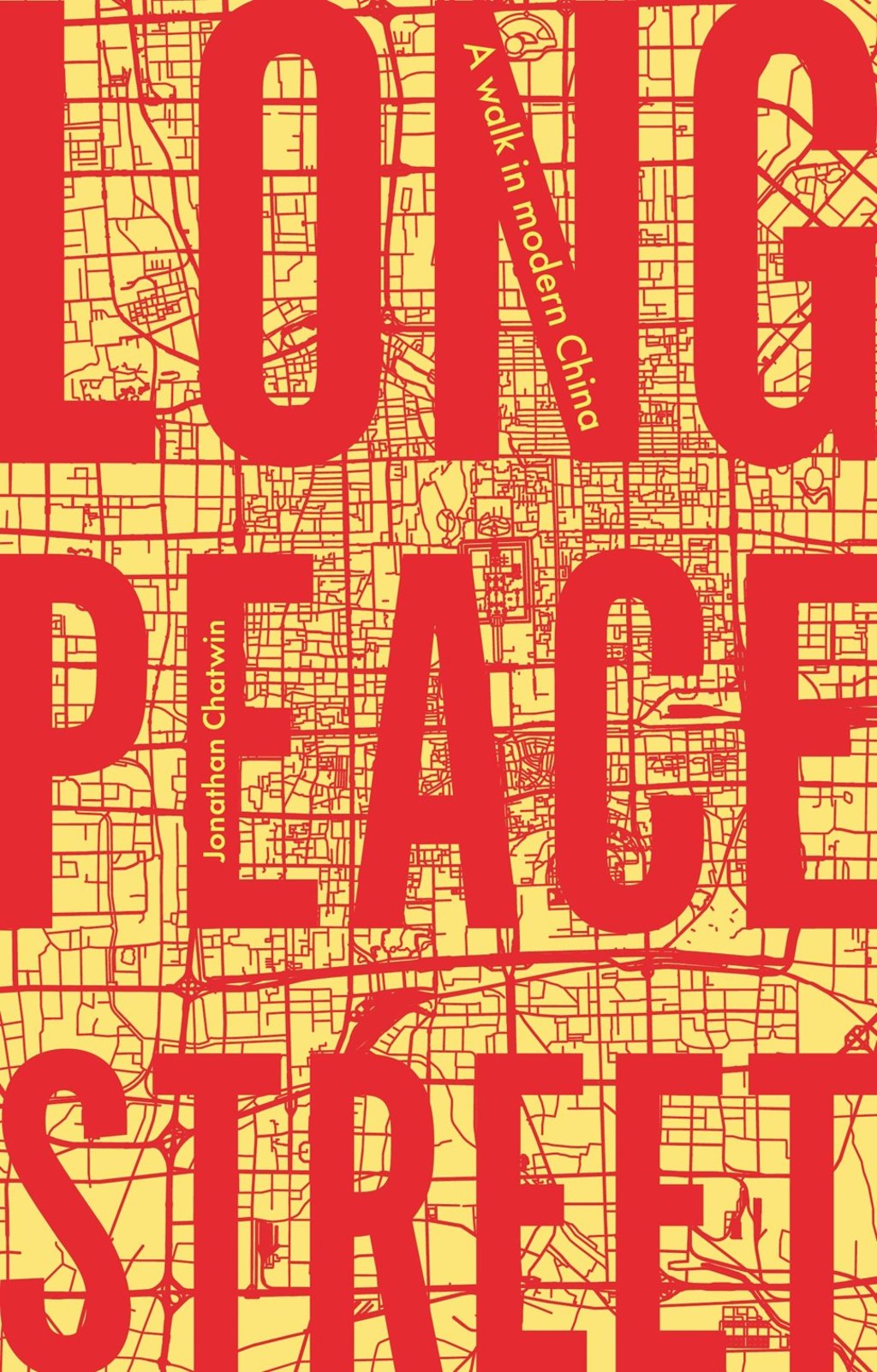
The steelworks were closed in 2011, to improve (or at least reduce harm to) the environment. Now it is abandoned – “cathedrals of rusted steel”, in Chatwin’s fine phrase – though visitors can “explore a disused blast furnace, eat a meal in a Shougang canteen, ride on one of the factory trains and even drink authentic Shougang-brand cola”. Thus the economy moves from the industrial to the postmodern.
Babaoshan Revolutionary Cemetery, the final resting place for China’s revolutionary founding fathers, has undergone a similar process. For centuries a Taoist temple, it is now “a place for retired eunuchs to live, with a special building given over to the housing of the severed genitalia”. (A marvellous detail.) Following a suggestion by Zhou Enlai, it became China’s national cemetery, containing the remains of leaders such as Bo Yibo (father of disgraced politician Bo Xilai), Zhu De and Chen Yun.