ReviewThe Supernova Era cements Cixin Liu’s position as leader of the sci-fi pack
- Absorbing story of children ruling China after adults die out in a cosmic event looks at the perils of play and has echoes in today’s generational conflicts
- Liu’s first novel was published in Chinese in 2004, with a new translation in English released in October
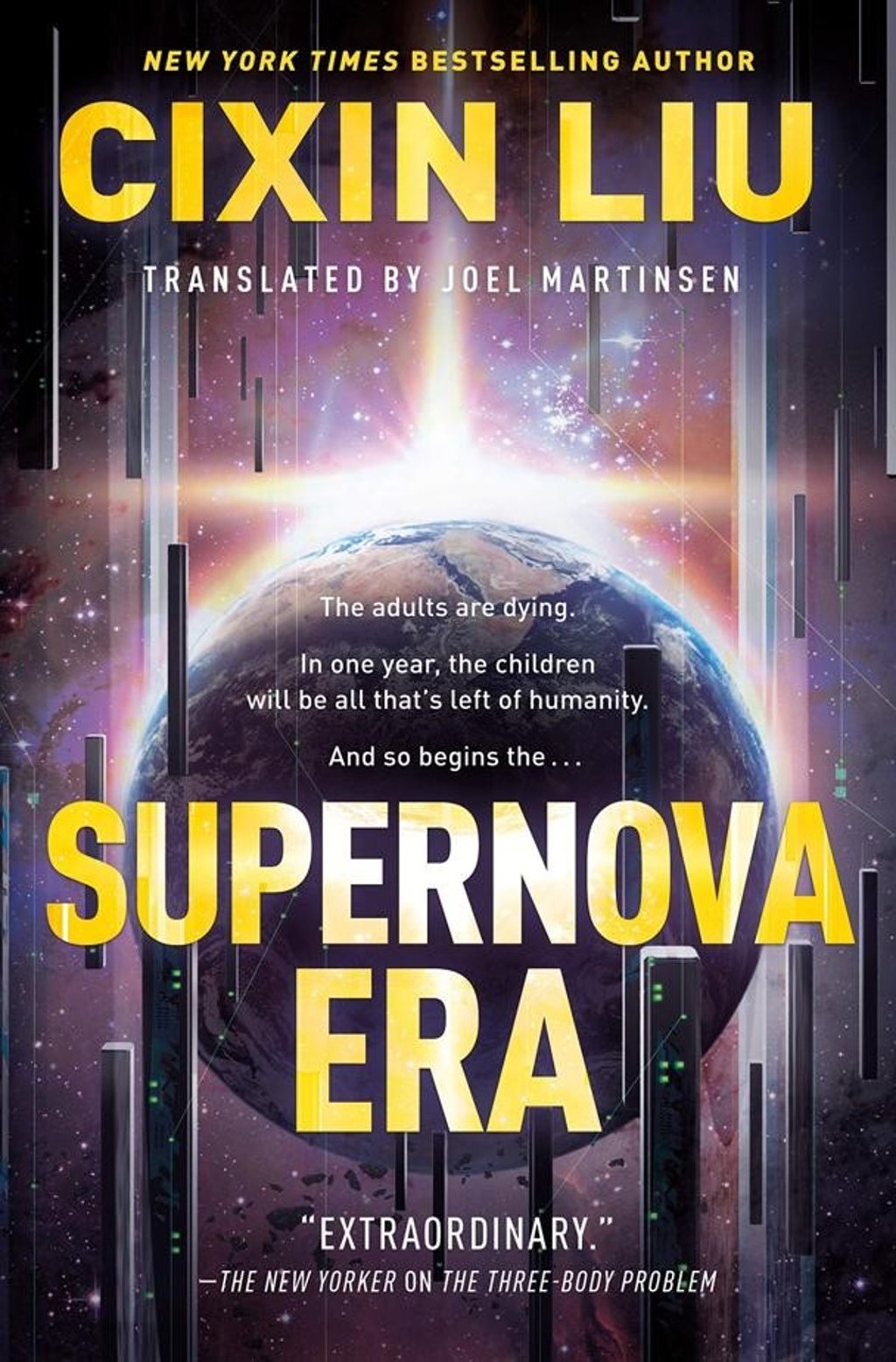
The Supernova Era
by Cixin Liu (translated by Joel Martinsen)
Head of Zeus
4/5 stars
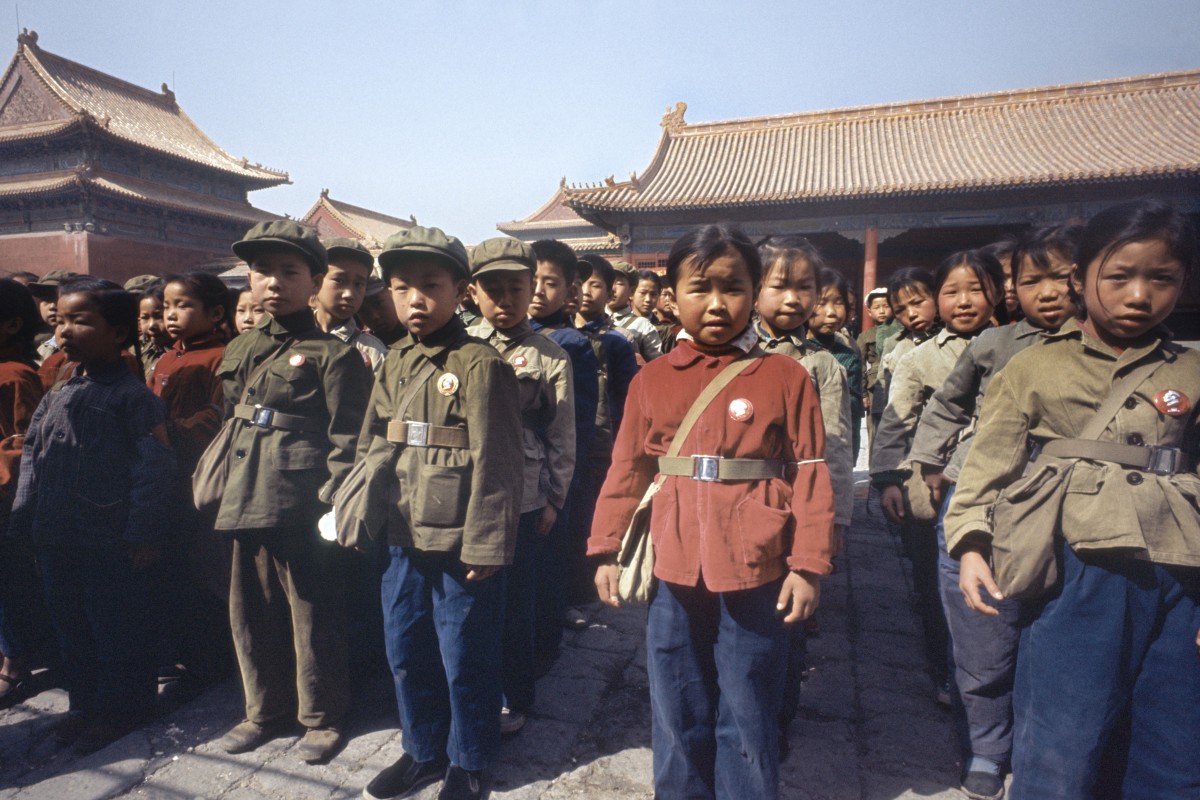
The Supernova Era by Chinese sci-fi giant Cixin Liu begins with a group of students expressing their ambitions. One boy wants to be a general; a girl wants to be a doctor, like her mother. Huahua, one of the novel’s three heroes, isn’t sure what he wants to be, just as long as he’s “the best”. Xiaomeng, whose melancholy maturity is the inverse of Huahua’s exuberant optimism, declares with characteristic realism that her family’s lack of funds means she will probably go to vocational high school. “Specs”, the final side of our triangle, speaks more abstractly. “No one knows what the future holds. It’s unpredictable. Anything could happen,” he says, before delivering a small lecture on chaos theory.
We don’t need Specs’ philosophical caveat to sense that something devastating is afoot. The novel begins with two ominous past tenses: “In those days, Earth was a planet in space. In those days, Beijing was a city on Earth.” Besides, this is a novel by arguably the world’s leading science-fiction writer, thanks to his already classic Remembrance of Earth’s Past trilogy, and as his many fans already know, Liu specialises in end-of-the-world scenarios. One promptly arrives, although “promptly” is measured by cosmic history.
A long time ago, in a galaxy far, far away, the “Dead Star” collapsed, emitting a torrent of energy. Centuries later, that torrent reaches Earth, turning night into day and unleashing environmental shock waves, only to recede as quickly as it appeared into a faint rose light that is christened, with disarming lyricism, the “Rose Nebula”.
Tragically for humankind, its consequence is not yet recognised. Every person on Earth has been exposed to lethal levels of radiation, capable of penetrating deep into the planet’s core. The only good news (although “good” as measured in a “Supernova” context) is that carbon-based life forms aged 13 years and below have cells supple enough to regenerate, heal and survive.