Advertisement
PostMag
Life.Culture.Discovery.
Legacy of war in Asia
MagazinesPostMag

Review | Kilsoo Haan – the Korean secret agent who warned the US about Pearl Harbour attack

  • Biography of secret agent reveals US officials dismissed a Japanese attack as ‘a product of Haan’s imagination’
  • Haan’s espionage network of low-level workers also warned of rise of communism in Korea

Reading Time:4 minutes
Why you can trust SCMP
On December 7, 1941, Imperial Japanese air and naval forces launched a surprise attack on the US naval base Pearl Harbour, in Hawaii. Secret agent Kilsoo Haan tried, to no avail, to warn the US what was coming.
Julian Ryall

‘Action Likely in Pacific’, Secret Agent Kilsoo Haan, Pearl Harbour and the Creation of North Korea
by John Koster
Amberley Publishing
4/5 stars

The official inquiry into the attack by Imperial Japanese air and naval forces on the United States fleet at Pearl Harbour, on December 7, 1941, reached a damning conclusion.
“Why, with some of the finest intelligence available in our history, was it possible for a Pearl Harbour to occur?” asked the 10-member committee looking into arguably the most stunning attack of the second world war. The report, released on June 20, 1946, cited “interdepartmental misunderstandings”, a failure in Washington to appreciate the looming threat, and “errors of judgment” in the US command in Hawaii as well as in the intelligence and war plans divisions of the war and navy departments.
Advertisement

The failure of the combined efforts of the US military, intelligence and political communities is even more remarkable given that one man knew what was coming weeks before December 7, a day that President Franklin D. Roosevelt, only hours after the attack, would describe as “a date which will live in infamy”.
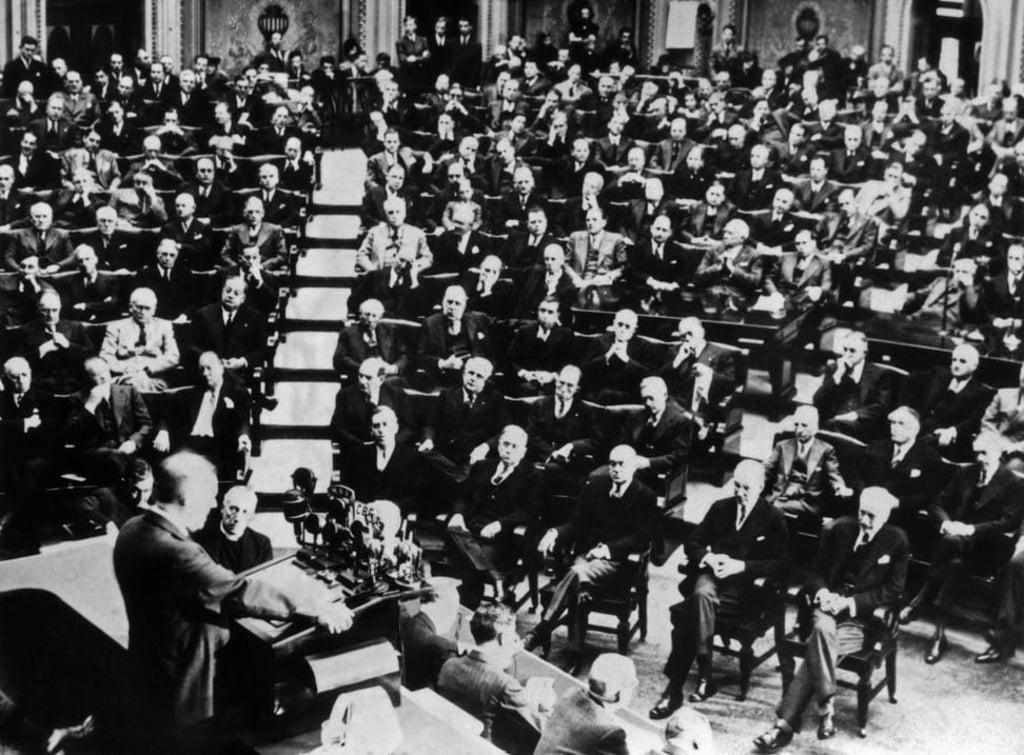
President Franklin D. Roosevelt pledges to keep the United States out of the war in an address to Congress on January 3, 1940. Photo: AFP
Advertisement

Kilsoo Haan did not have high-level informants within the Japanese legation in Hawaii or Washington, DC. He had not broken Tokyo’s secret codes and was not surreptitiously accessing the diplomatic pouch. Instead a network of Koreans in low-level positions in Japan and its overseas possessions enabled him to piece together the big picture that the US was not seeing.

Advertisement
Select Voice
Choose your listening speed
Get through articles 2x faster
1.25x
250 WPM
Slow
Average
Fast
1.25x