ReviewDefying the Dragon: Stephen Vines examines two turbulent years in Hong Kong and China’s standing in the world
- In his latest book, veteran journalist Vines analyses the rising importance and significance of Hong Kong to the China story
- Written with honesty and integrity, it chronicles a critical moment in Hong Kong’s history as the city prepares for an unclear future

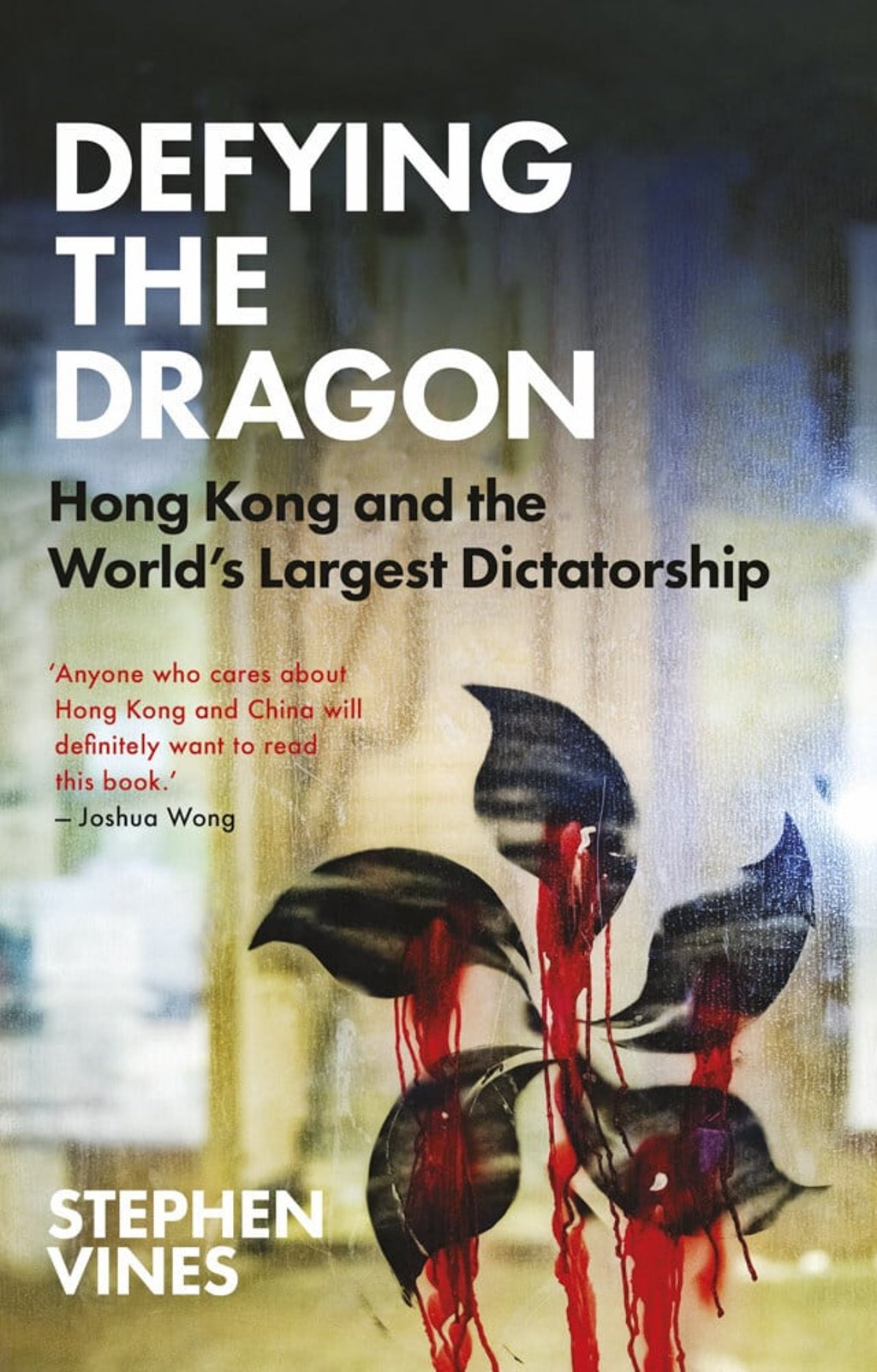
Defying the Dragon: Hong Kong and the World’s Largest Dictatorship by Stephen Vines. Hurst & Company
Not so long ago Hong Kong was, to borrow Lord Palmerston’s notorious term, a “barren rock” as far as publishers were concerned, a niche topic regarded as being of little interest to global readers.
Not so now. The events of the past two years have pushed Hong Kong into the global consciousness; whether in titles dedicated to the topic by authors and academics with varying degrees of connection to the city, or obligatory chapters in China books penned by foreign correspondents at the end of their Beijing postings. This reflects not mere fashion but the rising importance of Hong Kong to the China story, and to the story of China’s place in the world.
This is the angle taken by veteran journalist Stephen Vines in his new book, Defying the Dragon: Hong Kong and the World’s Largest Dictatorship. Few people are better qualified to write on Hong Kong than Vines, a resident since 1987 and first-hand witness to its vicissitudes, from the aftermath of the 1989 Tiananmen Square protests, through to the 1997 handover and the events of the past two years.
Vines argues that the events surrounding what he calls the Hong Kong “uprising” of 2019 have revealed “the seemingly mighty Chinese dictatorship is standing on feet of clay”. While once this argument may have raised few eyebrows, it seems a brave position in the present environment.
The book is divided into three parts. In the first, Vines explores the background to this moment in Hong Kong’s history. He analyses our dysfunctional political system, economy – in particular the chronic issues of inequality and housing affordability, as well as increasing mainland business influence – and the relationship between the mainland and Hong Kong, which he characterises as one of mutual suspicion and incomprehension.