ReviewHow did mahjong become so popular in the US? The game’s Chinese origins and American adaptations examined in historian Annelise Heinz’s book
- Annelise Heinz looks beyond the mahjong myths and marketing to find the 19th-century origins of a game that proved wildly popular in China and Jazz Age America
- Claims that mahjong was the ‘game of the Mandarins’, played 2,500 years ago by Confucius, were the ideas of marketing men from the West, she writes

Mahjong: A Chinese Game and the Making of Modern American Culture by Annelise Heinz. Oxford University Press
American historian Annelise Heinz’s aunt planted the idea for her book Mahjong. Why, she wondered, had the game become so popular, especially with middle-aged Jewish-American women, when it was clearly a Chinese invention?
A Chinese friend had introduced Heinz to the game during the year she spent teaching English in Kunming, in China’s Yunnan province, in 2007/8. “It was just part of the fabric of life in both public and private settings,” she says via Skype from Eugene, Oregon.
Heinz, now a professor of history at the University of Oregon, particularly enjoyed the game’s physical nature – the heft of the often beautiful tiles. But the question prompted her to ask how mahjong had become an American game.
“I quickly discovered that there were a lot of theories and misinformation,” she says, “but no one had actually done the scholarly research to find out.”
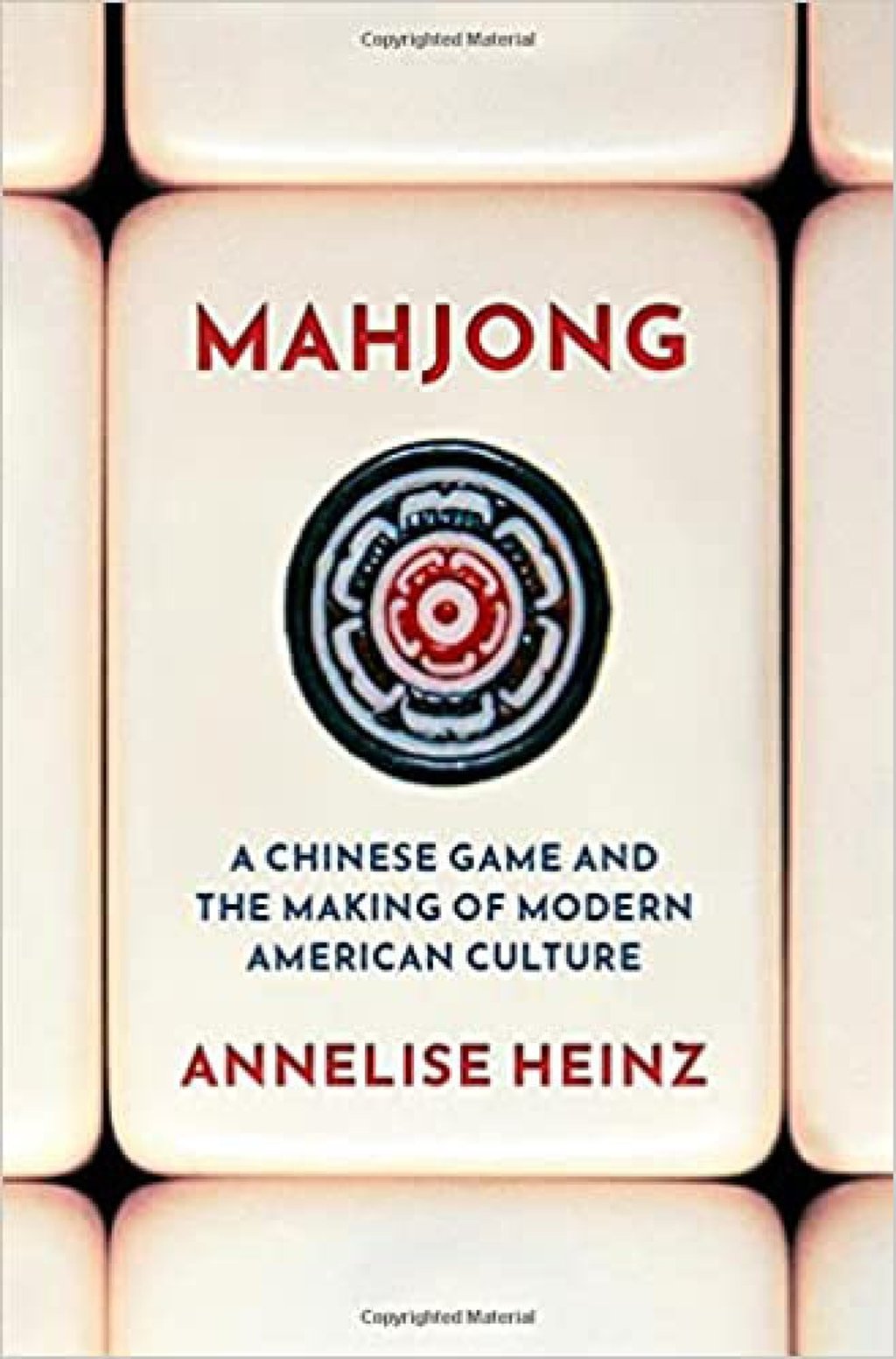
The result is Mahjong: A Chinese Game and the Making of Modern American Culture, a reader-friendly but fully footnoted account that leaves no tile unturned.