Moonkok, a bar from Hong Kong craft brewery Moonzen, draws inspiration from a traditional teahouse and temple
The bar offers a portal to the past in Mong Kok. Founder Laszlo Raphael explains how the brewery worked with designer Alex Cheng King-hang, of Heed Studio, to transform a tiny corner shop into a space rooted in tradition

The brief
“Our inspiration was taken from a charming traditional teahouse crossed with a Chinese temple exterior. We wanted to transport Moonkok visitors to another time and place, and pay homage to Mong Kok, meaning ‘prosperous corner’.”
Interpretation
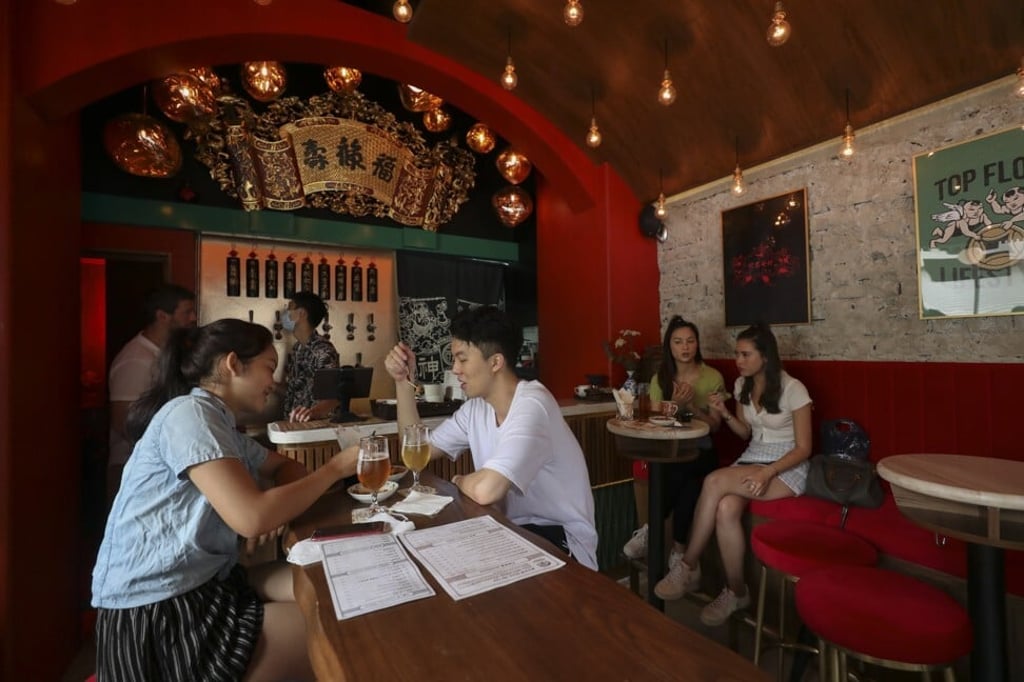
“The corner shop is around 300 square feet. The seating is divided into three sections: an open countertop seating section, a middle wooden table and four high round marble tables with booth sofas. We were exploring having a diagonal entrance to highlight the corner ‘kok’ aspect of the bar behind the main construction pillar, but after having a masterclass from a feng shui master we opted to keep the entrance facing straight onto the bar.
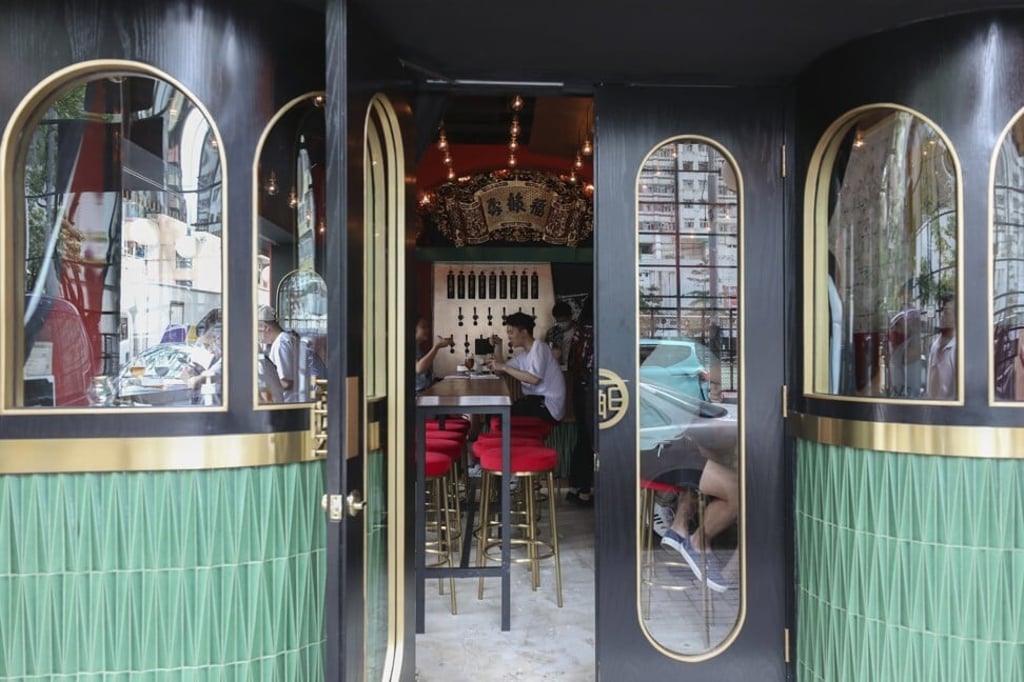
“We featured two main colours found in most Chinese temples – vermilion red and emerald green. The interior and exterior design features large vermilion columns and green haut-relief tiles all united with a half-moon ceiling. The floor was not renovated as it had these Hong Kong retro tiles that are difficult to procure so we left them in place.”
Challenges
“It was difficult to maximise the serving capacity of 12 craft beer draught taps and a kitchen within a tiny space. We have a cold room with the capacity to triple-stack kegs on stainless-steel shelves. Although using a flash cooler would have been more space-efficient, the drawback is the lack of quality longevity in kegged beer.”
Highlights
“Highlights include an antique wooden ‘fu lu shou’ board [referring to fortune, prosperity and longevity], sourced from a flea market in Bangkok, and a Chinese couplet designed exclusively for us by calligraphy master Wong Ho-ching. We also left the original Hong Kong colonial street sign on the facade.
“Details we love are the hand-painted wall and paintings by our first featured local artist, Keith Cheung Hok-wai. We will use this space as a platform for local art.”
Takeaway
“Having the possibility of dimming lights depending on the time of day helps transform the venue from a cafe/tea shop in the afternoon to a craft beer bar at night. Homes should have this ability as well. Additionally, the mixed and matched materials – wood, brick, tiles and metal – all come together in unison.”