Minimalism, a rooftop bathtub and Japanese-inspired floors: how a Hong Kong village house overlooking the sea became a dream home
- A lawyer wanted his Sai Kung home to be ‘very minimal and Zen’, and to give him the space to find ‘solitude, reflection and inner peace’
- He enlisted Glory Tam to transform it into something special – think extreme minimalism, a place to bathe on the rooftop and a theme for every floor
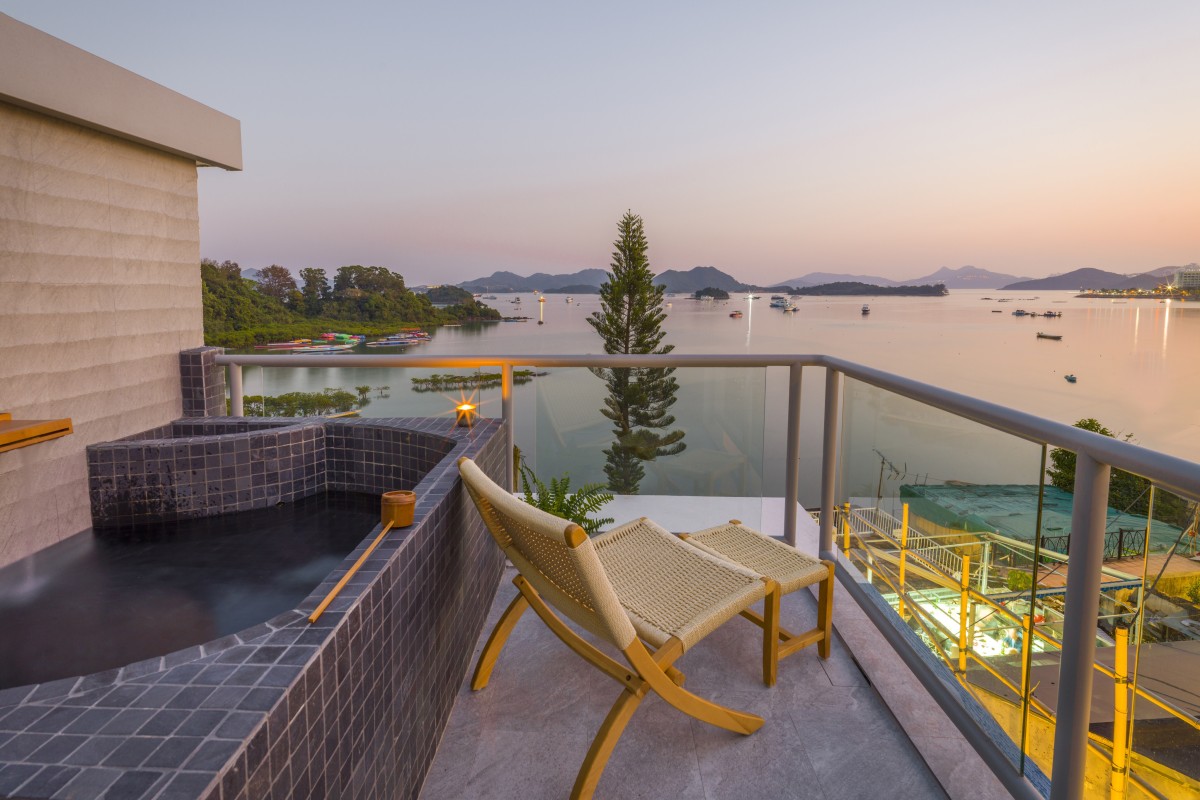
A lot of people talk about the desire for a less hectic lifestyle but few actually achieve it. Not so Dylan Poh, who decided that an old Sai Kung village house, overlooking the sea, would be the ticket to a more peaceful state of mind.
“Hong Kong is incredibly busy and everyone gets stressed out earning money to buy things, which only makes a space cluttered and not at all calming,” says Poh, a corporate lawyer who was born in the city. “I am of the ‘less is more’ school of thought and believe we have to live in the moment and then let it go. I wanted my home to be very minimal and Zen, and to give me the space to find solitude, reflection and inner peace.”
After deciding to buy the house on first viewing, he enlisted his friend, interior architect Glory Tam Chi-kiu, of Mister Glory, to help him transform it from ordinary to something special. The pair collaborated on the concept for the house for two months before work began. (It took seven months to complete.) Tam then pared it back to a shell and gave Poh some homework: to come up with one Chinese character to reflect each of the four 250 sq ft floors, one of which is a roof terrace.
Poh chose the character for “ground” to describe the lowest floor; “white” for the first-floor multipurpose living space; “water” for the second-floor bedroom and bathroom; and “sky” for the roof terrace. Tam then incorporated these concepts into his designs through materials, colours and textures.
“Most of the themes are obvious but I chose the theme of ‘white’ for the first floor because to me it represents emptiness and space,” says Poh. “However, this doesn’t mean ‘nothing’ but rather acts in the sense of a blank canvas to encourage creativity
and introspection.”