The CorkscrewGive Greek wines a chance
Winemaking in Greece goes back 6,500 years, so why don’t its wines get the love they deserve?


It’s been said the best things in life happen when you least expect them to, and no doubt the discovery of wine was among them. Winemaking in the early days was hit-and-miss as the process of fermentation was not understood. People discovered that winemixed with water resulted in a pleasant drink (the precursor to a spritzer, perhaps?) and also made them happy.
Paintings and writings illustrate how wine played an important role in past civilisations. Greece is one of the oldest wine regions in the world, going back 6,500 years. Greek physician Hippocrates (460-370BC) prescribed wine for medicinal purposes. The ancient Greeks took their vines and wines with them when they travelled, and traded their winemaking knowledge around the Mediterranean, especially in Italy, Spain and the south of France, so they could have a ready supply wherever they went.
Despite this long track record, Greek wine, with its tongue-twisting grape names, remains a mystery to consumers. DNA testing has found that many of Greece’s ancient grapes are parents of popular varietals today.
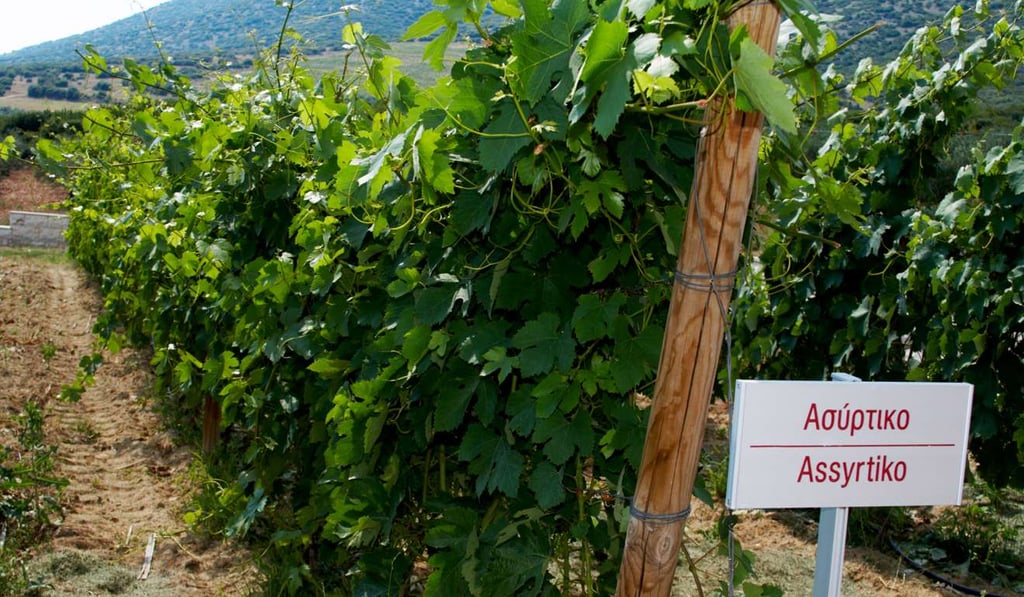
Agiorgitiko: a plump, juicy berry fruity grape with ripe strawberry flavours, has the same attributes as gamay noir. It is also known as St George’s grape.
Xinomavro: a dense, almost black grape that makes wine that ages well. With its bold tannins, has been found to be similar to nebbiolo.