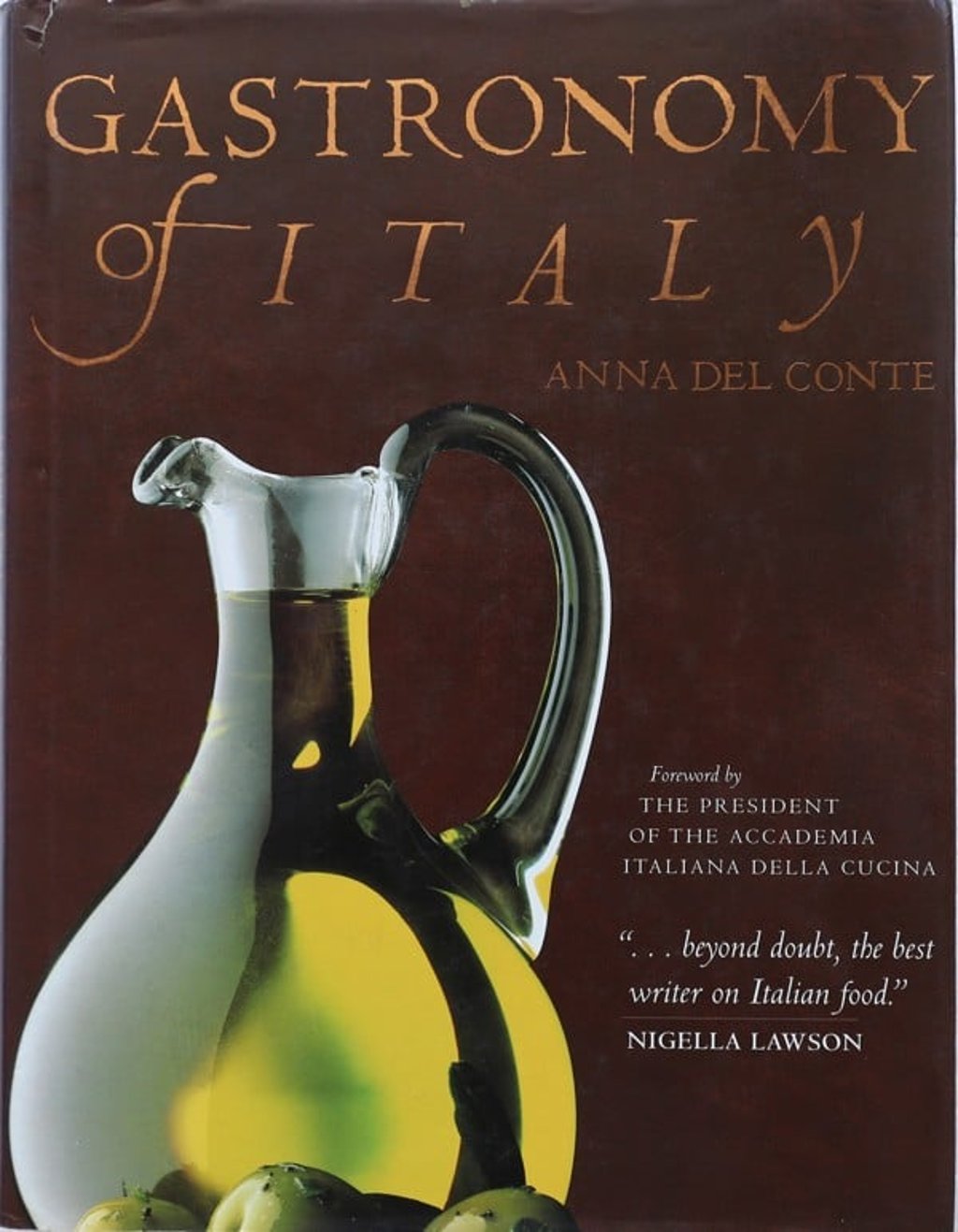
Cookbook: Gastronomy of Italy by Anna Del Conte
The Italian food writer delves into the cuisine’s long history and gives recipes for dishes cooked in most Italian homes and that are made from locally sourced ingredients

This book is large and heavy – 416 pages and more than 2kg – but given the subject, it could have been even larger and heavier. Author Anna Del Conte, who published the tome in 2001, goes back – way back – into the history of Italian cuisine.
“Looking far back into the past, it is possible to uphold the claim that the roots of European cooking are to be found in Italy,” she writes in the chapter “The Development of Italian Gastronomy”. “The first known food writer was Archestratus, a Sicilian Greek who lived in Syracuse in the fourth century BC.”
In the next paragraph, she writes about recipes collected by someone called Apicius.
Del Conte goes on to give brief descriptions of “The Sicilian Influence”, “Influences During the Renaissance”, “The Greatest Century” (the 16th) and “The Twilight Years” (the 17th century, when the country was “becoming the battleground of wars among her more powerful neighbours, the French, Spanish and Germans”, leading to Italy’s decline “from her leading role in every art”). She continues with commentary on “The Significance of the New World”, the importance of the tomato and potato in the cuisine, and finally writes about “The Twentieth Century and Beyond”. Here, Del Conte writes, “I have recounted the history of Italian gastronomy as seen through the writings of the last six centuries. But although much is learned about its development over that time, the fact remains that Italian cooking has always been to a large extent based on home cooking. This is the cucina casalinga passed down from one generation to the next, by word of mouth and by the family recipe book. The family, after all, is the one social unit that counts for everything in Italy. And, when it comes to food, the Italians are very sure about what they like: they like the food they are used to, they like the food they see growing and being produced around them, which means home cooking and, of course, regional cooking.”