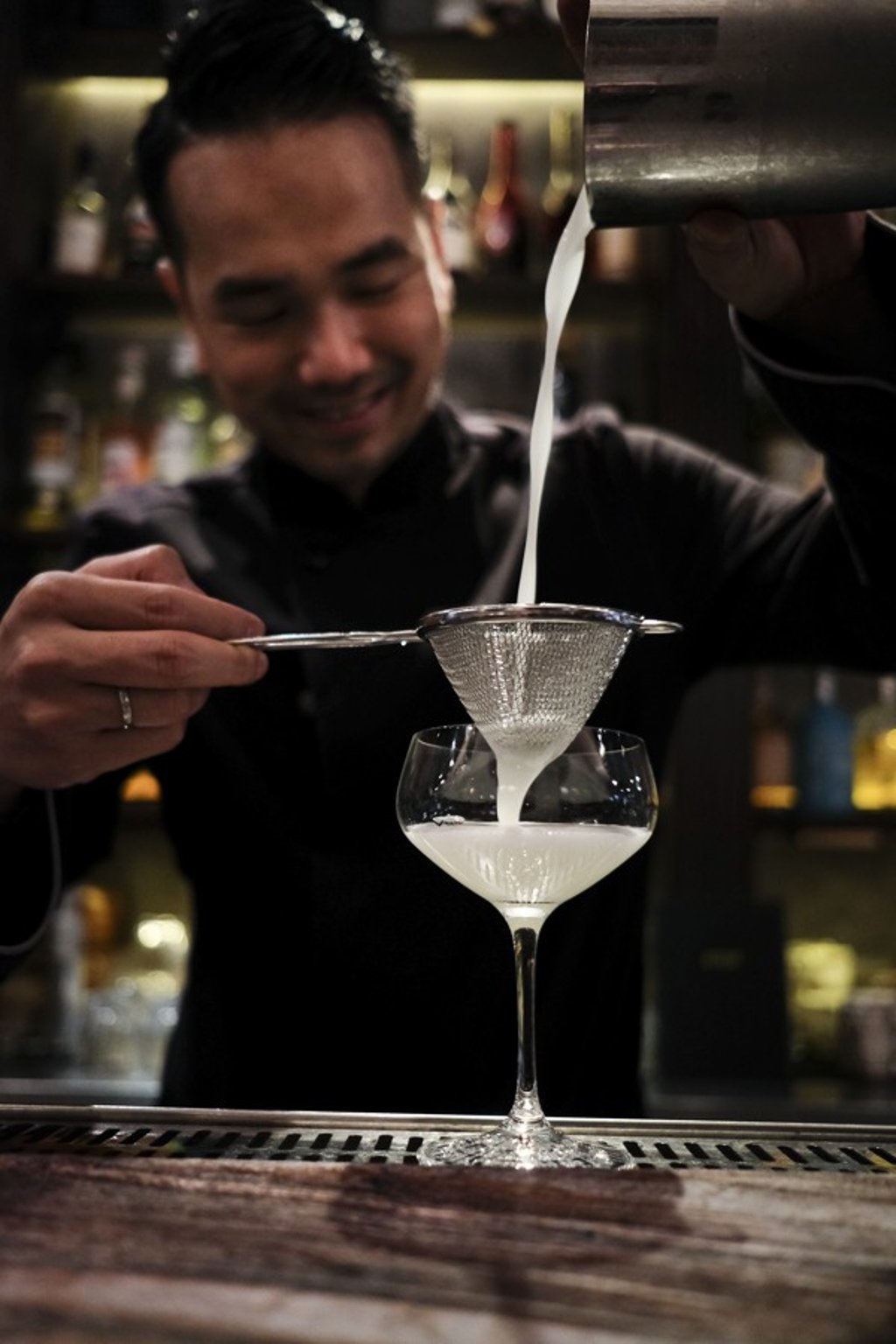
South American cocktail pisco sour gets a Hong Kong twist
Award-winning bartender Antonio Lai, of Hollywood Road’s Quinary bar, puts a new spin on the classic

The origin of the pisco sour is disputed: both Chile and Peru regard the cocktail as their national drink, though neither country attributes its invention to one of their own.
The Chilean theory is that one Elliot Stubb first mixed the drink in 1872, in a bar in the port city of Iquique. The Englishman was a steward on a ship called Sunshine. Documentation for this theory is questionable, however. What’s more, Iquique at the time, though it had a substantial Chilean population, was part of Peru.
Stubb was probably an early advocate of the whiskey sour, which he is said to have introduced to Iquique, and has been credited with inventing. There is reason, however, to believe that a cocktail by that name had currency in North America before Stubb turned up in Iquique.
A more likely story is that the pisco sour was first mixed between 1915 and 1922 in the Peruvian capital, Lima, by American bartender Victor Vaughen Morris, who owned a watering hole in the city called Morris Bar. Being a keen experimenter with cocktails, it’s likely his intention was to offer a variant on the whiskey sour using cheap local liquor.
Pisco, after all, is a South American brandy (made in both Peru and Chile) that was first distilled by Spanish settlers from local wine in the 17th century. A sour is a drink made from a combination of a spirit with lemon or lime juice, with added sugar or sugar syrup. The pisco sour traditionally uses lime and adds egg white and Angostura bitters to the formula.