The CorkscrewWhat goes into making the best ice wine, be it from Canada or Germany
Made in small quantities, ice wine is the product of grapes left on the vine into midwinter and picked and pressed frozen

The wine that put Canada on the map – ice wine – is also made in Europe, primarily in Germany, where it known as eiswein. Rare and expensive, these wines are usually sold in small, slender bottles.
The production of ice wine is different from that of other sweet wines, which get their concentration from botrytis, or “noble rot”, the result of leaving grapes on the vines to shrivel and acquire mouldiness. For ice wines, instead of being picked when ripe the grapes are left on the vines. Through an Indian summer – an extended growing season that is not too rainy – the winemaker waits for winter to come. The vines are covered in sheer netting to catch the sun’s rays while protecting the succulent fruit from birds and wildlife.
Mother Nature takes its course, with wintry blasts freezing the grapes, reducing the sugar inside them to a syrupy consistency with fruit notes that are, surprisingly, not cloying and have a well-balanced acidity. The wines are also not high in alcohol, ranging from 7 per cent to 12 per cent – low when compared with port.
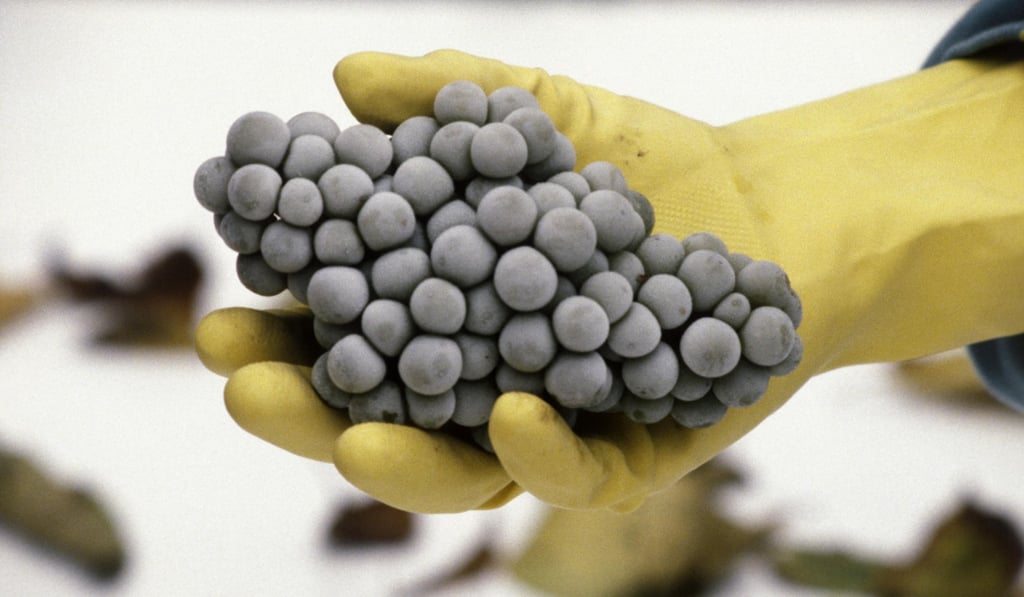
Harvesting is a daunting task, as the grapes – the few that are left on the vine by this point in December and January – must be picked by hand in their frozen state (-8 degrees Celsius for Canada, -7 degrees in Germany) during a continuous cold spell of at least 10 days. Picking the grapes and then freezing them in a deep freezer – allowed in some countries – is a no-no in Canada and Germany.