Choose fresh abalone for an easy-to-prepare seafood treat
Take the grind out of time-consuming preparation by buying the luxe ingredient only when needed

When it comes to abalone, most Chinese people think of the expensive dried versions that take hours to soak and braise. The dried stuff is expensive for a reason: to get the size that’s normally sold, about 5cm long, although they can be bigger (and even more costly), you have to start with much larger abalone, and they take a long time to dry. Fresh abalone is much easier to prepare, and while it’s not the cheapest seafood, it is an affordable luxury.
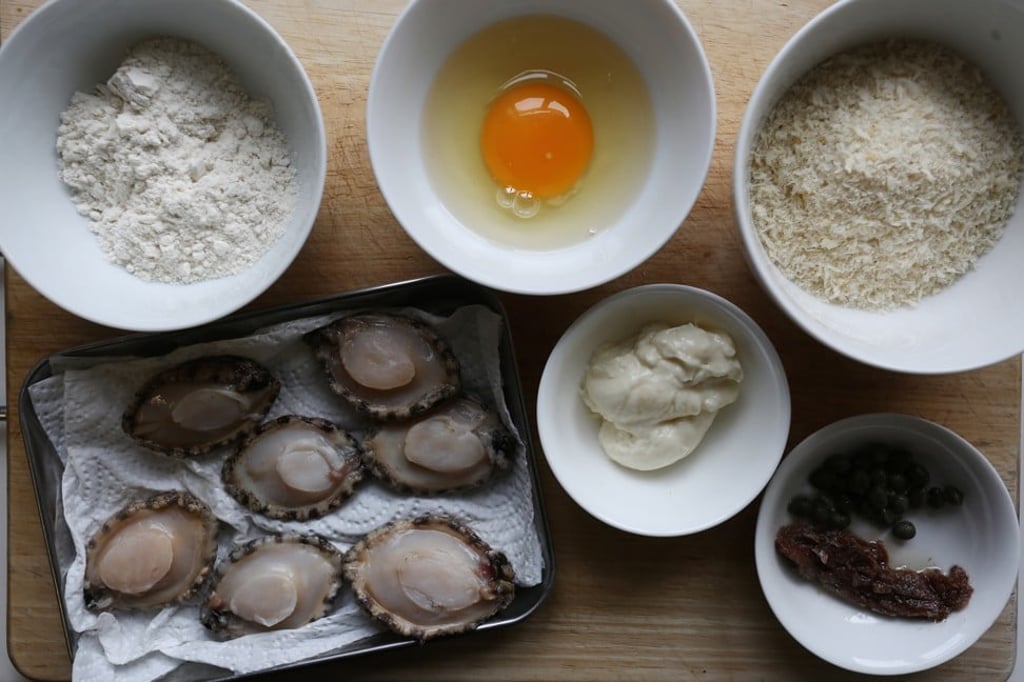
Fresh abalone schnitzel with anchovy and caper mayonnaise
When I lived in California, high-end seafood restaurants often served a simple but delicious dish of large abalone that had been sliced, pounded to tenderise, and dipped in batter and breadcrumbs before being pan-fried.
I wanted to try making a similar dish using the small fresh abalone commonly available in Hong Kong. To my surprise, my first attempt was a success: the abalone were wonderfully tender, even though I had not pounded them. This is one of the easiest, quickest and most delicious ways to cook small fresh abalone.
Buy the abalone as close as possible to the time you’re going to cook the meal, and have the seafood vendor clean them. Keep a few shells to use for the mayonnaise. I serve three or four abalone as a main course, with side dishes.
12-16 fresh abalone, with body size about 5cm long
1 or 2 eggs, as needed
Plain (all-purpose) flour, for dusting
Panko, for dredging
Fine sea salt and freshly ground black pepper
Cooking oil, for frying
For the anchovy and caper mayonnaise:
300 grams mayonnaise (I use Hellmann’s; do not use salad cream)
6-8 anchovies in olive oil, drained
18 (or more) small capers in brine, drained
To garnish:
Micro greens
Finger limes or Thai limes