Cooking with Asian leaves and herbs: a guide on the best ways to use them
Cookbook provides a reference and recipes for using Asian leaves, as well as advice on storing herbs and leafy greens and when it’s best to pick them

I am pretty familiar with most of the herbs and leafy greens available in Hong Kong wet markets but, when I visit the fresh produce shops in other Asian countries, I discover ingredients I’ve never seen before. This book, which I use more as a reference than as a cookbook (although it does contain recipes), is for those occasions.
In the introduction to Cooking with Asian Leaves (2004), Devagi Sanmugam and Christopher Tan write, “Leafy vegetables in particular seem to proliferate at vegetable stalls, in a wide array of leaf shapes and sizes, scents and textures. Many are traditionally used by a particular culture, outside of which they are barely known.
“This book is intended to shed some light on those attractive bunches of leaves you liked the look of this morning but didn’t recognise, or the bag of herbs you bought last week and couldn’t figure out a use for. It is not meant to be an exhaustive examination of every leaf on the market, but a practical guide to using some of the more common, and some of the slightly less common vegetables and herbs you may come across.”
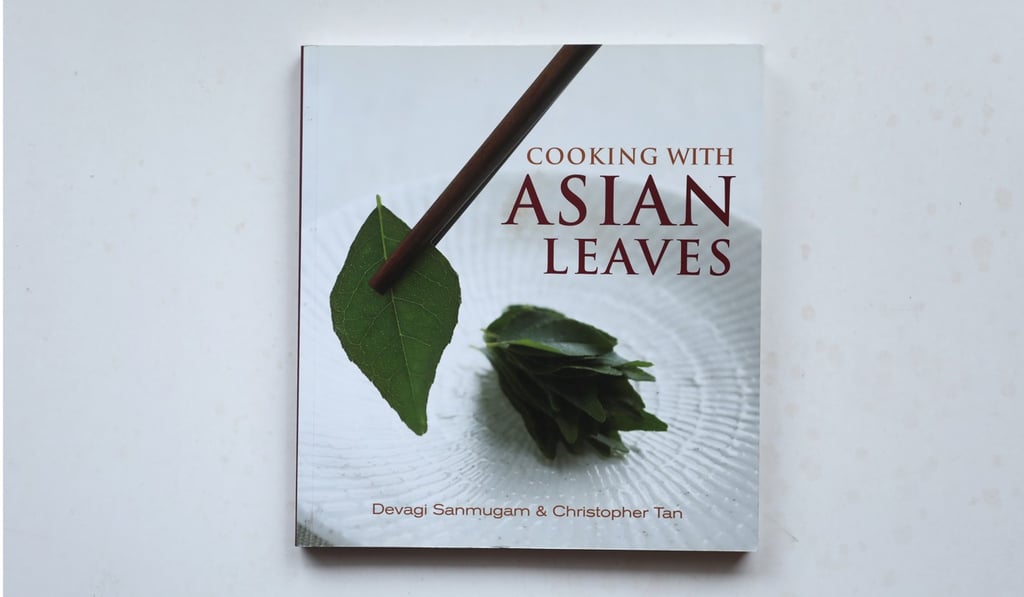
The book gives useful advice on storing herbs and leafy greens, and even a little information on when it’s best to pick them, if you grow your own.