Georgia’s natural wines making a splash in the industry with traditional qvevri method
- Winemakers such as Pheasant’s Tears are helping Georgia, one of the world’s oldest wine regions, make a name in the natural wine category

A natural wine is a subcategory of wines made using specific methods. While there is no legal definition for natural wines yet, Decanter magazine has come up with a broad list of conditions that need to be met: the vineyards must be cultivated organically or biodynamically, and grapes hand-harvested; minimal intervention in the cellar; fermentation only with indigenous yeast; no additives allowed except for a tiny amount of sulphur; the wines may undergo light filtration before bottling.
Natural wines are made in both the new and old worlds. Georgia, with its 8,000-yearhistory of winemaking, still uses traditional methods, which involves the use of qvevri – egg-shaped clay containers that can hold up to 2,000 litres. The grapes are pressed and the juice, skins, stalks and pips are put into the qvevri. During fermentation, usually done with indigenous yeast, the contents of the qvevri are stirred four to five times a day. At the end of fermentation, the container is sealed with a wooden or stone lid, lined with clay and left to mature.
The wine is usually orange or amber in colour and may look like a rosé, but the flavour and structure more resemble a red, with firm tannins and savoury notes.
Cristobal Huneeus, co-founder of La Cabane, a French-style wine bistro on Hollywood Road, Central, is a pioneer in the local natural-wine movement and has exacting standards when it comes to his selection. He relies on a network of winemakers to ensure the bottles in his portfolio meet specific standards in the vineyard and the cellar.
So who is drinking natural wines? Huneeus says everyone from hipsters to financiers.
Here are three natural wines from Georgia to try.
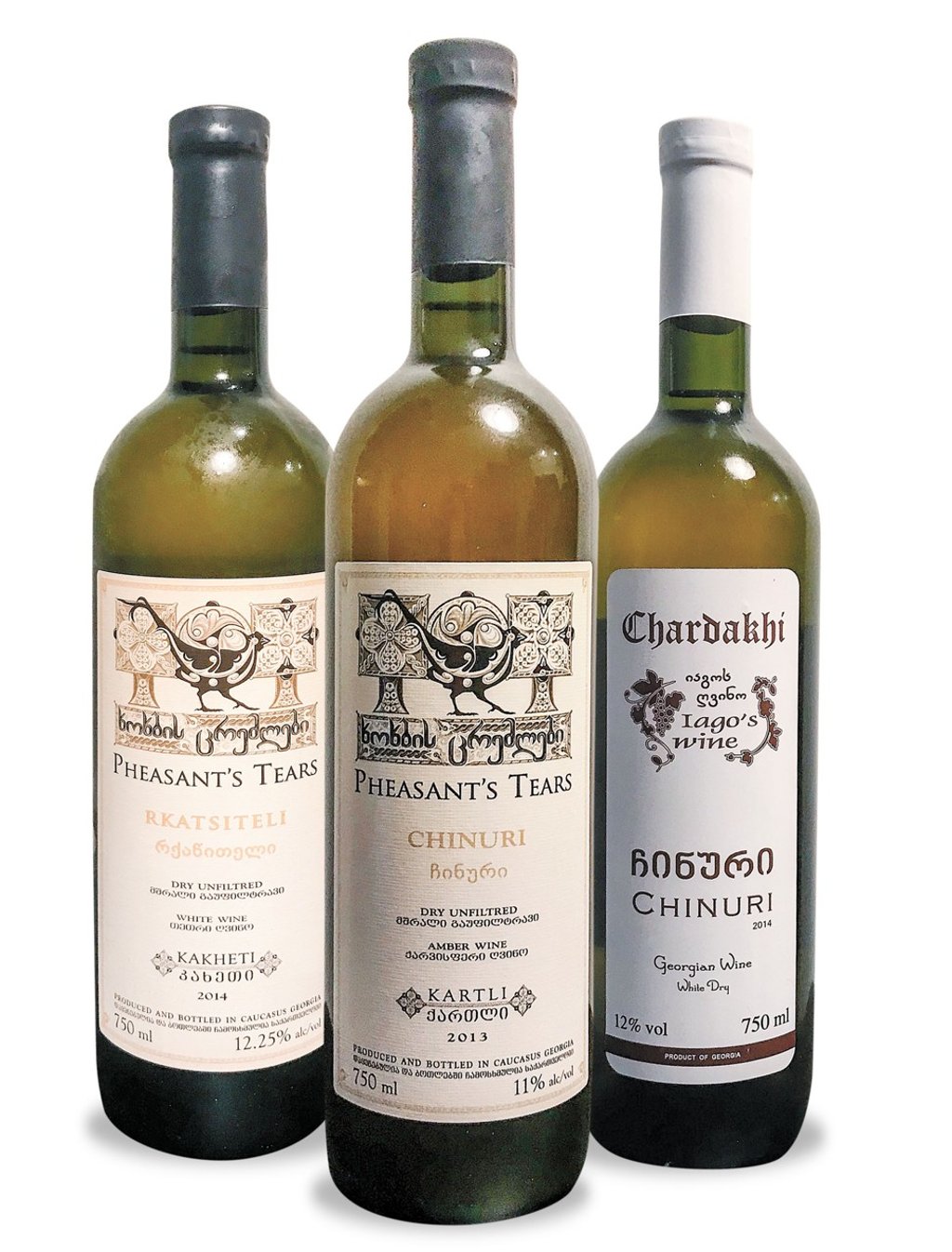
Pheasant’s Tears’ vineyards are located in Kakheti, eastern Georgia, and are farmed biodynamically. Rkatsiteli, which means “red stem” in Georgian, is an indigenous white grapethat is known for its thick skin. To extract flavour, the grapes receive six weeks of skin contact before fermentation. They are fermented using indigenous yeast and aged for nine months in qvevri.