Nonya cooking labour-intensive but worth the effort, cookbook shows
- From recipes for popiah to fried pork sandwich and pineapple curry, the cuisine of the Peranakans marries the best of Malaysian, Indonesian and Chinese food

I flipped through Nonya Flavours: A Complete Guide to Penang Straits Chinese Cuisine (2003) searching for the author only to realise that it was a collaborative effort – a collection of recipes gathered by the “lady members” of the State Chinese (Penang) Association.
It took a lot of effort to get the book to its present form, which uses standard weights and measurements, says editor Julie Wong.
She writes, “When the original manuscript […] landed on my desk, I was both excited and apprehensive. Here was a hotchpotch collection of recipes, many of them incomplete and written in a style that was not much more than simple scribblings. The fact that many of the recipes did not have precise measurements did not thrill me either. Some of the recipes asked for ‘10 sen worth of taugeh’ or quoted amounts in katties and tahils. Heavens, how were we to know how much taugeh one could buy with 10 sen in those days, when it has been metaphorically said that 10 sen was the size of a bullock cart wheel?”
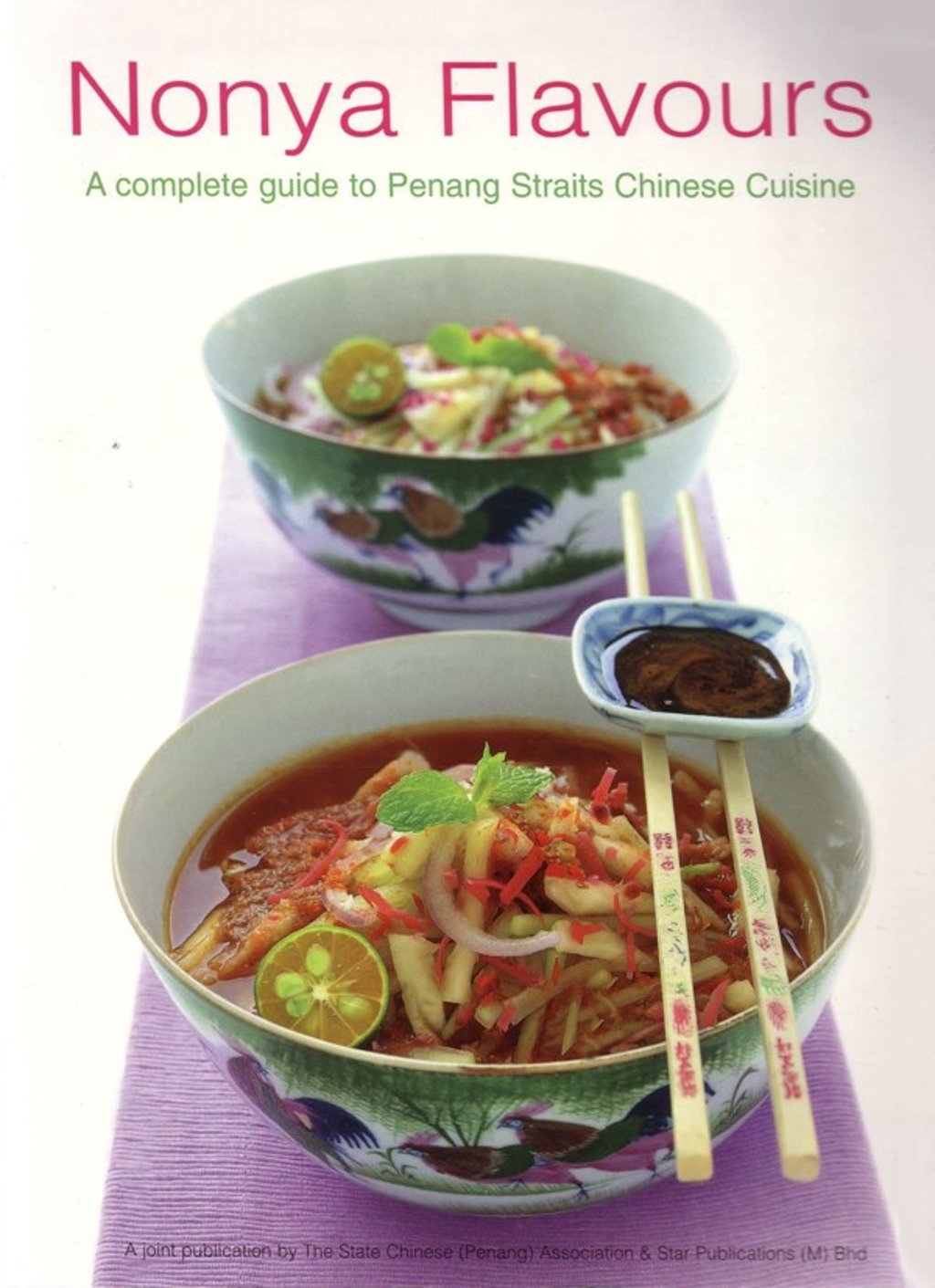
Nonya cooking is notoriously labour-intensive, as shown by the pages on cooking methods. “The grey stone mortar and pestle is at the heart of nonya cookery. Any nonya will vouch that mortar-pounded sambal belachan is superior to that whizzed up in an electric blender.” However, it is conceded that for tasks such as extracting the colour and essence of pandan leaf, a blender is more efficient than a mortar.
There are recipes for popiah (fresh vegetable rolls); popiah skins; sweet potato leaf curry; sambal-stuffed fried fish; nonya birthday noodles; pickled fish stomach with herbs and vegetable curry; roasted trotters in sour soup; stir-fried chives with pig’s blood; pineapple curry; fried pork sandwich; banana fritters; watermelon skin soup; sweet peanut broth and rice vermicelli in syrup.