Tasting India reveals Australian chef Christine Manfield’s fascination with world’s largest democracy
- Indian cuisine reflects the intricacies and nuances of the world’s largest democracy, says the celebrated chef
- ‘India is a visual feast and a gastronomic paradise, seducing with its food and contagious hospitality,’ she writes

Ever since I heard about it, I have been trying to get my hands on Tasting India (2011). Prices on eBay for the hardback edition were exorbitant (and it was sold out in bookshops). Thankfully, the publishers finally released a paperback version last year.
Australian chef Christine Manfield has a fascination for India, although she admits in the introduction that the country can be confounding. “On each and every visit, I surrender myself to the procession of life before me, as India begins to pulsate through my veins. It is impossible to be indifferent to the world’s largest democracy – though it is essential to bring an open mind and a great degree of patience!
“There is no choice but to jump right in, be brave and grab every exhilarating moment. This is a country where everything happens and everything is possible. Every day is a new adventure, providing another intriguing piece of the puzzle. As soon as I think I have a pretty good handle on it all, something pops up to confound my thinking and make me look at everything anew. But to me, that is just part of the whole Indian experience, the way the place and its people subtly continue to charm, inspire and compel, always daring to challenge. It makes me feel alive.”
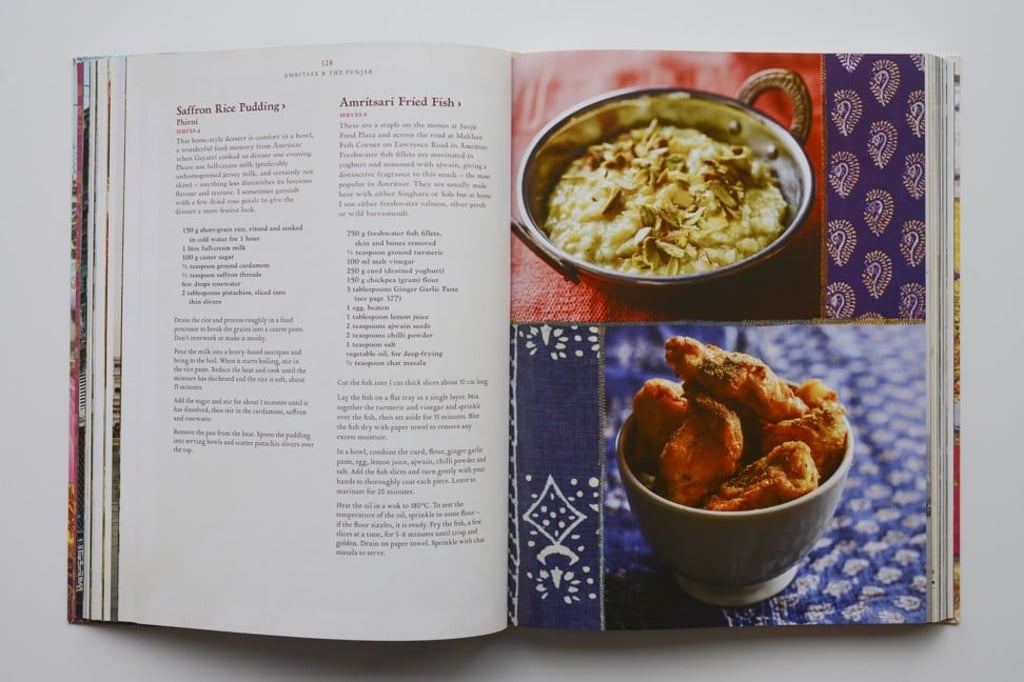
And, of course, she finds the food intriguing. “India is a visual feast and a gastronomic paradise, seducing with its food and contagious hospitality. The states of modern India have distinctive food traditions that reflect their regional and culinary heritage. Food preparation is bound up with spirituality, and demands a thorough understanding to appreciate its nuances. Religion underpins the dietary laws of each sect. To the uninitiated, it’s a minefield to navigate and accommodate – but to India’s Hindus, Jains, Muslims, Sikhs, Syrian Christians, Catholics, Parsis and Jews, it’s second nature, with each respecting the traditions of the others. The country’s culinary tapestry is complex, varied and ancient, underpinned by a masterful and enviable use of spice.”
Manfield divides the recipes by regions, which include Kolkata and Darjeeling, the Indian Himalaya, Kerala, Goa and Mumbai. The dishes (including plenty that will please vegetarians) are tempting and varied, and include onion bhajis; shallow-fried lamb kebabs with cinnamon; dal-stuffed puri bread; eggplant with masala sauce and spiced yogurt; spinach koftas; curd dumplings with lentil curry; spiced goat curry; potato and pea samosas; potatoes with coconut milk and chilli; Kerala fried fish; green peppercorn quail; cardamom caramel creams; Goanese duck vindaloo; and Hyderabadi lamb biryani.