How to make a vegetarian version of Korean chigae soup with a kick of fermented soybean paste
- Make this doenjang chigae your own by adding more varieties of mushrooms for extra umami
- Although Korean fermented soybean paste can contain meat or fish, it is easy to make a vegan version

Although Korean cuisine is usually associated with meaty barbecue, that is an occasional treat in South Korea, not something that is consumed every day. Korean food is in fact healthy because it incorporates a multitude of vegetables, many of which are fermented (and therefore great for digestion) and served as kimchi or as the banchan side dishes essential to Korean meals.
Doenjang chigae (also spelled jigae) is a thick soup that’s chock-full of vegetables. This version takes less than 10 minutes to cook, plus a couple of hours to soak the dried mushrooms. You can start soaking the mushrooms in the morning, before leaving for work, so they’ll be ready when you get home.
This recipe serves one, but to serve more simply increase the quantities of the ingredients or serve the chigae as part of a meal, with other dishes, rice and banchan.
Vegetarian doenjang chigae
This hearty soup uses Korean fermented soybean paste, doenjang, which is pungent and strongly flavoured. In restaurants, doenjang chigae usually incorporates a small amount of meat and/or seafood, but it’s easy to make a vegetarian version. If you’re vegan, omit the egg.
I use several types of mushrooms in this dish for extra umami; you can add or substitute other varieties to the shimeji and enoki called for in the recipe. Yuksu bags are the Korean equivalent of Japanese dashi bags, which make a flavourful instant broth when infused in hot water. Use either the Korean or Japanese bags, but check the ingredients’ label to make sure there’s no seafood or meat listed. Vegetarian yuksu/dashi bags are usually made with dried kelp and mushrooms.
Korean zucchini has pale green, smooth skin, and a mild taste. If you can’t find it, use Italian yellow squash instead.
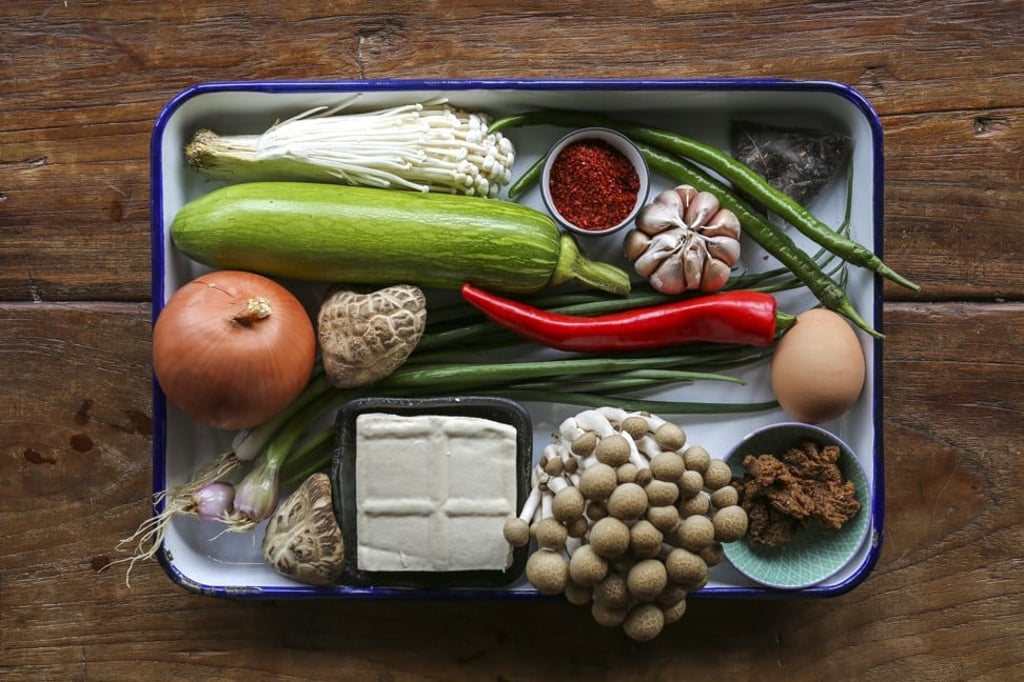
15 grams (½ oz) dried shiitake mushrooms (2-4, depending on size)
1 vegetarian yuksu or dashi bag
15ml (1 tbsp) sesame oil
50 grams (1 ¾ oz) onion
1 large garlic clove, peeled
125 grams (4 ½ oz) medium bean curd
½ a Korean zucchini, about 150 grams (5 1/3 oz)
50 grams (1 ¾ oz) shimeji mushrooms
50 grams (1 ¾ oz) enoki mushrooms
1 red or green banana chilli
½ tsp gochugaru (Korean chilli flakes), or to taste
50 grams (1 ¾ oz) doenjang
1 egg
1 spring onion