Recipes from the Garden of Contentment – a gastronomic guide from 1792
- The bilingual work, in Chinese and English, was a labour of love for Chinese-Canadian translator, Sean J.S. Chen
- Although not a chef nor a classic Chinese scholar, the scientist located the original 18th century text to ensure accuracy

Recipes from the Garden of Contentment (2018) is the first bilingual (Chinese and English) edition of Suiyuan Shidan (1792), a work on gastronomy by Qing dynasty poet and scholar Yuan Mei. However, its translator, Sean J.S. Chen, is neither a classic Chinese scholar nor a chef in a high-end Chinese restaurant looking for inspiration; rather, his field is science and engineering.
A “research scientist and algorithms developer for computer-assisted minimally invasive surgery”, Chinese-Canadian Chen started translating Yuan’s work after failing to find a translation of it, and published his efforts on his blog, Way of the Eating.
Translating the book wasn’t easy, Chen writes. “Classical Chinese is a written language of its own, quite different from modern written Chinese that is used today in daily life. For the untrained reader, Classical Chinese appears as a discontinuous mask of characters glommed together on a grid typically without any punctuation to guide the reader. Reading through the Suiyuan Shidan in Classical Chinese brought back those feelings of inadequacy I felt while grinding through the Middle English version of The Canterbury Tales in university.”
It wasn’t just the translations that troubled Chen – he also found that there were different versions of Suiyuan Shidan. For an accurate translation, he needed access to the original text, and found two copies of the 1792 volume – one at the Harvard-Yenching Library, the other at Princeton University Library.
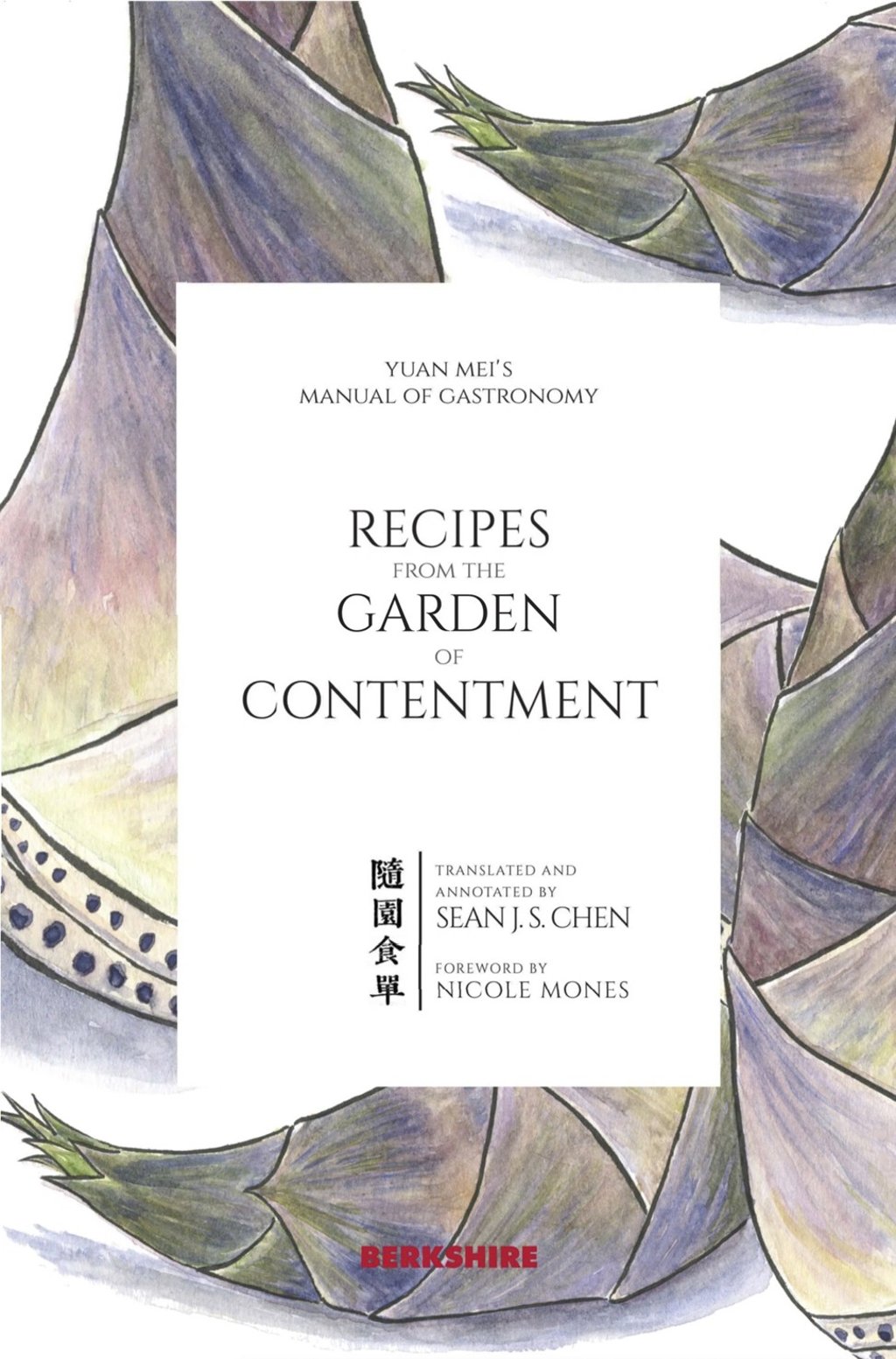
Yuan wasn’t a cook – his household staff included a chef (and several concubines). But as a food lover, he had strong opinions about recipes, as well as the preparation of ingredients. In the chapter “Essential Knowledge”, he states, “It is better to use more of an expensive ingredient in a dish and less of the inexpensive ones. If too much of an ingredient is pan-fried or stir-fried at the same time, there would be insufficient heat to cook them through; meats done this way are especially tough […] If one asks, ‘What if there isn’t enough to eat?’ I say, ‘If you’re not full after you’ve finished what’s there, just cook some more.’”