Food writer and historian So Yan-kit took ‘good food’ for granted until she moved to Britain
- Growing up in Hong Kong, So ate ‘delicious, well-prepared dishes, seasoned to father’s liking, rather than the bland food given to young children in the West’
- It was only once she was living in London that she started to cook herself and discovered her passion for Chinese cuisine

Hong Kong-British food writer and historian So Yan-kit, who died in 2001, would probably not have had very complimentary things to say about the hot dogs, fish fingers and burgers with fries listed on “children’s menus” at many restaurants. In the introduction to her first cookbook, Yan Kit’s Classic Chinese Cookbook (1984), she wrote, “My interest in food is inherited from my father. Although he did not cook himself, he always asked mother to see to it that what was on the table was correct, right down to the last detail: for him, stir-fried dishes had to have ‘wok fragrance’; sugar was to be used very sparingly in marinades; chicken was not to be overcooked lest the flesh become tough; fish for steaming was to be bought live from the market and abalone was to be well seasoned with oyster sauce.
“Like children in other Chinese families, my brothers, sisters and I joined the grown-ups for dinner from the age of four or five, picking with chopsticks from the dishes served in the centre of the table. So it isn’t surprising that what has stayed in my mind is delicious, well-prepared dishes, seasoned to father’s liking, rather than the bland food given to young children in the West.”
So’s childhood in Hong Kong, in the first half of the 20th century, was full of good food – at home and at banquets, dim sum meals, and at seafood feasts on the boat restaurants in the Aberdeen typhoon shelter. Moving to London for her PhD in the 1950s was a shock.
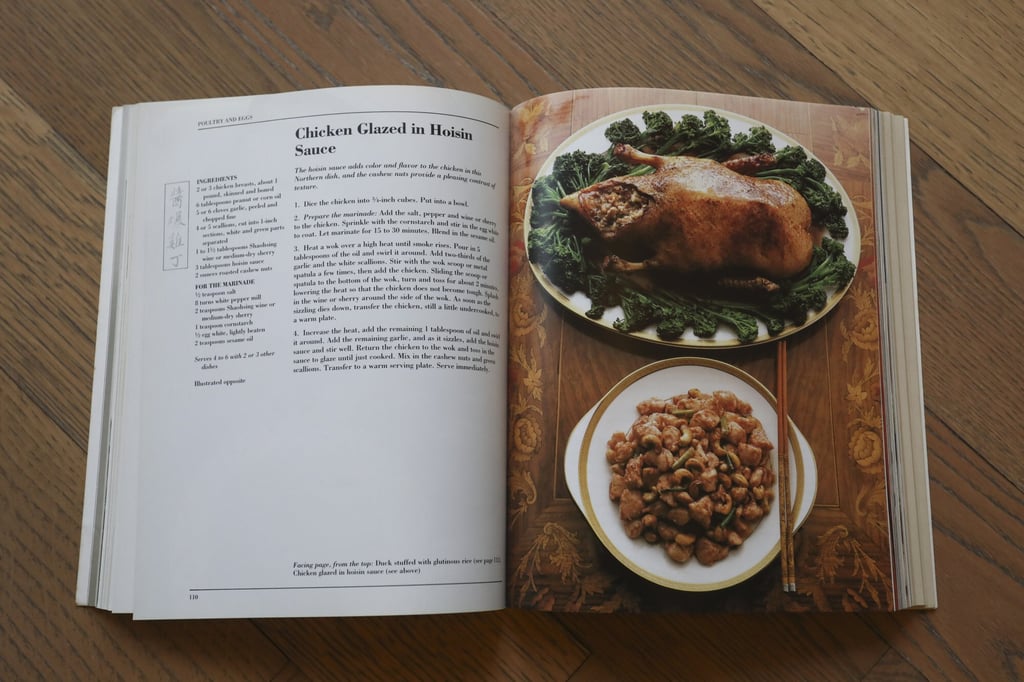
“Having taken good food for granted, like so many other Chinese, I did not think seriously about it until I became a frugal postgraduate student at the University of London. Short of cash but nevertheless hungry, haunted by the tastes of both home-cooked and restaurant dishes, I began to try my own hand at cooking Chinese food. To my delight, I found I was adept at it. One dish led to another, and soon I found that I had become an enthusiast, cooking with zest and satisfying not only my own palate but also many others.
“This amateurish approach took a marked turn some 10 years ago, when I spent a long summer with my young son in Waterford, Connecticut. There I used to entertain my American family and friends with Chinese dishes, and I remember their surprise that the tiny Niantic scallops could be so succulently tender when simply stir-fried; that the cherrystone clams, delicious served on the half-shell New England style, could make one’s mouth water equally, if not more, when cooked in black bean sauce with garlic, and that sea bass and bluefish could be so refreshing steamed with slices of ginger and seasoned with a little soy sauce […] For my part, I found cooking remedial, relaxing and rewarding. The seed of this book was sown then.”
The book starts with the basics: the different regional cuisines, how to use chopsticks, ingredients and equipment used in Chinese cuisines, how to cut ingredients, and the various ways to use a wok.
So’s recipes tend to be for fairly easy homestyle dishes, such as steamed fish, abalone with Chinese mushrooms, bean curd soup, rustic steamed beef, scrambled egg with Chinese chives, chicken glazed in hoisin sauce, sweet and sour pork, dry-fried beef, fish fragrant eggplant, stuffed Chinese mushrooms, red-braised chicken with chestnuts, and sizzling rice with shrimp and tomato sauce.