How to make Thai shrimp paste fried rice: khao kluk kapi is colourful and bursting with flavour
- With pork belly, Chinese sausage, shrimp paste, ginger and hot chillies, every bite is different
- Like most stir-fried dishes, most of the work is in the slicing or shredding

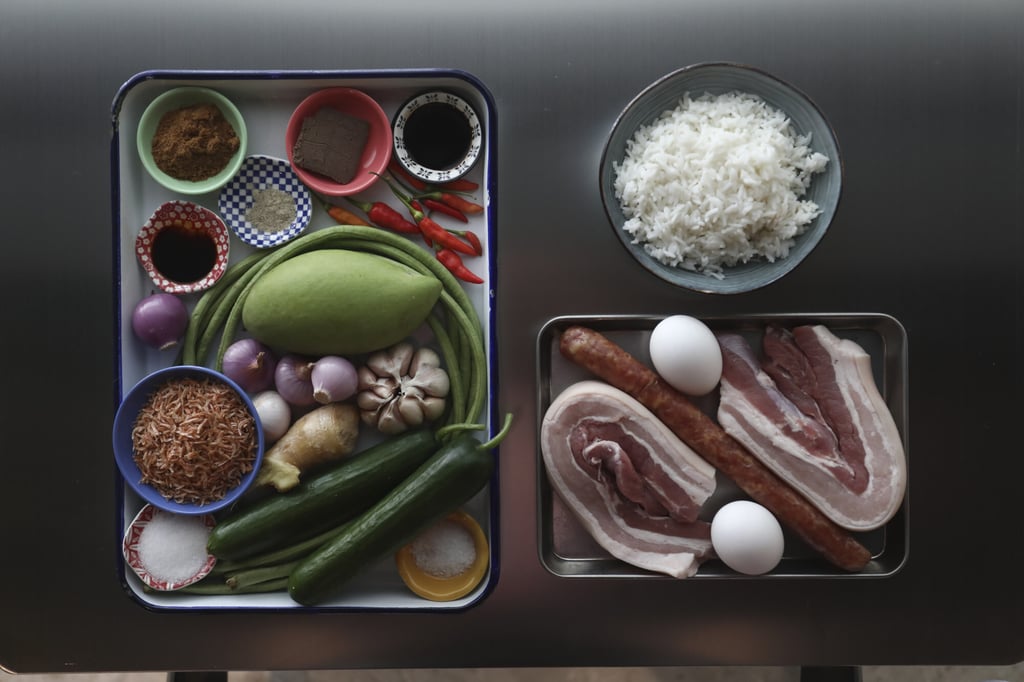
The Thai dish of khao kluk kapi has always reminded me of a painter’s palette – it’s a colourful mix of ingredients surrounding rice that’s been stir-fried with fermented shrimp paste. And as with an artist’s palette, you mix the ingredients as you like. I love it because each mouthful is different, depending on what ingredients you mix – there are almost endless flavour combinations. Always start with rice – put some on your spoon, then maybe add a piece or two of pork and a few shreds of green mango (along with a slice of shallot and a small piece of chilli, which I consider essential accents for every bite), then the next mouthful can be Thai sausage, cucumber and dried shrimp. Between spoonfuls, take the occasional bite of cucumber or green mango, to refresh the palate.
Khao kluk kapi (Shrimp paste fried rice)
This looks like a long list of ingredients, but with many of them, it’s just a matter of slicing or shredding. Start braising the pork belly first, and while that’s simmering, prepare the other ingredients.
The Thai version of lap cheong (wind-dried sausage) is larger (in diameter) and a little sweeter and softer than the Chinese one. For the dried shrimp, buy the tiniest ones you can find – ideally about 5mm long. If they are much larger, soak them in cool water for about 30 minutes, then drain and pat dry with paper towels before frying them in a little oil as instructed in the recipe.
For the braised pork:
400 grams pork belly (skin on or off, as you prefer)
6-8 thin slices of peeled ginger
4 garlic cloves, peeled
25ml dark soy sauce