Hot, sour, salty and sweet in balance, that’s Thai cuisine – but the heat is only there thanks to a Portuguese import in the 16th century
- Thai food is known for its balance of four flavours: hot, sour, salty and sweet – but the ‘hot’ wasn’t there until 500 years ago when Portuguese brought chillies
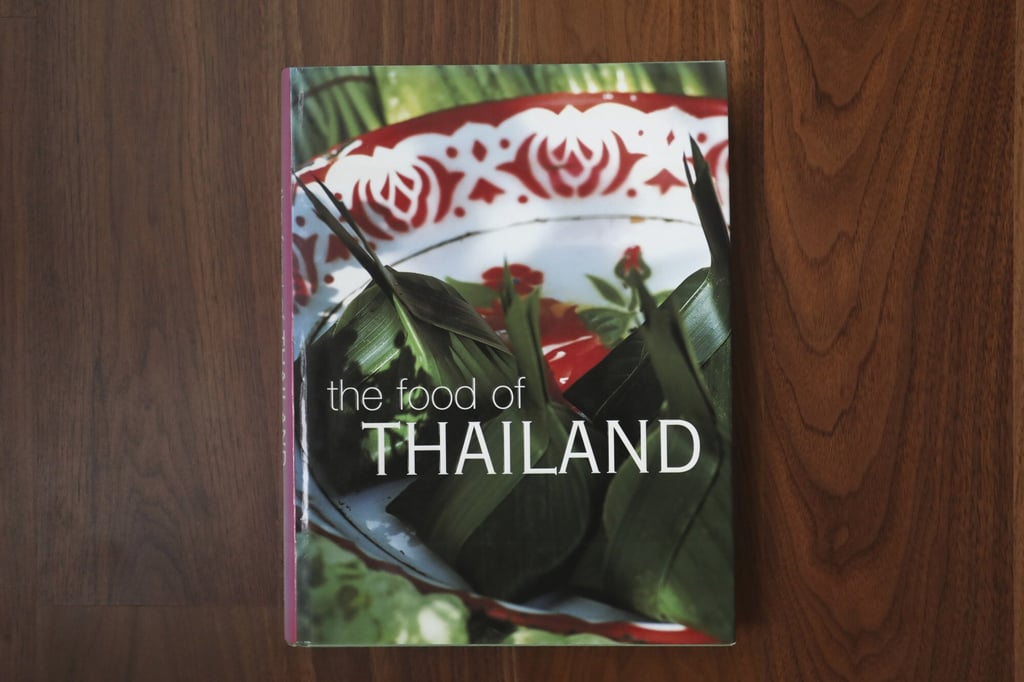
- All this is explained in The Food of Thailand – along with recipes for Thai favourites such as chicken in pandanus leaf, red curry and fried mussel pancake

What comes to mind when you think of the food of Thailand? Chances are, it’s the perfect balance of flavours: hot, sour, salty and sweet.
So it’s interesting to find in The Food of Thailand (2001) that “hot” didn’t play a big role in the kingdom’s culinary vocabulary until the 16th century.
In the book’s introduction, Lulu Grimes writes, “Geographically, culinary ideas have seeped into Thailand through the permeable borders with Malaysia, Laos, Cambodia and Burma. China, which had a far-reaching influence on the entire region, also made her mark on Thai cuisine. As would be expected, influences are strongest near the borders. The dishes found along the Mekong River have close affiliations to Laos, Cambodia and Vietnam. Around Chiang Mai there are Burmese-style curries and soups, and close to Malaysia, Muslim recipes such as massaman and roti are common.
“The most significant addition to Thai cuisine came not from Asia but from South America, via Europe. In the 16th century the Portuguese introduced what was to become one of the hallmarks of the cuisine, the chilli. Thai cuisine, like that of other cultures which accepted the chilli so readily, had long included an element of heat by way of fresh green peppercorns, dried white peppercorns and galangal.”
Grimes writes that in the past, the monarchy helped to maintain the quality of Thai food. “The basic tenets of Thai cuisine are ancient in origin and were upheld for centuries by the royal kitchens while being supplemented by outside influences. Even though they are worlds apart in terms of wealth, the underlying ingredients and recipes used, as well as styles of cooking, were, and still are, not much different between court and country.